
Diagnostic Hardware for Chilean Auto Workshops & Fleets
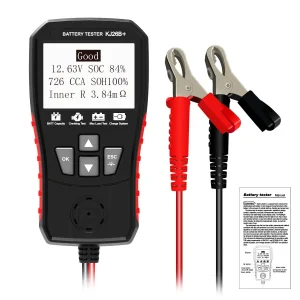
Pre-calibrated for SAE, DIN, EN, IEC, and JIS standards. Built to deliver laboratory-grade battery health evaluation, starter cranking testing, and alternator ripple analysis under rugged South American operating conditions.
Chile Automotive Diagnostic Market: Industrial & Commercial Landscape
A rigorous examination of Chile's specialized industrial vehicle density, climatic stress profiles, and commercial supply chain structures driving surging demand for digital battery diagnostic instruments.
The Operational Geography of Chilean Fleet Electrics
The Republic of Chile represents one of the most geographically diverse and industrially demanding automotive markets in the Western Hemisphere. Spanning over 4,300 kilometers from the hyper-arid Atacama Desert in the north to the sub-polar archipelago of Tierra del Fuego in the south, commercial vehicle electrical systems operate under extreme mechanical vibration, thermal stress, and altitude-induced derating.
In northern industrial clusters such as Antofagasta, Calama, and Tarapacá, the economy is dominated by large-scale copper and lithium extraction operations. Mining contractors deploy tens of thousands of light commercial utility trucks (principally Toyota Hilux, Mitsubishi L200, and Ford Ranger platforms) and heavy-duty transport units (Volvo FH, Scania R-series, and Mercedes-Benz Actros). These fleets endure severe diurnal temperature oscillations—plunging below 0°C at night at high Andean altitudes (3,000 to 4,500 meters above sea level) and soaring to near 40°C during daylight hours under intense ultraviolet radiation. Under such harsh cycles, standard automotive flooded lead-acid batteries suffer accelerated plate sulfation, water evaporation, and active material shedding. Fleet uptime in mining logistics is strictly mandated by preventive maintenance contracts; an unpredicted battery failure on an auxiliary vehicle or haul route can cause cascading logistics bottlenecks costing thousands of dollars per hour.
Conversely, in the central economic hub encompassing Santiago Metropolitan Region and the maritime ports of Valparaíso and San Antonio, fleet dynamics pivot around urban public transport (Red Metropolitana de Movilidad), inter-urban freight corridors along Ruta 5 Panamericana, and explosive last-mile e-commerce logistics. Urban stop-and-go driving patterns combined with high electrical parasitic loads (fleet telematics, GPS trackers, dashcams, and refrigeration compressors) impose chronic partial state-of-charge (PSoC) conditions on starter batteries. In these metropolitan centers, Chilean servitecas (automotive fast-fit centers), franchised dealerships, and independent repair garages require reliable digital conductance testers to deliver verifiable diagnostic printouts to fleet clients and vehicle owners, proving the necessity of proactive battery replacement before terminal cranking failure occurs.
The Transantiago & Electromobility Transformation
Chile stands as a Latin American pioneer in urban electromobility. Santiago operates the largest electric bus fleet in the Americas outside of China, comprised predominantly of BYD, Yutong, and Foton heavy-duty e-buses. While high-voltage traction batteries power the drivetrains, every commercial electric vehicle remains entirely dependent on conventional 12V or 24V auxiliary low-voltage battery systems to boot up vehicle ECUs, engage high-voltage contactors, power active safety telemetry, and operate emergency braking systems. Global field data reveals that auxiliary 12V/24V battery failure accounts for more than 58% of unexplained electric vehicle breakdowns. Consequently, Chilean municipal transit concessionaires and heavy electrical fleet maintenance providers are actively procuring dedicated low-voltage conductance diagnostic instruments capable of accurately isolating auxiliary battery health without causing voltage transients that could damage sensitive electric vehicle supervisory computers.
Mining Vehicle Compliance
Strict safety protocols implemented by SERNAGEOMIN (National Geology and Mining Service) mandate daily mechanical and electrical checklists before machinery enters active extraction sites. Portable, intrinsically safe battery testers with anti-sparking Kelvin clamps are indispensable field tools.
Serviteca Retail Monetization
Chilean aftermarket retail chains utilize digital battery testers featuring Spanish-language diagnostic reports. Presenting an objective, printed or on-screen health verdict (Good / Recharge / Replace) builds customer trust and accelerates retail replacement battery sell-through rates.
Andean Logistics Corridors
Cross-border long-haul freight connecting Chile and Argentina via Paso Los Libertadores experiences extreme sub-zero Andean blizzards. 24V commercial dual-battery balance testers prevent costly roadside stranding in isolated mountain passes.
Conductance Diagnostic Algorithms vs. Carbon Pile Load Testing
A rigorous comparative analysis of dynamic AC conductance measurement methodologies versus legacy resistive high-rate discharge methods for automotive workshops and fleet maintenance managers.
Principles of AC Conductance Testing
For decades, automotive service workshops across South America relied on traditional carbon pile or resistive coil load testers. These legacy units operate by placing a brutal physical resistance (typically drawing 150A to 300A for 10 to 15 seconds) across the battery terminals, generating massive heat and discharging significant usable capacity during the test itself. Furthermore, if a battery is already depleted or internally compromised, applying a heavy discharge load risks thermal runaway, acid boiling, and explosive hydrogen gas discharge.
Modern SPKSTAR digital diagnostic tools utilize advanced Dynamic AC Conductance Technology. Conductance is a direct physical measurement of the battery's active plate surface area available to deliver electrical energy. The instrument injects a high-frequency, low-amplitude alternating current (AC) signal through the battery cells and measures the corresponding AC voltage response via a precision four-wire Kelvin connection.
By computing conductance (\( G = \frac{I}{V} \)) and factoring in internal micro-impedance, the embedded 32-bit automotive-grade microprocessor accurately models the battery's true electrochemical health. The algorithm cross-references real-time conductance against pre-programmed baseline matrices corresponding to international rating standards including SAE (CCA), EN, DIN, IEC, and JIS.
| Evaluation Parameter | SPKSTAR AC Conductance Digital Tester | Legacy Carbon Pile / Resistive Load Tester |
|---|---|---|
| Battery State Required | Can test discharged batteries (down to 1.0V) | Requires 100% full charge prior to test |
| Testing Duration | < 3 Seconds (Instant algorithmic verdict) | 15 Seconds heavy load + cooldown periods |
| Thermal & Explosion Risk | Zero heat generation; 100% spark-free | Generates glowing red elements & flammable fumes |
| Battery Chemistry Support | Flooded, AGM Flat Plate, AGM Spiral, GEL, EFB | Primarily flooded lead-acid; poor accuracy on AGM |
| Internal Impedance Measurement | Direct milliohm (\(m\Omega\)) precision measurement | None; voltage drop approximation only |
| Starter & Alternator Diagnostics | Integrated cranking curve & diode ripple analysis | Manual analog gauge observation only |
| Operator Safety & Ergonomics | Lightweight, handheld, reverse-polarity protected | Heavy, sharp sheet-metal edges, high burn risk |
Four-Wire Kelvin Connection Architecture
A critical engineering failure mode in low-cost diagnostic meters is contact resistance error. When testing cold-cranking capacity on high-demand batteries (e.g., 900 CCA commercial truck batteries), even a tiny contact resistance of 0.05 ohms across oxidized terminal posts can distort readings by up to 40%. SPKSTAR automotive diagnostic tools implement high-grade Kelvin Four-Wire Clamps. Each clamp jaw features electrically isolated copper teeth: one pair delivers the calibrated AC excitation signal, while the second pair monitors the minute voltage drop directly at the terminal post interface. This eliminates test lead resistance and clamp contact impedance entirely from the calculation, ensuring reproducible, laboratory-tier test repeatability across thousands of maintenance cycles.
Localized Chilean Application Scenarios & Case Studies
Examining four high-value operational environments across Chile where digital car battery testers provide decisive preventative maintenance value and operational cost savings.
1. High-Altitude Mining Fleets
Region: Antofagasta, Calama (3,200m+ Elev.)
Challenge: Heavy equipment auxiliary starter batteries experience sub-zero Andean nights and chronic silica dust accumulation.
Solution: SPKSTAR 12V/24V dual-system testers verify internal cell health during 250-hour preventive servicing, preventing stranded haul trucks in active open pits.
2. Urban Bus Fleets (RED)
Region: Greater Santiago Urban Basin
Challenge: High-frequency start-stop duty cycles and severe alternator diode wear on municipal diesel and electric bus fleets.
Solution: Depot technicians utilize ripple diagnostic modes to identify failing alternator rectifier diodes before they destroy newly installed auxiliary battery banks.
3. Serviteca Service Chains
Region: Viña del Mar, Concepción, Temuco
Challenge: Customer skepticism regarding battery replacement recommendations without verifiable empirical diagnostic evidence.
Solution: Technicians display clear SOH% / SOC% metrics and internal resistance numbers directly to vehicle owners, elevating replacement close rates by over 32%.
4. Cold Chain & Logistics
Region: Biobío, Los Lagos, Puerto Montt
Challenge: Parasitic discharge from telematics, tail-lifts, and refrigeration loggers causing dormant battery drain on long-haul transport.
Solution: Rapid in-vehicle cranking tests analyze minimum cranking voltage drop to flag aging batteries before winter runs through southern Chilean mountain passes.
Technology Roadmap: Next-Generation Automotive Power Diagnostics
How SPKSTAR's engineering department is innovating the next evolution of battery telemetry, multi-chemistry algorithmic testing, and cloud-connected fleet diagnostic workflows.
BLE 5.4 & Cloud Telematics
Integration of ultra-low-power Bluetooth 5.4 modules connecting handheld testers to mobile applications and fleet ERP software. Enables automatic synchronization of VIN barcodes, GPS coordinates, and historical battery health degradation records across distributed Chilean fleet depots.
Micro-EIS Spectrometry
Migrating multi-frequency Electrochemical Impedance Spectroscopy (EIS) from high-end battery laboratories into handheld workshop tools. Allows direct measurement of both ohmic electrolyte resistance and charge-transfer kinetics to distinguish between plate sulfation and acid stratification.
Auxiliary EV Multi-Chemistry
Specialized testing firmware calibrated for emerging Lithium Iron Phosphate (LiFePO4) 12V starter batteries alongside conventional lead-acid chemistries. Features programmable algorithm compensation for 48V mild-hybrid (MHEV) battery packs entering the South American passenger car parc.
Shenzhen Manufacturing Precision: Direct Sourcing for Chilean Importers
Leverage the unrivaled speed, component availability, and cost efficiencies of our Shenzhen manufacturing hub with dedicated bilateral trade advantages under the China-Chile Free Trade Agreement.
Unmatched Component Integration & Engineering Speed
Shenzhen SPKSTAR Technology Co., Ltd. operates state-of-the-art SMT (Surface Mount Technology) assembly lines, in-house plastic injection tooling centers, and comprehensive environmental testing laboratories in Bao'an District, Shenzhen. Our location at the epicenter of the global power electronics supply chain gives our engineering teams immediate access to tier-one microcontrollers (STM32, NXP), precision 16-bit analog-to-digital converters (ADCs), and high-current pure copper wiring harnesses within hours, bypassing component lead-time bottlenecks that paralyze regional manufacturers.
Every SPKSTAR diagnostic instrument undergoes 100% full-load burn-in cycles, automated in-circuit optical inspection (AOI), high-voltage transient spike resistance testing, and continuous vibration-table drop validation designed to exceed Chilean field conditions.
Bilateral Trade Advantage: China-Chile Free Trade Agreement (Form F)
Under the deepened China-Chile Free Trade Agreement (TLC Chile-China), electronic automotive testing equipment and diagnostic meters classified under HS Code 9031.80 and 9030.89 enjoy 0% import tariff (Arancel Aduanero) when accompanied by a certified Form F Certificate of Origin issued directly by our factory. This offers Chilean importers, distributors, and aftermarket wholesalers a substantial 6% to 15% cost advantage over non-preferential suppliers from North America or Europe.
Shipments depart directly from the mega-ports of Shenzhen (Yantian/Shekou) or Hong Kong with direct trans-Pacific container vessels calling at Puerto San Antonio or Puerto Valparaíso within a 28-to-35-day maritime transit window. Furthermore, our dedicated Spanish-language documentation team provides complete commercial invoices, packing lists, and SEC/CE/RoHS compliance declarations required by the National Customs Service of Chile (Servicio Nacional de Aduanas).
Commercial Automotive Starting, Charging & Diagnostic Range
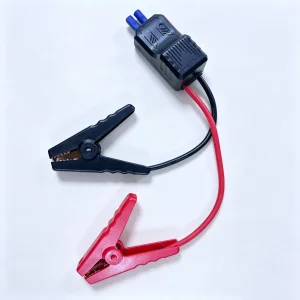
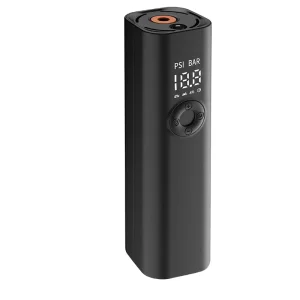
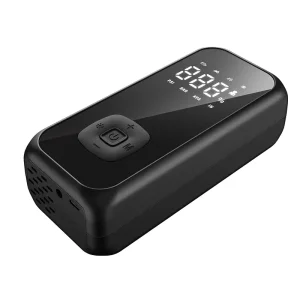
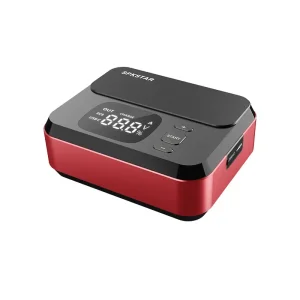
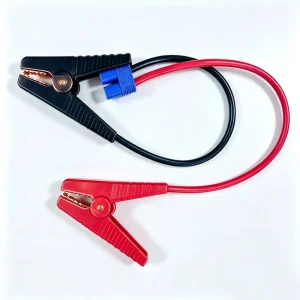
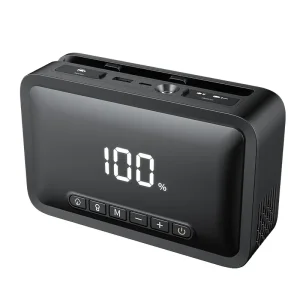
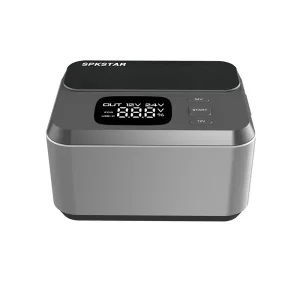
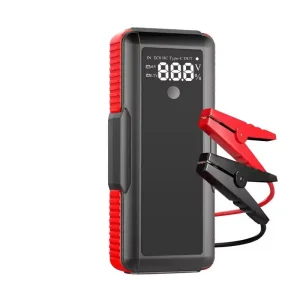
Explore our comprehensive ecosystem of professional automotive power products, heavy-duty supercapacitor jump starters, smart air inflators, and rugged workshop accessories.
Frequently Asked Questions: Chilean Wholesale & Sourcing
Comprehensive answers compiled by our engineering and Latin American export trade specialists for automotive parts importers, fleet directors, and authorized distributors.