High-Performance Jump Starters for Swedish Fleet & Wholesale Channels
Engineered to overcome extreme electrolyte freezing, high parasitic drains, and cold-cranking resistance up to -40°C in Swedish seasonal cycles.
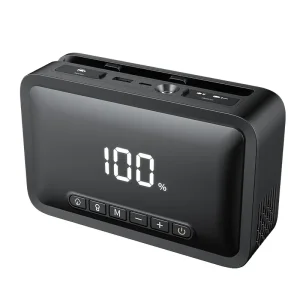
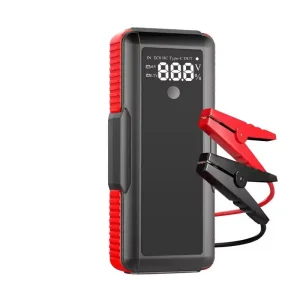
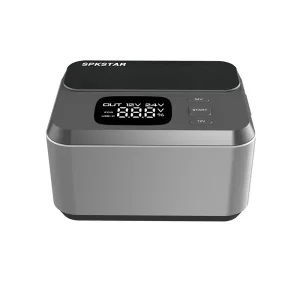
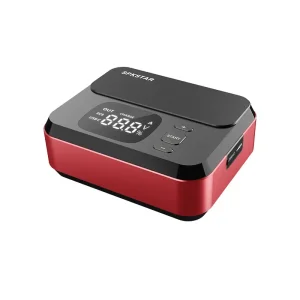
Sweden's Automotive Landscape & Sub-Zero Operating Demands
A strategic overview of environmental stress profiles, logistics infrastructure, and evolving aftermarket dynamics in Northern Europe.
Sub-Arctic Climatic Friction
Sweden experiences persistent sub-zero temperatures spanning November through April, with northern regions such as Norrland and Lapland regularly dropping below -30°C to -40°C. Under these thermodynamic conditions, conventional lead-acid vehicle starter batteries experience up to a 60% loss in effective cranking capacity (CCA), while engine oil viscosity increases by over 300%. This chemical deadlock makes high-burst-current emergency starting solutions a vital requirement for personal, commercial, and municipal vehicles.
Heavy Commercial & Timber Corridors
Sweden's timber, mining, and long-haul logistics corridors along the E4, E18, and inland road networks rely heavily on high-gross-vehicle-weight (GVW) trucks from manufacturers like Scania and Volvo Trucks. A dead battery on a 60-tonne timber transport rig deep in the Dalarna or Västerbotten forests presents severe logistical, financial, and life-safety hazards. Sourcing dual-voltage 12V/24V heavy-duty starters with high instant capacitance is central to commercial procurement teams.
EV Auxiliary 12V Battery Paradox
Sweden maintains one of Europe's highest per-capita Electric Vehicle (EV) adoption rates. However, modern EVs depend on low-voltage 12V auxiliary lead-acid or lithium batteries to power contactors, central computers, and safety relays. When the auxiliary 12V battery freezes or drains due to constant telematics draw in cold weather, the main high-voltage traction pack cannot engage. Compact, smart-sensing jump starters are becoming indispensable roadside kit items for EV roadside operators.
Supercapacitors vs. Lithium Jump Starters in Sub-Zero Nordic Service
A technical evaluation for procurement managers on internal resistance, cycle degradation, and chemical passivation under freezing conditions.
Conventional Lithium-Ion (NMC / LFP) Limitations
Lithium-ion cells rely on liquid electrolytes and intercalated lithium ions traversing cathode and anode lattices. At temperatures below -15°C, lithium ion mobility plummets drastically due to increased electrolyte viscosity and the rapid escalation of the solid electrolyte interphase (SEI) film resistance. Cranking an engine under heavy load at -25°C forces lithium cells into a severe voltage drop, frequently causing internal BMS low-voltage lockouts, lithium metal plating, micro dendrite formation, and permanent cell damage. Furthermore, leaving a lithium jump pack stored inside a vehicle glove box during Swedish winter leads to severe cold self-discharge, rendering the pack dead precisely when an emergency strikes.
Supercapacitor (EDLC) Cold-Weather Supremacy
Electric Double-Layer Capacitors (EDLCs) store electrical potential via purely electrostatic charge separation across high-surface-area activated carbon electrodes, entirely eliminating chemical phase transitions. Because no chemical bonds are broken or formed, the Equivalent Series Resistance (ESR) of industrial supercapacitors remains remarkably flat from +65°C down to -40°C. A supercapacitor unit can harvest residual energy from a drained vehicle battery (even one sitting at 8V–9V) over 2 to 3 minutes, boost that voltage internally through a high-efficiency synchronous DC-DC step-up converter, and deliver a clean 1000A to 3000A cranking surge without degradation across 100,000 cycles.
| Performance Parameter | SPKSTAR Supercapacitor Architecture | Standard Lithium-Ion (Cobalt/LFP) Pack | Impact on Nordic Commercial Operation |
|---|---|---|---|
| Operating Range | -40°C to +70°C Optimal | -15°C to +50°C (Output drops below 0°C) Limited | Guarantees winter starting in Kiruna, Luleå, and Norrland forests. |
| Storage / Maintenance | Zero maintenance; stores at 0V indefinitely Zero Care | Must be recharged every 60–90 days High Risk | Eliminates fleet downtime caused by dead booster units in glove boxes. |
| Charge Time Prior to Use | 2 to 3 minutes from drained 12V/24V battery Instant | 3 to 6 hours via wall adapter/USB Pre-charge Req. | Enables field recovery with zero advance charging or AC grid access. |
| Lifecycle Longevity | 100,000+ Cycles (10+ Years operational) 10+ Years | 300 to 800 Cycles (Decomposes in 2–3 yrs) Degradable | Delivers vastly lower Total Cost of Ownership (TCO) for fleet buyers. |
| Cabin Fire & Transport Hazard | Completely safe; contains zero volatile lithium Safe | Class 9 Dangerous Goods (Thermal runaway risk) Hazardous | No Hazmat shipping surcharges across Baltic ferries or air cargo routes. |
Enterprise Sourcing Criteria for Swedish Distributors & Importers
A checklist for supply chain directors evaluating Chinese manufacturing partners for high-compliance Nordic distribution.
Tier-1 Quality Systems (IATF 16949)
Procuring automotive power electronics for the Nordic aftermarket demands verifiable factory quality systems. B2B buyers must prioritize suppliers operating under ISO 9001 and IATF 16949 certifications. This ensures full traceability of active semiconductors, ESR binning of supercapacitor cells, automated optical inspection (AOI) on SMT lines, and computerized burn-in stress testing of assembled PCBA boards before shipment.
Severe-Environment Cable Tooling
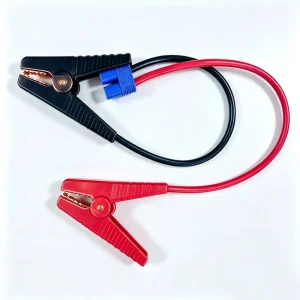
A jump starter's electronics are only as reliable as its clamp and cable interface. Cheap PVC cables turn rigid and shatter like glass at -20°C. Swedish procurement standards require 100% pure copper conductors insulated in ultra-flexible, high-strand silicone rated down to -50°C (8AWG or 6AWG for commercial systems). Clamps must feature solid phosphor bronze or pure copper bridging teeth with integrated high-interrupt bypass relays.
OEM Private Label Customization
Swedish retailers and distributors (e.g., Biltema, Mekonomen, Swedol channels) require deep private-label OEM integration. Our factory capabilities encompass bespoke industrial mold designs, Pantone-matched impact-resistant ABS/PC casings, custom bilingual English/Swedish screen-printed markings, tailored UI firmware on digital status displays, and customized retail blister or high-density EVA travel carry cases.
Engineering Roadmap & Next-Gen Power Architecture (2025–2030)
Strategic advancements in hybrid ultracapacitor chemistry, gallium nitride (GaN) switching, and digital fleet connectivity.
Phase 1: High-Density Graphene Ultracapacitors
By leveraging graphene-doped electrode coatings, next-generation supercapacitors are increasing volumetric energy density by over 35% without forfeiting instantaneous power delivery. This allows a 12V/24V dual-system capable of cranking a 16-liter marine or commercial diesel engine to fit inside a compact, handheld tool casing weighing under 2.5 kg.
Phase 2: Bidirectional GaN USB-PD 3.1 Protocols
Integrating Gallium Nitride (GaN) power stages enables 140W to 240W bidirectional USB Power Delivery. Professional jump packs can now recharge their supercapacitor bank from an in-cab 12V socket or USB-C laptop charger in under 90 seconds, while serving as high-output emergency power stations for field diagnostics computers and mobile lighting.
Phase 3: Connected Fleet Telematics Integration
Future industrial jump starters will incorporate low-power Bluetooth and Nordic-band cellular IoT interfaces. Fleet managers can monitor starter pack health, track battery diagnostics performed on fleet vehicles, log ambient cranking amperages, and automate preventive replacement schedules for vehicle batteries across remote maintenance hubs.
Nordic Compliance & Swedish Market Certification
Ensuring complete import safety, environmental compliance, and smooth customs clearance through Swedish Tullverket.
European Union & Swedish National Directives
All jump starters exported to Sweden must satisfy rigorous European Union product directives verified by accredited third-party test laboratories (TÜV, SGS, Intertek):
- CE Marking (LVD & EMC Directives): Tested according to EN 60335-1, EN 60335-2-29 for electrical safety, and EN 55014-1/2 for electromagnetic immunity against interfering with vehicle ECUs.
- RoHS Directive (2011/65/EU) & REACH (EC 1907/2006): Stringent restriction of lead, mercury, cadmium, hexavalent chromium, and phthalates across all solder joints, plastics, and cable coatings.
- Kemikalieinspektionen (KEMI) Alignment: Verified compliant with Swedish chemical agency regulations regarding chlorinated paraffin and flame retardant limits in rubber and plastics.
New EU Battery Regulation (EU 2023/1542) & WEEE
For hybrid or lithium auxiliary jump starters, the new EU Battery Regulation mandates strict compliance requirements that Swedish importers must fulfill:
- Producer Responsibility (WEEE & El-kretsen): Importers must be registered with the Swedish Environmental Protection Agency (Naturvårdsverket) or affiliated with El-kretsen for end-of-life battery and electronics takeback.
- Supercapacitor Exemption Advantage: Pure supercapacitor jump starters contain zero heavy-metal battery chemistry, streamlining classification under standard industrial electronics and bypassing heavy hazardous battery levies.
- UN 38.3 & Air/Sea Freight Documentation: Full test summaries and MSDS paperwork supplied to facilitate clearance across Gothenburg and Helsingborg ports.
Frequently Asked Sourcing & Engineering Questions
Detailed technical explanations addressing real-world concerns of Nordic importers, distributors, and fleet procurement officers.
Can supercapacitor jump starters reliably crank a completely frozen diesel engine in Swedish winters?
Yes. In extreme cold (-20°C to -40°C), traditional lead-acid and lithium batteries suffer severe chemical slowdown, reducing output current and dropping voltage below the vehicle starter motor's activation threshold. Supercapacitors operate via electrostatic charge separation, retaining low Equivalent Series Resistance (ESR) regardless of ambient sub-zero temperatures. SPKSTAR units deliver immediate, full-rated peak amps (up to 3000A) to overcome both stiff frozen engine oil and sluggish starter motors.
How does a supercapacitor jump starter charge from a vehicle battery that is already "dead"?
A vehicle battery that cannot turn over an engine often still contains substantial residual energy at a lower voltage (e.g., 8V to 10.5V). While this voltage is insufficient to overcome the mechanical resistance of a cold engine, SPKSTAR supercapacitors utilize high-frequency synchronous boost converters that pull this remaining energy over 2 to 3 minutes, storing and compressing it inside the supercapacitor bank at 15V. Once charged, it releases this energy in a massive 1000A–3000A burst to start the engine.
What are the minimum order quantities (MOQs) and lead times for custom OEM branding for Sweden?
For custom silk-screened logos and standard Swedish/English retail packaging, our standard MOQ is typically 500 units per model. For bespoke injection molding, custom housing colorways, or specialized cable specifications, MOQs range from 1,000 to 2,000 units. Standard production lead times are 25 to 35 business days following sample sign-off, with express pilot-run capabilities available for seasonal launch schedules.
Are SPKSTAR jump starters compatible with 24V commercial systems like Scania, Volvo, and MAN?
Yes. Our heavy-duty industrial series (such as the 12V/24V 3000A model) features intelligent dual-voltage auto-sensing circuitry or manual selector switches with physical safety interlocks. It effortlessly cranks high-displacement diesel engines up to 13–16 liters used in heavy timber trucks, construction machinery, municipal snowplows, and agricultural harvesters operating across Sweden.
What safety protections are integrated into the clamp cable assemblies?
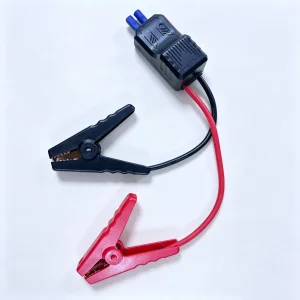
Our EC5 and EC8 smart jumper cable assemblies feature multi-stage hardware protection controlled by an integrated MCU: reverse polarity protection with acoustic alarms, short-circuit interlocks, reverse charging protection (blocking alternator feedback once the vehicle starts), over-temperature shutdown, over-discharge clamping, and spark-proof contact detection.
Complete Automotive Emergency Power & Accessory Solutions
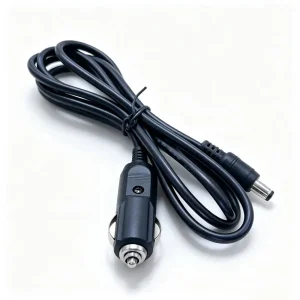
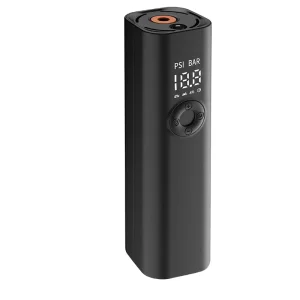
Comprehensive OEM/ODM catalogue of jump starters, smart inflators, high-strand silicone cables, and automotive accessories tailored for the Nordic market.