
Engineered Emergency Starting Units for Czech Commercial Channels
Direct-to-importer tier hardware platforms tested for extreme European environmental profiles, fleet service centers, and aftermarket supply distribution.
-
Product Specifications

Czech All-Weather 2-in-1 Emergency Booster & Digital Inflator Pack
-
Product Specifications
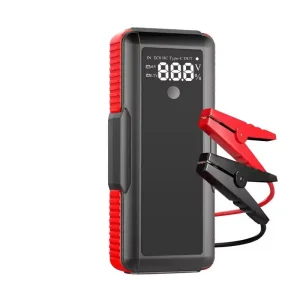
1000A Supercapacitor Sub-Zero Instant Jump Starter for Czech Passenger Fleets
-
Product Specifications
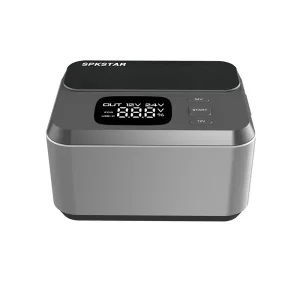
12V/24V 3000A Commercial Truck & Bus Capacitor Booster for D1 Logistics Hubs
-
Product Specifications
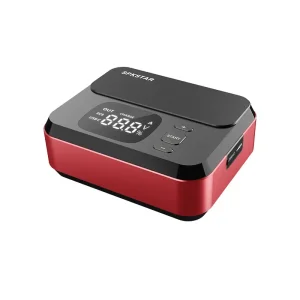
12V 1500A PD 140W Rapid-Charge Supercapacitor Dealership Diagnostic Starter
Czech Republic Commercial & Industrial Automotive Reality
Bridging high-output vehicle manufacturing with an aging domestic passenger fleet and critical trans-European logistics corridors.
The Czech Republic represents the industrial heartland of Central Europe’s automotive engineering sector. Anchored by major manufacturing complexes including Škoda Auto (Volkswagen Group) in Mladá Boleslav and Kvasiny, Hyundai Motor Manufacturing Czech in Nošovice, and Toyota Motor Manufacturing Czech Republic in Kolín, the country manufactures over 1.4 million light vehicles annually. Automotive production accounts for nearly 10% of the Czech gross domestic product and more than 26% of total industrial manufacturing output.
However, beneath this Tier-1 production excellence lies a pronounced domestic and logistics operational dichotomy: the average age of the Czech passenger car fleet stands at approximately 15.9 to 16.2 years, according to data from the Czech Car Importers Association (SDA). This positions the Czech operational fleet among the oldest in Central Europe, significantly above the European Union average of 12.3 years.
Older internal combustion powertrains, especially high-displacement turbo-diesel engines (such as the widespread 1.6L and 2.0L TDI platforms), exhibit heavy parasitic battery drains during seasonal temperature drops. When Central European winter temperatures dip below freezing—frequently reaching -15°C to -25°C across the Bohemian Forest (Šumava), the Krkonoše range, and the Bohemian-Moravian Highlands (Vysočina)—chemical lead-acid and AGM batteries experience up to a 50% drop in cranking amperage capacity while engine oil viscosity dramatically escalates, precipitating widespread battery failures.
Czech Automotive Metrics at a Glance
Operational indicators shaping emergency starting power procurement across Bohemia and Moravia.
Beyond regional passenger vehicles, the Czech Republic functions as the indispensable freight bridge connecting Western Europe with Poland, Slovakia, Hungary, and the Balkans. Massive commercial truck flows traverse the D1 Motorway (Prague – Jihlava – Brno – Ostrava), the D5 corridor (linking Plzeň to Bavaria, Germany), and the D8 highway (connecting Prague through Ústí nad Labem to Dresden). Commercial logistics carriers operate under severe transit SLAs where roadside breakdowns cause cascading supply-chain penalties. Traditional lithium jump starter packs fail under these grueling commercial requirements due to cell self-discharge, mandatory pre-charging cycles, and degraded performance in cold storage inside unheated tractor cabs.
Centralized Aftermarket Distribution
Dominated by established distributor networks such as LKQ CZ (Auto Kelly / ELIT), Inter Cars Česká republika, and SAG CZ, who require strictly certified, CE/RoHS-compliant hardware with custom private labeling and localized service manuals.
Rigid Transit Emergency Services
National automotive clubs like ÚAMK (Ústřední automotorklub) and private breakdown contractors (ABA Assistance) operate 24/7 service fleets demanding zero-maintenance starting packs capable of executing 30+ consecutive boosts without degradation.
Industrial OEM & Staging Depots
Extensive open-air holding lots at assembly plants and rail hubs experience prolonged standing drain on 12V aux systems, requiring rapid, battery-free capacitor boosters to mobilize newly built units for rail shipment.
Global Industry Trends: Electrostatic Supercapacitors vs. Chemical Lithium
Why European commercial fleets and automotive engineers are transitioning away from high-volatility lithium boosters toward maintenance-free ultracapacitors.
The global jump starter market has reached an engineering turning point. For over a decade, consumer automotive markets relied almost exclusively on lithium-ion (LiCoO2, NCM, and LiFePO4) battery packs. While offering high gravimetric energy density (Wh/kg), chemical batteries possess inherent electro-chemical liabilities that render them problematic for professional, industrial, and extreme-climate B2B deployment.
In contrast, Electric Double-Layer Capacitors (EDLCs), or Supercapacitors / Ultracapacitors, store electrical energy electrostatically via physical charge separation at the interface between an electrolyte and a high-surface-area activated carbon electrode. With no chemical redox reaction involved, internal resistance (ESR) is virtually nonexistent (<0.5 mΩ per cell), allowing for an immense power density (kW/kg) capable of releasing massive peak current pulses instantaneously.
| Performance Vector | Lithium-Ion (NCM/LFP) Jump Starter | SPKSTAR Industrial Supercapacitor System | Operational Impact for Czech Fleets |
|---|---|---|---|
| Operating Temperature Window | -10°C to +45°C (Thermal drop off below 0°C) | -40°C to +70°C (Full discharge curve) | Zero failure during Bohemian sub-zero cold waves; immune to summer glovebox heat traps. |
| Recharging Mechanism | Requires AC wall adapter or 12V DC for 3–6 hours | Residual Battery Harvesting in 60–180s | Can charge directly from the dead car battery (>5V residual) on site without mains electricity. |
| Cycle Life Rating | 300 – 500 deep cycles (Degrades within 2 years) | 100,000+ full charge/discharge cycles | 10+ years operational lifespan; virtually zero RMA warranty claims for distributors. |
| Storage & Self-Discharge | Loses 3–5% charge monthly; requires quarterly refresh | Zero maintenance; stores completely discharged | Can sit in a trunk or workshop shelf for 5 years and be ready to deploy in 2 minutes. |
| Transport & Hazmat Safety | UN 3480 / UN 3481 Class 9 Dangerous Goods (Strict ADR) | Non-Dangerous Goods Exemption (UN 3499 SP 361) | Unrestricted cross-border EU shipping; no dangerous goods handling surcharges. |
| Safety & Thermal Runaway | Risk of cell puncture, swelling, and fire if overcranked | Chemically inert; explosion-proof architecture | Highest safety level for professional garage mechanics and freight operators. |
From an EU regulatory and freight perspective, the distinction is transformative. Under the European Agreement concerning the International Carriage of Dangerous Goods by Road (ADR), transporting lithium battery packs incurs stringent labeling, specialized packaging, and escalating shipping fees. SPKSTAR’s supercapacitor jump starters comply with Special Provision 361 under UN 3499, exempting them from dangerous goods regulations when discharged, substantially reducing warehousing liabilities and cross-border transport overhead across Central and Eastern Europe.
Application Scenarios Across Czech Industrial Sectors
From municipal fleets and trans-continental TIR freight to agricultural combines and dealership prep centers.
1. Long-Haul Logistics & Freight Corridors (D1/D5)
Czech transport operators such as ČSAD, C.S.CARGO, and international carriers operating along the D1 artery rely on our 12V/24V 3000A dual-voltage units. When a semi-truck's dual 225Ah lead batteries drain during weekend layovers in unheated logistics parks outside Brno or Jihlava, supercapacitor units mobilize the 13L diesel engine in under three minutes without waiting for external tow services.
2. Dealership Pre-Delivery & Service Centers
Multi-brand dealer chains in Prague, Brno, and Ostrava manage extensive inventory outdoors. Auxiliary electronics and infotainment systems on modern mild-hybrid (MHEV) and electric vehicles (EV 12V auxiliary lead/LFP systems) frequently drain during storage. SPKSTAR’s 1500A supercapacitor units safely re-energize low-voltage control circuits without triggering transient voltage spikes that damage sensitive ECUs.
3. Mountain Rescue & Municipal Infrastructure
In high-elevation regions like Liberec, Pec pod Sněžkou, and Špindlerův Mlýn, emergency rescue services (Horská služba ČR) and municipal snow-removal fleets require starting solutions that operate flawlessly at -25°C. Supercapacitor units remain unaffected by sub-zero cold, delivering instantaneous current to snow blowers, utility tractors, and all-wheel-drive rescue vans.
4. Agricultural Equipment & Zetor Tractors
Central and Southern Moravia's extensive agricultural operations utilize heavy machinery from Zetor, John Deere, and Claas. These machines frequently sit idle for extended winter periods. Our heavy-duty 24V jump starters enable immediate engine cranking during seasonal field preparation, bypassing days of trickle-charging dead tractor batteries.
5. Heavy Construction & Mining Plants
In quarrying, infrastructure excavating, and cement manufacturing sites across North Bohemia, Caterpillar, Komatsu, and Tatra heavy machinery require extreme current surge capabilities. Our 3000A industrial units withstand high vibration, mud, and harsh outdoor exposure while providing reliable engine turnover.
6. Intermodal Rail & River Container Terminals
Container terminals in Mělník, Lovosice, and Česká Třebová utilize large container-handling gantry cranes, diesel forklifts, and yard shunting locomotives. Rapid-cycling supercapacitors ensure uninterrupted yard operations by preventing equipment downtime due to dead battery systems.
Technical Roadmap: Architecture of SPKSTAR Power Electronics
Hardware schematics, intelligent microcontroller management, and solid-state protection designed for European compliance standards.
Multi-MOSFET Parallel Switching & Thick-Copper PCBA
A primary failure mode in conventional jump starters is switch breakdown under peak inrush current (which can surge beyond 2000A in 50 milliseconds during cold cranking). SPKSTAR jump starters incorporate heavy 4-layer 3oz thick-copper PCBAs paired with banks of low-RDS(on) automotive-grade N-channel MOSFET switches mounted on dedicated aluminum thermal dissipation backplates.
This layout ensures that high-current bursts cause negligible thermal rise across the board traces. In addition, our firmware utilizes advanced algorithmic current balancing to distribute inductive flyback energy evenly across all switching channels, preventing localized gate rupture.
Residual Voltage Energy Harvesting Technology
Even a "completely dead" vehicle battery rarely sits at true zero volts; typically, an automotive battery that cannot turn over an engine maintains between 6V and 10.5V. SPKSTAR’s integrated high-frequency boost converter circuity leverages this residual chemical charge. By connecting the clamps to the weak battery, the device draws low-amperage current over 120–180 seconds, accumulating electrostatic charge within the ultra-low ESR capacitor array until nominal boost voltage is achieved—enabling a full engine start without external power outlets.
Integrated Safety Protections
- Reverse Polarity Inversion Clamping: Immediate MOSFET cutoff (<10 microseconds) with audible buzzer.
- Short-Circuit Arc Suppression: Spark-free contact design prevents flammable hydrogen ignition near battery vents.
- Over-Voltage Feedback Isolation: Eliminates back-charging damage once the vehicle alternator fires up.
- Dynamic Pre-Charge Current Limiting: Protects low-residual batteries from thermal stress during charging.
- Anti-Transience Clamping Diodes: Absorbs voltage spikes up to 45V to safeguard modern vehicle ECUs.
Our next-generation platforms integrate Gallium Nitride (GaN) switching circuits, cutting internal volume by 35% while enabling 140W bidirectional fast charging from modern vehicle USB-C ports.
Macro B2B Industry Solutions for Czech Importers & Distributors
Turnkey OEM/ODM services, compliance certifications, and Shenzhen factory direct supply chain integration for European brands.
Full CE, RoHS & European Standards Compliance
Every SPKSTAR platform holds authentic test reports conforming to European electromagnetic compatibility directives (EMC 2014/30/EU), Low Voltage Directive (LVD 2014/35/EU), RoHS 2011/65/EU, and REACH chemical standards. Reports are readily provided for Czech customs clearance and market surveillance authorities (ČOI - Česká obchodní inspekce).
Custom Tooling, Casing & Localized Branding
We provide full white-label and private-label customization: custom injection mold colors matching brand guidelines, high-resolution laser marking, silk-screened logos, custom retail packaging, and comprehensive Czech language user manuals with complete safety declarations.
Direct Shenzhen Factory Architecture
Eliminate intermediary trading margins. Operating out of our Bao'an, Shenzhen manufacturing hub since 2005, SPKSTAR combines in-house SMT PCBA lines, automated ultrasonic plastic welding, precision battery testing laboratories, and dedicated aging test racks to maintain strict quality control.
Establish Your Direct OEM/ODM Jump Starter Supply Chain
Partner directly with Shenzhen SPKSTAR Technology Co., Ltd. for custom-branded ultracapacitor boosters, tire compressors, and diagnostic hardware tailored for the Czech Republic and wider EU markets.
Send Inquiry NowFrequently Asked Questions for Sourcing & Procurement Teams
In-depth answers addressing cold-weather physics, capacitor pre-charging, homologation, and logistics regulations.
How do SPKSTAR supercapacitors handle cold cranking in Czech winters compared to lithium packs?
Lithium-ion cells depend on chemical reaction rates which plummet at -20°C, causing voltage collapse and irreversible lithium plating. SPKSTAR’s electrostatic ultracapacitors store charge physically across activated carbon interfaces. Their equivalent series resistance (ESR) remains virtually flat from -40°C to +70°C, consistently delivering full peak cranking current regardless of frozen ambient conditions.
How does a supercapacitor jump starter charge from a dead battery?
Even when a car battery lacks the cranking amperage to turn an engine starter motor, it usually retains residual voltage between 6V and 11V. Our onboard high-frequency step-up boost circuit draws this residual energy at a low, safe current rate (approx. 2A–4A) over 90 to 180 seconds, accumulating full capacitive charge. The starter then discharges this concentrated energy in a massive 1000A–3000A pulse to crank the engine.
What are the freight and dangerous goods advantages when importing to the EU?
Unlike lithium batteries governed by strict Class 9 dangerous goods rules (UN 3480 / UN 3481) that mandate costly specialized transport under ADR, IMDG, and IATA, supercapacitors with an energy storage capacity below 0.3 Wh or meeting UN 3499 Special Provision 361 are classified as non-dangerous goods when shipped discharged with a shorting pin, significantly slashing shipping and warehousing costs.
Can the 12V/24V heavy-duty model start large diesel engines in commercial trucks?
Yes. Our dual-voltage 3000A peak system is engineered for commercial fleet logistics, city transit buses, municipal equipment, and agricultural tractors. It delivers the high inrush current required to turn over diesel engines up to 13 liters displacement, with integrated intelligent voltage auto-sensing to prevent accidental cross-voltage connection.
What is the minimum order quantity (MOQ) and lead time for Czech private labeling?
Standard neutral or factory-branded trial orders start at low MOQs. Full OEM customization (including customized housing colorways, laser engraving, Czech language packaging, and custom user manuals) typically begins at 500 to 1,000 units per SKU. Mass production lead time ranges between 25 and 35 business days following pre-production prototype sign-off.
What built-in reverse-polarity and ECU safety protections are integrated?
Our smart booster clamps and internal PCBA utilize solid-state relay architecture that prevents power delivery unless correct polarity and contact impedance are detected. The circuit clamps inductive back-EMF voltage spikes generated by vehicle alternators, ensuring complete safety for delicate modern electronic control units (ECUs), CAN bus nodes, and sensor arrays.
Specialized Jump Starters, Inflators & Heavy-Duty Accessories
Explore our full line of automotive emergency booster packs, smart inflation pumps, and OEM cables configured for Czech regional distribution.
-
Product Specifications
Industrial 12/24V 3000A Supercapacitor Commercial Starter Station
-
Product Specifications
Compact 1000A Ultracapacitor Emergency Booster for Retail Programs
-
Product Specifications
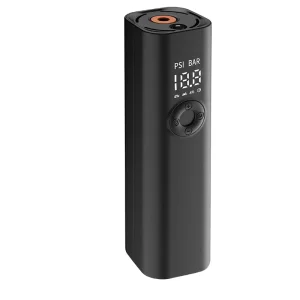
Direct-Drive 12V Super Mini Automotive Tire Compressor
-
Product Specifications
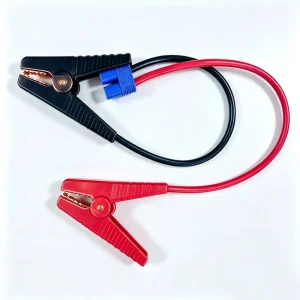
Heavy-Duty EC8 12V/24V Copper Booster Clamps & Harness
-
Product Specifications
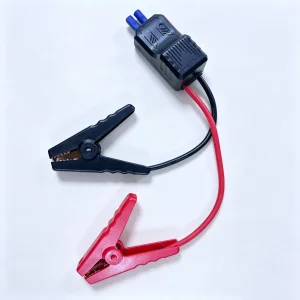
Intelligent EC5 Solid-State Protection Clamps with Force-Start
-
Product Specifications
Professional 12V 1500A Capacitor Starter & Bench Charger
-
Product Specifications
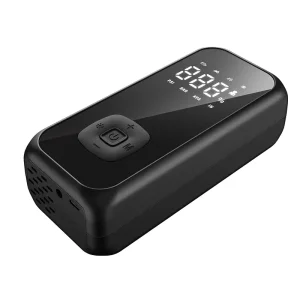
Cordless 6000mAh Multi-Mode Smart Tire Inflator Pump
-
Product Specifications
Multi-Functional 2-in-1 Emergency Booster with Compressor