
Priority Germany Stock: 12V/24V Precision Test & Power Hardware
Selected high-velocity diagnostic units and workshop power accessories pre-configured for European commercial and passenger vehicle architectures.
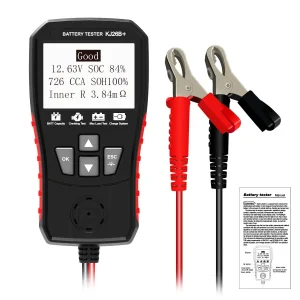
Durable SPKSTAR Digital Automotive Diagnostic Tool 12V 24V Car Battery Tester (Germany Workshop Edition)
- Measurement NormsDIN / EN / IEC / SAE
- Voltage Spectrum12V / 24V Dual-Circuit
- Battery ChemistriesAGM, EFB, GEL, SLI
- Test Duration< 2.5 Seconds SOH/SOC
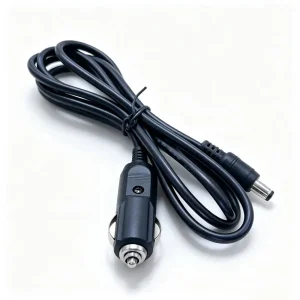
High-Quality SPKSTAR 12V 5A Diagnostic Power Cord Cigarette Lighter for German Wholesalers
- Voltage Rating12V Regulated DC
- Overload CutoffIntegrated 7A Safety Fuse
- Plug StandardDIN ISO 4165 Compatible
- Cable CoreHeavy 18AWG Copper
Professional SPKSTAR Dynamic Conductance Battery & Alternator Tester (In Stock Germany)
- Cranking AnalysisMicro-drop Millivolt Detection
- Ripple AssessmentAlternator Diode Health
- Display UIHigh-Contrast Multi-Language
- ProtectionSpark-Free Kelvin Clamps
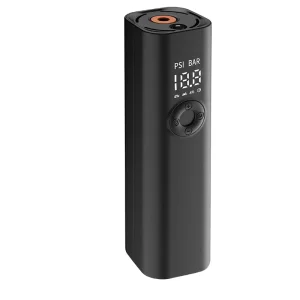
ODM SPKSTAR Super Mini Portable Tire Pump & Pressure Verifier for German Roadside Kits
- Peak Pressure150 PSI / 10.3 BAR Calibrated
- Power Coupling12V DC Vehicle Harness
- Sensor Drift< ±0.5 PSI Precision Gauge
- Heat DissipationAnodized Aluminum Piston
Why Car Battery Testing Is Critical Across the German Market
Analyzing ADAC failure reports, strict TÜV/DEKRA inspection protocols (§29 StVZO), and the rapid shift toward micro-hybrid AGM/EFB and EV auxiliary low-voltage architectures.
The Federal Republic of Germany represents Europe’s most technologically demanding and densely regulated automotive aftermarket. According to comprehensive historical breakdown telemetry published annually by the Allgemeiner Deutscher Automobil-Club (ADAC), battery malfunctions consistently account for over 43.2% to 46.2% of all roadside vehicle breakdowns. Despite major advances in vehicle powertrain engineering and telematics, the humble 12-volt battery remains the undeniable primary single point of failure in modern passenger cars, commercial transport vans, and heavy-duty trucks operating on the Autobahn network.
The Triple Driver of Battery Diagnostic Demand in Germany
Three unique local factors make precision conductance testers indispensable for German automotive service providers (Kfz-Meisterbetriebe), fleet depots, and retail accessory chains:
TÜV & DEKRA HU Inspections (§29 StVZO)
Under German road safety regulations, periodic motor vehicle safety checks (Hauptuntersuchung) are mandatory. Weak starting capacity and fluctuating alternator output trigger fault codes (DTCs) in modern OBD-II networks, jeopardizing certification. Workshops use battery analyzers preemptively to ensure compliance before official inspection.
Complex Micro-Hybrid (AGM/EFB) Demands
Over 70% of passenger cars in Germany employ Start-Stop technology and intelligent alternator energy recuperation. These systems place intense cyclical loads on Absorbent Glass Mat (AGM) and Enhanced Flooded Batteries (EFB). Conventional carbon pile testers cannot evaluate internal resistance or stratification without damaging sensitive cells.
Sub-Zero Alpine & Continental Winters
Sub-zero winter conditions across Bavaria, Baden-Württemberg, and central German highlands drastically reduce available battery electrochemical efficiency. A battery degraded to 65% State of Health (SOH) may function during warm autumn days, but fails completely on the first frost at -10°C. Timely autumn preventative battery checks are standard workshop procedure.
DIN, EN, and EU Regulatory Frameworks for Automotive Testing Instruments
Ensuring complete conformance with German commercial importation guidelines, CE Directives, and international electrochemical test algorithms.
When entering the German B2B ecosystem, precision instruments must adhere to rigorous quality directives. Cheap, uncalibrated testers that only measure open-circuit terminal voltage produce dangerously misleading assessments, leading to customer disputes and returned inventory. SPKSTAR digital diagnostic tools are engineered to bridge factory efficiency with European metrological precision.
Multi-Standard Algorithmic Support for German Workbenches
German automotive professionals cross-examine starter batteries across divergent manufacturing specifications. SPKSTAR diagnostic instruments feature multi-rating firmware allowing one-touch selection between:
| Standard Rating | Originating Body | Testing Range (A / CCA) | Primary Application in Germany |
|---|---|---|---|
| DIN (Deutsches Institut für Normung) | German National Standard | 100 – 1400 DIN | Classic domestic German OEM specifications (Older VAG, BMW, Mercedes-Benz bench tests) |
| EN (European Norm EN 50342-1) | CENELEC European Standard | 100 – 2000 EN | Primary standard for all new aftermarket passenger & commercial starter batteries sold in EU |
| IEC (International Electrotechnical Comm.) | Global Standards Body | 100 – 1400 IEC | Industrial stationary batteries, auxiliary transport systems, and traction backup sets |
| SAE (Society of Automotive Engineers) | North American Standard | 100 – 2000 CCA | Imported US vehicles, defense vehicles, and international heavy plant machinery |
| JIS (Japanese Industrial Standard) | Japanese Standards Assoc. | 26A17 – 245H52 | Asian car imports operating across Germany (Toyota, Hyundai, Nissan fleet vehicles) |
Statutory Compliance for Importers & Resellers in Germany
Supplying German commercial entities requires meticulous documentation. SPKSTAR supports importers, brand owners, and logistics providers with ready-to-file regulatory declarations:
- CE Marking & EMC Conformance (Directive 2014/30/EU): Tested against EN 61326-1 to verify that high-frequency pulsing test currents do not interfere with delicate vehicle ECUs, body control modules, or workshop Wi-Fi networks.
- Low Voltage Directive (2014/35/EU): Safe operating thresholds verified during high-voltage alternator ripple voltage measurements.
- RoHS & REACH Compliance (2011/65/EU and 2015/863): Free of lead, cadmium, mercury, and restricted plasticizers, ensuring worry-free retail placement across Germany and Austria.
- WEEE (ElektroG) & German Battery Act (BattG): Clear barcode labeling, recyclable ABS casing markings, and product classification ready for registration with the German Stiftung Elektro-Altgeräte Register (ear).
- DGUV Vorschrift 3 Workplace Electrical Safety: Spark-free double-insulated Kelvin alligator clips prevent short circuits during terminal hookups inside tight commercial engine bays.
Direct-From-Factory Sourcing for European Enterprises
Combining 20 years of power-electronics engineering in Bao’an, Shenzhen with dedicated European distribution pathways.
In-House SMT & Firmware Design
We own our automated Surface-Mount Technology (SMT) pick-and-place lines and software teams. This allows custom calibration of conductance algorithms, dynamic micro-drop measurement curves, and localized German-language UI translations directly inside the tester’s EEPROM.
35% – 50% Margin Advantage
By bypassing multiple European trading layers and wholesale repackagers, German B2B buyers obtain industrial-grade conductance testers at primary factory gate costs, expanding profit margins while remaining price-competitive in demanding tenders.
Turnkey OEM / ODM Customization
Complete flexibility for tool brands and automotive aftermarket groups: customized housing colors (e.g., workshop red, industrial blue, stealth grey), laser-engraved client logos, bespoke rubber boot drop-protection, and customized retail packaging.
Conductance Diagnostic Technology vs. Legacy Carbon Pile Load Testing
Why modern electronic conductance testing is universally mandated for sensitive micro-hybrid and smart vehicle electronics.
For decades, automotive mechanics evaluated starter batteries using resistive carbon pile load testers. These older devices drew hundreds of amperes directly from the battery plates, generating intense heat, sparks, and chemical degassing. In modern workshop environments, legacy load testing is not only hazardous but technically obsolete.
| Diagnostic Parameter | SPKSTAR Dynamic Conductance Tester | Traditional Carbon Pile / Load Resistor |
|---|---|---|
| Test Principle | AC micro-current pulsing to measure plate surface area & electrochemical conductance | Draws massive high DC amperage to simulate direct engine cranking load |
| Battery Depletion | Zero battery drain; draws less than 0.1A during testing | Severe battery drain; discharges 30% to 50% of residual capacity |
| Heat & Spark Hazard | 100% cold testing; zero heat generation, no hydrogen explosion risk | Extreme internal coil heat; severe burn hazard and dangerous terminal sparking |
| AGM / GEL / EFB Safety | Completely safe for sealed, valve-regulated, and stop-start batteries | Can overheat glass mat separators and cause venting in sealed cells |
| Vehicle ECU Safety | Test directly in-vehicle without disconnecting battery clamps | Requires battery removal or risks frying vehicle body electronics |
| Speed & Repeatability | Results within 2.5 seconds with 99.2% repeatable accuracy | Requires cool-down periods between tests; inconsistent results |
Comprehensive 3-in-1 Electrical System Health Verification
SPKSTAR digital automotive battery diagnostic tools evaluate three interrelated sub-systems in a unified routine:
- Battery State of Health (SOH) & State of Charge (SOC): Calculates the remaining Cold Cranking Amperage against rated factory values, internal resistance in milliohms (mΩ), and voltage to identify sulfation, dry-out, or plate collapse.
- Starter Cranking Voltage Dynamics: Captures the lowest millivolt drop during the exact moment of ignition key engagement. If cranking voltage drops below 9.6V (on 12V architectures), the tool isolates high starter resistance, binding bearings, or worn starter brushes.
- Alternator Charging & Diode Ripple System: Assesses charging voltage under unloaded and loaded electrical conditions (headlights on, blower fan at maximum). By measuring alternating current (AC) ripple voltage, it flags leaking rectifier diodes before they destroy the vehicle's secondary electronics.
Where SPKSTAR Battery Testers Excel Across Germany
Engineered for high-throughput environments from independent garages to cross-border logistics centers.
Independent Workshops (Freie Werkstätten)
Over 16,000 independent repair shops across Germany rely on fast diagnostic triage during routine seasonal tire changeover windows (Frühjahrs- und Winter-Reifencheck) to generate preventative battery replacement revenue.
Commercial Freight Hubs (LKW Flotten)
24V heavy-duty commercial fleets operating on vital logistics arteries like the A1, A2, and A3 corridors use dual-voltage 12V/24V testers in maintenance depots to prevent multi-thousand-Euro highway downtime penalties.
Used Vehicle Inspection (Autohäuser & PDI)
Car dealerships use instant digital battery printouts or screen readouts to verify battery health during pre-delivery inspection (PDI), eliminating customer warranty disputes on certified pre-owned vehicles.
Intralogistics & Electric Forklift Depots
German warehouse distribution centers use portable conductance testers for scheduled maintenance of 12V/24V deep-cycle traction auxiliary systems, ensuring industrial floor scrubbers and reach trucks remain operational.
High-Performance Battery Diagnostics, Starters & Inflators for Germany
Complete commercial inventory selection including battery-free supercapacitor boosters, industrial alligator clamps, and smart tire inflation hardware ready for European fulfillment.
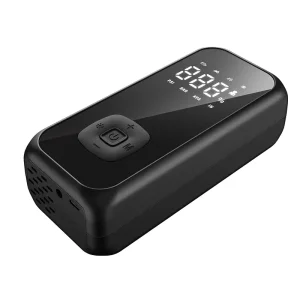
Budget-Friendly SPKSTAR 6000mAh Cordless Tire Pump & Pressure Gauge for German Fleets
- Battery Cell6000mAh Lithium Pack
- Maximum Rating150 PSI / 10.3 BAR Auto-Cut
- Preset ModesCar / Motorrad / Velo / Ball
- Digital ScreenBacklit OLED Metric Display
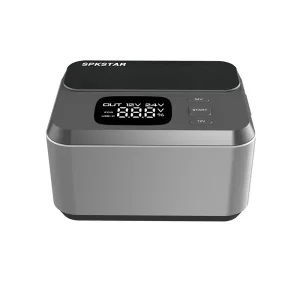
Easy-Maintainable SPKSTAR 12/24V 3000A Supercapacitor Jump Starter for German Trucks
- Dual Voltage12V / 24V Automatic Sensing
- Peak Starting3000A Extreme Amperage
- Engine SupportDiesel Engines up to 13.0L
- Technology100% Battery-Free Ultracapacitor
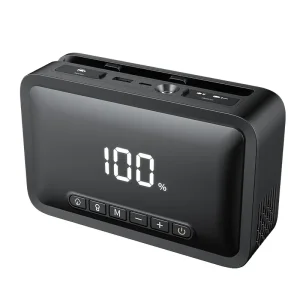
High-Quality SPKSTAR 2-in-1 Emergency Booster with Integrated Air Compressor (Germany Spec)
- Multi-FunctionEmergency Crank + 150 PSI Air
- Power Bank OutUSB-C Fast Power Delivery
- Safety SystemSmart Reverse Polarity Relay
- CertificationsCE / RoHS / FCC Certified
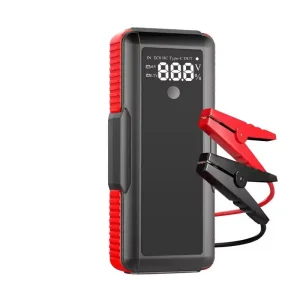
Low-Price SPKSTAR Ultra-Safe 1000A Supercapacitor Booster Pack for European Winters
- Cold RatingCranking down to -40°C Cold
- Rapid Charge180 Sec Weak-Battery Harvest
- Lifespan100,000+ Cycles (10+ Years)
- Chemical SafetyNo Lithium Swelling Risk
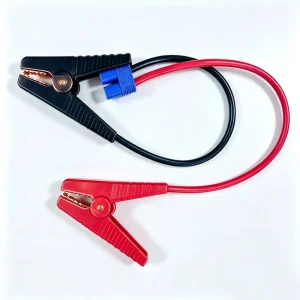
Heavy-Duty SPKSTAR 12V/24V Jump Starter EC8 Alligator Clamps Replacement Parts
- Connector TypeEC8 High-Amp Connection
- Wiring GradeUltra-Flexible 8AWG Silicone
- Clamp PlatingThick Pure Copper Jaw Inserts
- InsulationTPE Fire-Retardant Sleeve
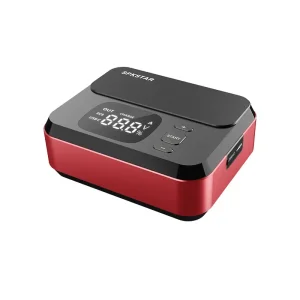
Wholesale SPKSTAR 12V 1500A Supercapacitor Battery Charger & Jump Starter Station
- Peak Output1500A Instant Starting
- Charging InputUSB-C PD 140W Ultra-Fast
- Station Mode10A Battery Maintenance Charge
- DiagnosticsIntegrated Voltage Health Scan
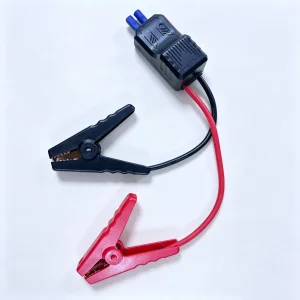
OEM SPKSTAR EC5 Smart Jump Starter Cable with Microcontroller Safety Clamps
- Safety CircuitMCU Controlled MOSFET Relay
- Force BoostManual 0V Deep-Discharge Start
- ProtectionAnti-Spark & Short-Circuit Proof
- ConnectorStandard EC5 Universal Plug
SPKSTAR Precision 12V/24V Industrial Conductance Battery Analyzer (Germany Special Edition)
- Testing Range100 - 2000 CCA / DIN Range
- Internal ResistanceResolution to 0.01 mΩ
- FirmwareGerman / English Dual Interface
- HousingAcid-Resistant Polycarbonate
SPKSTAR Factory Systems vs. European Domestic Reseller Offerings
Comparing electrical tolerances, testing speed, compliance support, and total procurement costs.
| Evaluation Metric | SPKSTAR Shenzhen Direct Factory | German Local Reseller / White-Label Brand |
|---|---|---|
| Direct B2B Pricing Structure | Direct manufacturer baseline pricing; zero distributor tier markups | 150% to 220% markup to cover local European warehousing overhead |
| Firmware & Language Customization | Native German language localized firmware loaded at factory SMT level | Fixed firmware; translations often poorly mapped or English-only |
| Conductance Sensor Precision | Four-wire Kelvin test method with ±1% dynamic variance resolution | Often uses two-wire internal resistance approximation with ±5% error |
| AGM / EFB Stop-Start Profiles | Pre-programmed electrochemical discharge curves for VARTA, Bosch, Moll, Banner | Generic lead-acid calibration that frequently misdiagnoses AGM batteries as failing |
| Lead Times to German Ports | Fast air transit (FRA Airport: 5-7 days) or sea freight (Hamburg Port: 28 days) | Domestic freight (1-3 days), but constrained by frequent local out-of-stock cycles |
| OEM / ODM Tooling Capabilities | Full structural tooling, customized mold colors, customized PCB layout available | Limited to external surface pad-printing and sticker branding only |
Frequently Asked Questions for Sourcing Battery Testers for Germany
Detailed technical and commercial answers for European fleet buyers, automotive importers, and wholesale distributors.
How does conductance testing protect electronic control modules in modern German vehicles?
Modern German vehicles (Audi, BMW, Mercedes-Benz, Porsche, VW) possess between 50 and 120 interconnected Electronic Control Units (ECUs). Traditional carbon pile load testers draw massive burst currents that trigger significant voltage dips, risking EEPROM memory corruption and throwing diagnostic trouble codes (DTCs) across CAN-bus and LIN-bus channels. SPKSTAR conductance testers utilize passive high-frequency micro-pulses that safely scan internal plate conductance without loading or discharging the electrical system, eliminating the need to disconnect the battery terminals during routine testing.
Are SPKSTAR car battery testers compatible with the German DIN norm as well as EN standards?
Yes. The testing firmware integrates full selectable standard matrices: European Standard (EN 50342-1), German Industry Norm (DIN), International Electrotechnical Commission (IEC), Society of Automotive Engineers (SAE), and Japanese Industrial Standards (JIS). Operators simply toggle between DIN (100–1400 DIN) and EN (100–2000 EN) via the intuitive digital menu to match the physical cold-cranking rating printed on the battery's top label.
Can this equipment accurately diagnose Absorbent Glass Mat (AGM) and Enhanced Flooded (EFB) batteries?
Yes. Standard flooded lead-acid batteries have different internal impedance and charge acceptance profiles compared to AGM flat plate, AGM spiral, and EFB designs commonly fitted to start-stop vehicles. Our testers feature discrete testing modes calibrated for the chemical and physical characteristics of AGM and EFB chemistries, ensuring accurate state-of-health (SOH) and internal resistance readouts down to 0.01 milliohms.
What documentation is provided to clear German customs smoothly under EU regulations?
SPKSTAR provides comprehensive European import documentation packages with every shipment, including the formal EU Declaration of Conformity (DoC), verified third-party laboratory test reports for CE-EMC (EN 61326-1) and RoHS Directive (EU 2015/863), accurate Harmonized System code classification (HS 9030.89.00), Commercial Invoices matching your company’s EORI number, and material compliance sheets necessary for German ElektroG (WEEE) registration.
Can we order customized firmware featuring the German language and our company’s brand name?
Yes. As an original equipment manufacturer (OEM/ODM) based in Shenzhen, we support complete firmware customization for qualified wholesale order quantities. This includes a native German-language interface (Deutschsprachige Benutzeroberfläche), customized start-up splash screens featuring your company logo, customized tolerance thresholds, and custom brand packaging and housing colors.
How does SPKSTAR support warranty claims and technical servicing for German clients?
Every commercial-grade product is protected by our standard 12 to 24-month manufacturer warranty. For high-volume German commercial partners and retail distributors, we provide a 1% buffer replacement stock on container shipments to immediately satisfy local workshop returns, alongside rapid air freight dispatch of replacement modular assemblies directly from our Shenzhen manufacturing plant.
Partner Directly with Shenzhen's Leading Automotive Power Electronics Factory
Whether you need pilot samples dispatched via air express to your German facility or full container-load OEM production runs, our engineering and export team responds within 12 hours with complete spec sheets, compliance certificates, and factory-direct pricing.