
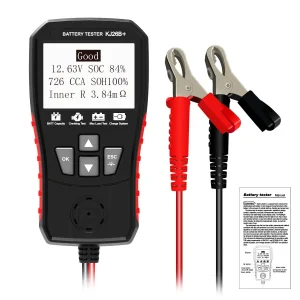
SPKSTAR 12V/24V Digital Automotive Diagnostic Tool & Battery Tester (Jakarta Edition)
- Voltage Range: 12V / 24V Auto-Detect
- Standards: CCA, JIS, DIN, EN, SAE
- Method: Kelvin 4-Wire Conductance
- Application: Bengkel, 4S Dealers, Fleets
Engineered to endure the intense stop-and-go thermal cycles of Jakarta traffic. High-precision Kelvin measurement circuits and supercapacitor booster architectures.
Navigating high ambient humidity, prolonged idling, and commercial fleet electrifications across Southeast Asia's most congested economic core.
The Special Capital Region of Jakarta, together with its industrial satellite hubs in Bogor, Depok, Tangerang, and Bekasi (Jabodetabek), represents one of the world's most concentrated automotive ecosystems. With over 21 million motorized vehicles—spanning passenger cars, commercial light trucks, delivery vans, and high-frequency ride-hailing fleets—the electrical stress placed on starter batteries is unparalleled globally. Jakarta's average ambient daytime temperatures persistently oscillate between 31°C and 35°C, with relative humidity routinely exceeding 80%. When coupled with endemic traffic congestion (the infamous Jakarta macet), under-hood temperatures frequently exceed 70°C.
In traditional vehicle operations, a lead-acid starter battery recharges during continuous cruising. However, in Jakarta's stop-and-go arterial corridors—such as Jalan Sudirman, Gatot Subroto, and the Cikampek logistics highway—alternators spend extensive durations at low-RPM idle while air conditioning, multimedia screens, and electronic control units (ECUs) demand maximum electrical current. This chronic micro-cycling accelerates active plate material degradation, promotes intense electrolyte stratification, and triggers rapid positive grid corrosion. Consequently, car batteries in Jakarta suffer from a shortened functional lifecycle—rarely exceeding 12 to 18 months—compared to a 36-month baseline in temperate markets.
Overland logistics connecting the port of Tanjung Priok with the Cikarang-Karawang industrial corridor depend on uninterrupted transport. A single dead 24V starter battery on a container hauler can choke arterial toll gates, causing cascade logistics delays. Fleets require instant diagnostic conductance testing during routine shift inspections.
From authorized ATPM (Agen Tunggal Pemegang Merek) dealer service bays to tens of thousands of independent repair shops (Bengkel), service technicians are discarding outdated, sparks-inducing resistive load coils in favor of digital handheld conductance testers that generate zero bay heat and protect sensitive vehicle electronics.
Super-apps like Gojek and Grab run hundreds of thousands of operational vehicles across Jakarta. Drivers cannot afford unscheduled downtime. Fleet service depots demand fast SOH (State of Health) and SOC (State of Charge) verification in under 15 seconds to greenlight vehicle deployments each morning.
Why legacy resistive carbon pile testers fail Indonesian safety standards and modern OEM electronic requirements.
For decades, automotive mechanics in Indonesia relied on analog carbon pile load testers. These units function by drawing a massive physical current (typically 100A to 300A) across an internal resistive bank for 10 to 15 seconds while observing needle deflection on an analog voltmeter. In a tropical workshop environment such as Jakarta, where the ambient temperature inside a service stall frequently reaches 38°C with elevated petrochemical vapors, traditional carbon pile testers present severe engineering and safety hazards:
SPKSTAR digital automotive battery diagnostic tools integrate passive high-frequency AC conductance measurement algorithms. By applying a microscopic, high-frequency alternating current signal (typically 100 Hz to 1 kHz) across the battery terminals via a true Kelvin four-wire clamp system, the device measures the plate surface area available for electrochemical reaction without drawing current from the battery.
Conductance is directly proportional to the battery's active surface area and its genuine Cold Cranking Ampere (CCA) capability. Using high-precision 24-bit Analog-to-Digital Converters (ADCs) and on-board ARM Cortex microcontrollers, the tester calculates State of Health (SOH), State of Charge (SOC), dynamic internal resistance down to 0.01 mΩ, and cranking system voltage drop in milliseconds. This non-invasive method generates zero heat, consumes less than 10 mA of parasitic current, and allows continuous back-to-back testing on lead-acid (Standard Flooded, AGM Flat Plate, AGM Spiral, GEL, and EFB Start-Stop) without safety risks.
| Evaluation Parameter | Legacy Carbon Pile Tester | Generic Cheap Multimeter | SPKSTAR Precision Conductance Tester |
|---|---|---|---|
| Measurement Principle | High Current Resistive Discharge (150A+) | Static Open-Circuit Voltage (OCV) | Multi-Frequency AC Conductance (Kelvin 4-Wire) |
| Test Duration | 15 Seconds (Requires cooldown) | Instant (Voltage only) | Under 3 Seconds (Continuous testing) |
| Battery State Depletion | High (Drains 10%–20% capacity) | Zero | Negligible (<0.05% capacity) |
| Diagnostic Metrics | Rough Voltage under Load | Terminal Voltage only | CCA, SOH (%), SOC (%), Internal Resistance (mΩ), Alternator Ripple |
| Safety in Jakarta Bays | High Risk (Thermal sparks, hydrogen hazard) | Safe but Inaccurate | 100% Safe (Spark-proof, Reverse Polarity Guard) |
| Start-Stop (EFB/AGM) Support | Unsuitable (Damages separators) | Unsuitable | Calibrated Algorithms for EFB, AGM & Lead-Acid |
Decoupling supply chain bottlenecks through vertical integration, rapid PCBA prototyping, and custom calibration.
Shenzhen, China has cemented its role as the world's apex epicenter for power electronics, precision instrumentation, and battery management systems (BMS). SPKSTAR's state-of-the-art manufacturing facility in Bao'an, Shenzhen delivers decisive structural advantages for Indonesian importers, automotive brand owners, and logistics enterprises seeking private-label or OEM/ODM battery testing solutions:
Unlike trading entities that rebrand standard boards, SPKSTAR controls schematic design, multi-layer thick-copper PCB layouts, and firmware development. Our software engineers calibrate battery database lookups specifically for Japanese Industrial Standards (JIS D 5301)—which dominate 85% of Indonesia's passenger car park (Avanza, Xpander, Brio, Innova)—alongside DIN, SAE, and EN protocols.
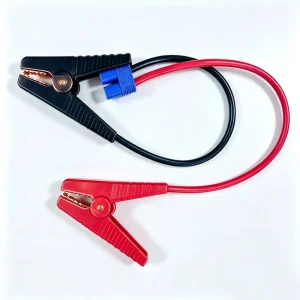
High humidity and corrosive workshop chemical atmospheres degrade consumer-grade plastics quickly. SPKSTAR tools custom ABS/polycarbonate composite housings rated to IP54 standards with oil-resistant overmolding. Heavy-duty copper alligator clamps undergo salt-spray chamber testing exceeding 48 hours to guarantee corrosion immunity in Southeast Asian maritime climates.
Under the ASEAN-China Free Trade Agreement (ACFTA) and Regional Comprehensive Economic Partnership (RCEP), SPKSTAR issues verified Certificates of Origin (Form E). This grants Indonesian importers preferential import duty tariffs—reducing landed customs clearance costs in Tanjung Priok port by up to 10% to 15% compared to non-treaty sourcing regions.
Assuring compliance, safety credentials, and smooth customs clearance for industrial diagnostic hardware.
Successfully importing and distributing electronic testing equipment in Jakarta demands strict adherence to Indonesian statutory requirements. SPKSTAR assists enterprise buyers and distributor partners in qualifying every regulatory tier:
Next-generation battery testers frequently incorporate Bluetooth BLE 5.0 or Wi-Fi modules to beam diagnostic PDF reports directly to workshop management printers, customer smartphones, or cloud fleet databases. Any radio-frequency emitting device distributed in Indonesia must obtain SDPPI (Direktorat Jenderal Sumber Daya dan Perangkat Pos dan Informatika) type approval from the Ministry of Communication and Informatics (Kominfo). SPKSTAR pre-certifies modular RF units with CE RED and FCC ID test reports, drastically compressing the SDPPI paperwork cycle for Indonesian importers.
While basic battery diagnostic hand-tools measuring extra-low voltages (≤24V DC) fall outside mandatory SNI (Standar Nasional Indonesia) electrical safety certification applied to grid-connected appliances, heavy commercial workshop equipment, combination battery chargers, and supercapacitor booster units must comply with electromagnetic compatibility (EMC) standards (IEC 61000-6 series) and CE-EMC directives. SPKSTAR provides verified lab documentation verifying our products produce zero interference with modern CAN-bus, LIN-bus, and vehicle ECU networks.
For state-owned transportation enterprises such as TransJakarta bus fleets or mining tenders in outer islands managed from Jakarta corporate offices, local content requirements (TKDN - Tingkat Komponen Dalam Negeri) are increasingly scrutinized. SPKSTAR supports domestic Indonesian assemblers by offering Semi-Knocked Down (SKD) and Completely Knocked Down (CKD) procurement models, unbundled PCBA supply, and custom firmware localized in Bahasa Indonesia to empower partners to achieve local value-addition thresholds.
From port logistics to automated dealership service lanes, reliable battery testing prevents operational bottlenecks.
Brands like Toyota-Astra Motor, Honda Prospect Motor, and Mitsubishi Motors mandate documented battery warranty audits. Technicians use digital conductance testers to generate verifiable printouts showing SOH%, SOC%, and cell voltage before approving warranty battery replacements under factory guarantee.
With hundreds of express service centers across Jakarta, technicians perform complimentary 30-second battery health checks during routine oil changes. Using intuitive colored LED indicators and clear Bahasa prompts, workshops convert routine diagnostic inspections into transparent battery retail sales.
Jakarta's Bus Rapid Transit (BRT) system operates thousands of diesel and compressed natural gas (CNG) buses running dual 12V (24V total) heavy-duty flooded and AGM batteries. Regular starter draw analysis and alternator ripple voltage testing prevent catastrophic commuter service disruptions during peak morning rushes.
How electrification and connectivity are transforming Jakarta's automotive maintenance paradigm.
Indonesia is accelerating rapidly toward electric mobility, driven by government incentives, local nickel processing policies, and the proliferation of electric passenger cars (such as Wuling Air EV, Hyundai Ioniq 5, and BYD models) throughout Jakarta. A widespread misconception among workshop owners is that electric vehicles eliminate the need for 12V battery testers.
In reality, every Electric Vehicle utilizes an auxiliary 12V low-voltage battery (typically AGM or small lithium chemistry) to power the main Electronic Control Units (ECUs), dashboard instrumentation, high-voltage traction battery contactors, and ADAS safety systems. If the 12V auxiliary battery drops below critical voltage, the high-voltage pack cannot close its relays, effectively bricking the EV even if the traction battery is 100% full. In Jakarta's extreme heat, auxiliary EV batteries suffer identical thermal degradation cycles. Modern SPKSTAR diagnostic instruments include dedicated EV 12V auxiliary testing modes with refined voltage thresholds to protect sensitive electric drive controllers.
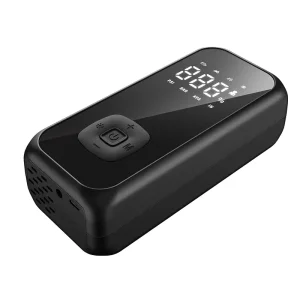
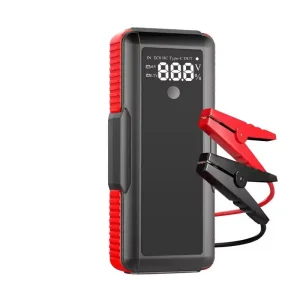
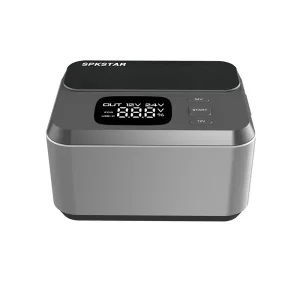
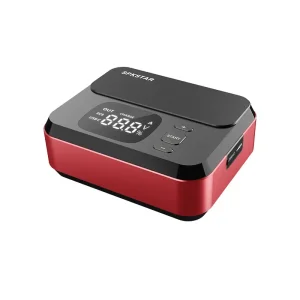
Furthermore, integration with Supercapacitor Energy Storage represents the vanguard of workshop emergency technology. Traditional lithium jump starters degrade rapidly if left in a hot glovebox or service trunk in Jakarta, with lithium pouch cells swelling under 60°C heat. Supercapacitor booster platforms, by contrast, contain zero volatile chemical electrolytes. They charge in under three minutes from a limp, discharged vehicle battery (harvesting residual 8V–10V energy) and crank the engine instantly with up to 3000A of peak current. With a rated lifespan exceeding 100,000 cycles and absolute thermal stability up to 70°C, supercapacitor systems are rapidly replacing lithium boosters across Indonesian roadside rescue fleets.
Factory-direct OEM/ODM solutions ready for Indonesian wholesale distribution, private labeling, and fleet deployment.

Key technical specifications professional procurement managers must audit before placing container-scale orders.
| Evaluation Parameter | Commercial Minimum Requirement | SPKSTAR Industrial Specification | Strategic Business Impact |
|---|---|---|---|
| Testing Accuracy | ± 10% CCA Margin | ± 2% Across Full JIS / DIN Range | Eliminates false warranty battery replacements in 4S dealer lanes. |
| Testing Cable Architecture | Single-Core Copper Coated Steel (CCS) | Pure Copper 4-Wire True Kelvin System | Cancels cable lead resistance; accurate down to 0.01 mΩ internal resistance. |
| Thermal Operating Window | 0°C to 40°C (Consumer grade) | -20°C to +70°C (Industrial automotive) | Prevents screen fading and internal ADC thermal drift in 38°C Jakarta bays. |
| Reverse Polarity Protection | Sacrificial Fuse (Requires replacement) | Solid-State Auto-Reset MOSFET Relay | Zero downtime or clamp destruction when mechanics misconnect in dark bays. |
| Firmware Localization | English Only | Bahasa Indonesia, English, Dual-Language | Empowers entry-level Bengkel technicians, reducing operational error rates. |
Technical and commercial answers addressing common inquiries from automotive importers, fleet managers, and aftermarket brands.
Jakarta combines extreme ambient tropical heat with dense urban traffic congestion. Prolonged stop-and-go driving keeps alternators at low idling speeds, preventing full recharge cycles while air conditioning and vehicle electronics draw heavy currents. This leads to chronic acid stratification, rapid plate sulfation, and accelerated positive grid corrosion, causing batteries to fail within 12 to 18 months.
Standard two-wire testing introduces contact and cable resistance into the measurement loop, distorting battery health calculations. A true Kelvin 4-wire configuration sends an alternating current signal through one pair of leads and measures the voltage drop through an independent second pair. This isolates the internal electrochemical resistance of the battery, delivering accuracy down to ±0.01 mΩ.
Yes. Over 85% of vehicles in Indonesia utilize JIS standard batteries (e.g., 34B19R, 46B24L, 55D23L, 80D26L, 105D31L). SPKSTAR firmware contains native, pre-programmed lookup tables that map exact JIS code designations to their corresponding factory Cold Cranking Ampere (CCA) ratings, ensuring accurate evaluations for Toyota, Honda, Daihatsu, and Suzuki models.
Yes. Under Kominfo regulations, any diagnostic tool incorporating radio frequency transceivers (Bluetooth BLE or Wi-Fi) must obtain SDPPI type approval prior to customs clearance in Indonesia. SPKSTAR facilitates this process by utilizing pre-certified RF modules with complete CE RED and FCC compliance dossiers, accelerating local lab approvals.
Yes. Start-stop micro-hybrid vehicles utilize Enhanced Flooded Batteries (EFB) or Absorbent Glass Mat (AGM) technologies with distinct internal impedance characteristics. SPKSTAR testers include dedicated algorithms that evaluate EFB and AGM plates with tailored conductance thresholds, avoiding the false "Replace Battery" errors common with generic testers.
SPKSTAR offers agile OEM cooperation models. Standard logo laser marking or screen printing is available at low MOQs (from 200–500 units), while fully customized injection-molded colorways, bespoke packaging, and localized Bahasa Indonesia firmware menus are supported at 1,000 to 2,000 units.
Under the ASEAN-China Free Trade Agreement, imports into Indonesia accompanied by a valid Form E Certificate of Origin enjoy preferential zero or reduced import duties. SPKSTAR prepares official Form E documentation with precise HS Code classification (typically 9030.33.00 for electrical testers), significantly reducing import costs.
Lithium battery packs stored in commercial vehicle cabs or road-rescue vans degrade rapidly under tropical heat (temperatures exceeding 55°C inside closed vehicles in Jakarta), creating severe fire and swelling risks. Supercapacitors operate without internal chemical reactions, function reliably from -40°C to +70°C, recharge in 3 minutes, and provide over 100,000 maintenance-free cycles.