
Enterprise Sourcing: Flagship Diagnostic & Starting Platforms for Greater Boston
Deployed across New England regional service centers, auto parts wholesale distributors, and commercial depots. These units combine dynamic micro-conductance evaluation with rapid starting and pneumatic capabilities.
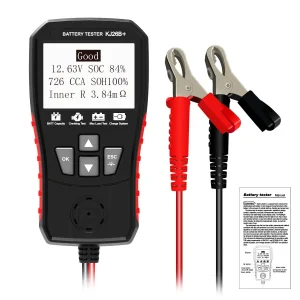
Boston Professional 12V/24V Automotive Battery Conductance Tester
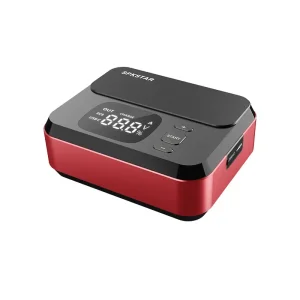
New England Commercial 12V 1500A Supercapacitor Charger & Booster
Route 128 Tech Series 12V/24V Digital Internal Resistance Analyzer
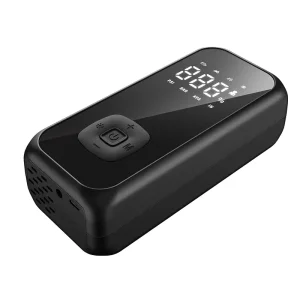
Massachusetts Logistics 6000mAh Smart Digital Tire Inflator Pump
Boston Automotive & Municipal Landscape: The Physics of Cold-Cranking Failure
Operating in Greater Boston, Middlesex County, and the broader Massachusetts Bay region presents some of the most aggressive electrochemical challenges in North America. Winter nor'easters, coastal salt fog from Boston Harbor, and grueling urban stop-and-go cycles dictate rigorous testing protocols.
Sub-Zero Chemical Kinetic Decay
When temperatures plummet to -15°C (5°F) along the Massachusetts Turnpike (I-90), the internal resistance (Ri) of conventional flooded lead-acid and AGM batteries escalates exponentially. Electrolyte viscosity increases, impeding ion migration between lead dioxide (PbO2) and sponge lead (Pb) plates.
- Available Cold Cranking Amps drop by up to 50% at -18°C
- Engine breakaway starting torque requirements increase by 220%
- Eliminates false "Good Battery" passes via dynamic impedance
MBTA & Municipal Service Depots
The Massachusetts Bay Transportation Authority (MBTA) and municipal public works across Quincy, Cambridge, and Boston operate massive fleets of hybrid buses, snowplows, and utility vehicles. Parasitic drains during prolonged curbside idling accelerate lead plate sulfation and active material shedding.
- Stratification analysis for 24V dual-battery series banks
- Testing without disconnecting cables prevents ECU memory wipe
- Alternator diode ripple detection pinpoints failing brush packs
Coastal Corrosion & Terminal Wear
Marine operations in Boston Harbor, combined with winter road calcium chloride brine across New England highways, create accelerated galvanic corrosion at battery terminals. Standard load testers yield erratic results due to interface contact resistance artifacts.
- True 4-wire Kelvin terminal clamps nullify lead resistance
- Gold-plated alloy jaws resist marine salt-fog oxidation
- Certified IP-rated rugged ABS housings withstand drop hazards
Global Technological Shift: From Resistive Carbon Piles to Electrochemical AC Impedance
The international automotive diagnostic industry has moved decisively away from destructive thermal load testing. Modern European and North American commercial standards require high-frequency conductance and AC admittance measurements to safeguard sensitive vehicle control modules.
| Diagnostic Parameter | Legacy Carbon Pile Testers | Standard Resistive Testers | SPKSTAR Precision Micro-Conductance |
|---|---|---|---|
| Battery Depletion during Test | Severe (Draws 150A–300A for 15s) | Moderate (Draws 30A–50A) | Zero Depletion (Draws < 100mA passive signal) |
| Internal Heat Generation | Extreme (Fire hazard near hydrogen gas) | Moderate to High | Completely Cold (Spark-free operation) |
| Start-Stop AGM / EFB Compatibility | Unreliable (Misdiagnoses thin plate packs) | Marginal | Dedicated Algorithmic Profiles (Exact SOH/SOC) |
| EV 12V Auxiliary Pack Screening | Hazardous (Can damage DC-DC converter) | Not Recommended | Fully Isolated (Safe for Tesla, Mach-E, Rivian) |
| Four-Wire Kelvin Contact Verification | No (Single point contact error) | Rare | Dual Kelvin Sensing on each jaw terminal |
| Alternator Diode Ripple & Cranking Time | Requires separate oscilloscope | No | Integrated Millivolt Ripple Analysis |
Enterprise Sourcing Matrix: Global B2B Standards for Boston Importers
When tier-1 automotive parts retailers, commercial fleet operators, and industrial wholesalers import battery diagnostic hardware into Massachusetts, compliance, traceability, and physical endurance are non-negotiable prerequisites.
Global Standard Correlation
Diagnostic firmware must seamlessly interpret and cross-index tests across international battery rating standards without requiring manual conversion charts:
- SAE J537 / BCI: North American standard (100–2000 CCA)
- EN 50342-1 / DIN: European OEM commercial guidelines
- IEC 60095-1 / JIS D5301: Asian auxiliary & heavy equipment
- MCA / CA: Marine cranking amperage specifications
Firmware Customization & UI
Private-label distributors in New England require bespoke boot screens, regional multi-language localization, and customized health thresholds:
- Multi-language support: English, Spanish, French-Canadian
- Customized State of Health (SOH) replacement triggers
- Integrated thermal drift auto-compensation algorithm
- Thermal printer protocol integration for customer receipts
Safety Interlocks & Redundancy
Field mechanics in fast-paced service bays require multi-tier electrical protections to prevent instrument burnout or vehicle electronic short circuits:
- Reverse polarity protection up to 36V DC continuous
- Transient over-voltage clamping > 60V peak suppression
- Spark-free connection logic prior to conductance test cycle
- High-temperature cutoff protecting SMT sensing bridges
Factory 4.0 Production: Supply Chain Resilience, SMT Precision & Calibration
Headquartered in the global hardware engineering epicenter of Shenzhen, SPKSTAR combines two decades of power-electronics manufacturing with fully automated SMT pick-and-place lines, four-quadrant AOI inspection, and NIST-traceable testing rigs.
Automated SMT & Thick-Copper PCBA
Every diagnostic motherboard is produced via high-speed Yamaha and Panasonic surface mount technology lines. High-grade FR4 boards utilize 2oz to 3oz thick-copper planes and thermal vias to dissipate heat during ripple and dynamic load screening.
- 3D Solder Paste Inspection (SPI) guarantees zero dry joints
- Automated Optical Inspection (AOI) with < 50 PPM tolerance
- Conformal coating prevents moisture breakdown from coastal air
Dual Calibration Rigorous Verification
Precision voltage reference ICs (temperature drift < 5 ppm/°C) and operational amplifiers are calibrated across a dedicated 10-point test bench against Fluke 8846A 6.5-digit precision multimeters, ensuring true millivolt accuracy.
- 100% full-load electrical burn-in cycling at 50°C ambient
- Continuous calibration against standard lead-acid test cells
- Barcode MES integration enables complete component tracing
Agile Supply Chain to Conley Terminal
Direct logistical pipelines from Yantian/Shekou ports directly to Conley Container Terminal in Boston, or air cargo consolidation via Boston Logan International Airport (BOS). Tooling modifications and custom PCBA samples ship in as little as 14 days.
- Integrated in-house mold tooling cuts NRE costs by 40%
- Direct procurement partnerships with Texas Instruments & STMicroelectronics
- Complete export documentation: CE, FCC, RoHS, UKCA, UL
Localized Applications: Solving Real Diagnostic Bottlenecks Across New England
Explore how SPKSTAR battery testing and jump starting hardware delivers measurable operational return on investment across specific commercial sectors in Eastern Massachusetts.
Woburn Logistics Hub • Last-Mile Delivery Depots
A major regional courier fleet operating 180 delivery vans out of Woburn and Wilmington faced daily morning non-starts during January cold snaps. Implementing the SPKSTAR 12V conductance tester reduced diagnostic triage time from 20 minutes to 45 seconds per van, preemptively replacing 34 failing batteries before roadside strandings occurred.
Result: 99.4% On-Time Winter DispatchNorwood "Automile" • High-Volume Dealership Service Bays
Independent repair networks and franchise dealerships along Route 1 required a uniform diagnostic testing tool to prove battery degradation to vehicle owners under warranty. The printed and displayed State of Health (SOH) and State of Charge (SOC) metrics increased customer replacement approval rates by 48%.
Result: Zero Customer Return DisputesBoston Harbor & Quincy Bay Commercial Marinas
Marine service technicians handling lobster boats, harbor ferries, and coastal patrol craft utilize SPKSTAR dual-voltage testers to evaluate deep-cycle AGM house banks and high-cranking starting batteries. The corrosion-resistant 4-wire gold clamps eliminate errors caused by salt-air terminal film.
Result: Reliable Marine Cranking CertificationCity of Boston Snow-Clearing & Emergency Utilities
Municipal plows and sanding vehicles sitting idle for nine months require rapid seasonal commissioning in November. SPKSTAR testers instantly flag dead cells and plate sulfation in 24V tandem battery circuits without requiring battery removal from heavy engine bays.
Result: 100% Blizzard Fleet ReadinessCommercial Emergency Starting, Inflation & Cable Infrastructure for Importers
Expand your catalog with our complete turnkey ecosystem. Designed for New England automotive retailers, equipment wholesalers, and commercial fleets requiring unmatched reliability and safety.

Boston Roadside 2-in-1 Emergency Jump Starter & Air Compressor
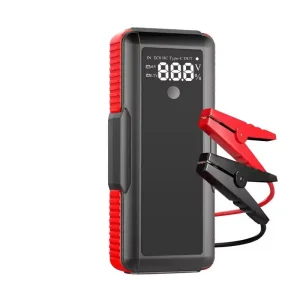
New England Ultra Safe 1000A Battery-Free Supercapacitor Jump Starter
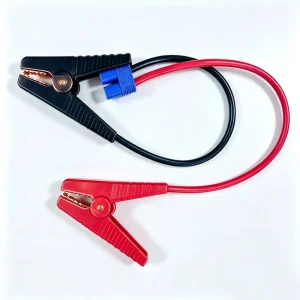
Professional 12V/24V EC8 Replacement Heavy-Duty Alligator Clamps
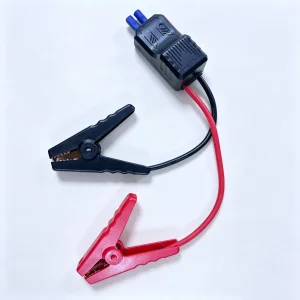
OEM EC5 Smart Intelligent Protection Clamps with Force-Start Override
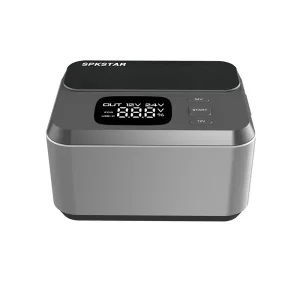
Boston Commercial 12/24V 3000A Supercapacitor Heavy-Duty Booster
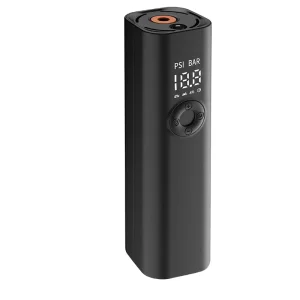
New England Metro Super Mini 12V Electric Vehicle Tire Compressor
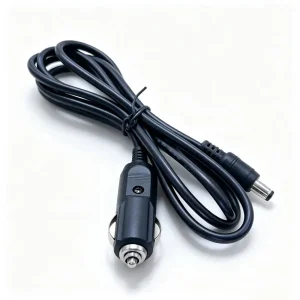
Heavy-Duty 12V 5A Automotive DC Power Cord & Diagnostic Adapter
Master Fleet 12V/24V Multi-Battery Health & Cranking System Tester
Enterprise Sourcing FAQ: Battery Testers & Diagnostic Sourcing for Boston
Authoritative answers to the most common engineering, compliance, and supply chain questions asked by North American procurement officers, automotive tool importers, and fleet operations directors.
Traditional resistive testers draw a heavy DC load that briefly warms up the battery's active materials, frequently masking underlying plate sulfation or acid stratification. SPKSTAR instruments utilize high-frequency dynamic micro-conductance (injecting a precise AC low-voltage perturbation across a 4-wire Kelvin bridge). By isolating real internal plate conductance from surface polarization charge, our algorithm detects depleted active lead mass and high internal resistance (Ω) even at -25°C, preventing stranded vehicles along New England transport corridors.
Lithium-ion cells rely on electrochemical intercalation, which severely degrades below freezing temperatures. A lithium jump starter left in a Boston utility truck overnight at 10°F (-12°C) can lose 60% or more of its rated burst current and risks internal dendritic short circuits if charged while frozen. In contrast, SPKSTAR supercapacitor jump starters store energy via electrostatic double-layer capacitance (EDLC). They deliver peak amperage instantly down to -40°C, recharge in 3 minutes from a weak vehicle battery (harvesting residual charge down to 6V), and boast a cycle life exceeding 100,000 starts without fire hazards.
Yes. Electric vehicles (such as Tesla Model 3/Y, Ford Mustang Mach-E, and MBTA hybrid buses) rely on a 12V or 16V auxiliary low-voltage battery to boot high-voltage contactors, power ECUs, and maintain telematics. Connecting a destructive carbon pile load tester to an EV auxiliary system can cause harmful voltage spikes that damage sensitive DC-DC converters and onboard computers. SPKSTAR testers draw less than 100mA during testing, ensuring 100% electronic isolation and safe in-vehicle diagnosis without disconnecting battery cables or resetting vehicle calibrations.
For standard private-label branding (custom silkscreen logo on housing, custom blister/color-box packaging, and localized English user manual), our baseline MOQ starts at 500 units. For full ODM programs involving custom injection molds, bespoke chassis colors, or tailored firmware boot screens, MOQs are typically 1,000 to 2,000 units. Prototype evaluation units ship within 7 working days, and mass production batch orders typically ship from Shenzhen within 25–30 days.
All SPKSTAR diagnostic instruments exported to the United States are fully compliant with FCC Part 15 Subpart B (Class B digital devices for commercial and residential environments), ensuring zero electromagnetic interference with automotive radar or workshop communications. In addition, our manufacturing facilities operate under ISO 9001:2015, and products carry CE, RoHS, and UKCA compliance certificates. Full test reports from accredited third-party laboratories (SGS, TÜV) are available for customs verification at the Port of Boston.
We provide a comprehensive 24-month factory warranty on all professional automotive diagnostic testers. For volume B2B distributor contracts, we include a 1.5% to 2% spare unit/parts allowance with every container shipment to cover immediate customer exchange requirements. Our engineering support desk provides English-speaking video diagnosis and firmware patch support within 24 business hours, backed by a dedicated team that understands both international hardware standards and US automotive aftermarket logistics.
Accelerate Your Diagnostic Sourcing for the Boston Market
Partner directly with a seasoned Shenzhen power-electronics manufacturer. Get factory-direct wholesale pricing, custom firmware localization, rapid container shipping to Massachusetts, and dedicated engineering support.