
Enterprise Diagnostics & Roadside Readiness Hardware
Pre-cleared and immediately available for Silicon Valley tech shuttles, Port of Oakland logistics tractors, municipal maintenance depots, and commercial workshop integration.
Commercial & Fleet Electrification Realities Across Greater San Francisco
Understanding the severe electrical and mechanical stresses placed upon 12V/24V auxiliary and starting topologies within the dense urban and micro-climatic corridors of Northern California.
Micro-Climates & Marine Layer Galvanic Degradation
San Francisco’s coastal marine layer brings saline, high-humidity fogs that accelerate oxidation across lead terminals and copper ground straps. Conventional open-circuit voltage tests fail to register micro-ohmic contact impedance.
- Persistent 85%+ relative humidity cycling from the Pacific Ocean
- Galvanic corrosion between battery terminal posts and cable lugs
- False capacity readings from passive voltage-drop tests
- Requirement for dynamic multi-point conductance measurement
The EV/AV Low-Voltage Auxiliary Crisis
The San Francisco Bay Area hosts the highest density of Battery Electric Vehicles (BEVs) and Autonomous Vehicles (AVs) in North America. When 12V auxiliary lead-acid or LiFePO4 batteries fail, high-voltage traction contactors cannot engage.
- High continuous quiescent parasitic draw from LiDAR, radar, and compute stacks
- Deep discharge cycling not observed in internal combustion engines
- Catastrophic system lockouts resulting from undetected 12V battery failure
- Need for specialized SOH (State of Health) diagnostic verification
Severe Grade Dynamic Start-Stop Depletion
San Francisco's iconic 15% to 31% street grades demand repeated extreme stop-and-go duty cycles. Delivery vans, parcel couriers, and muni vehicles subject auxiliary starter systems to relentless cyclic discharge.
- Accelerated grid corrosion and active material shedding
- Rapid sulfation in traditional flooded starter batteries
- Intermittent starter solenoid contact weld failures
- Demands for ruggedized 12V/24V high-amperage boost capability
Precision Conductance Diagnosis vs. Legacy Carbon Pile Load Testing
Why modern automotive electronic architectures prohibit brute-force resistive load testing, and how SPKSTAR’s AC impedance conductance algorithms protect sensitive ECUs across 12V and 24V bus networks.
The Shift from Thermal Discharge to Micro-Signal Conductance Profiling
For decades, commercial fleet shops in California relied on carbon pile load testers, which draw 300 to 500 amperes of direct current from the battery to monitor terminal voltage drop. While adequate for older mechanical diesel engines, carbon pile testing introduces severe thermal stress, hazards explosive outgassing of hydrogen gas in enclosed service bays, and strips remaining charge from already depleted batteries.
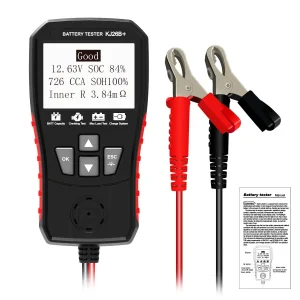
SPKSTAR digital automotive diagnostic tools employ high-frequency AC conductance technology (utilizing Kelvin 4-wire micro-ohmic Kelvin bridge sensing). By injecting an ultra-low amplitude, high-frequency AC test signal across the battery plates, the processor measures the effective plate surface area available for chemical reaction. The resulting conductance measurement directly maps to Cold Cranking Amps (CCA), internal resistance in milliohms (mΩ), and true State of Health (SOH) without generating sparks, surface heat, or electronic voltage transients that corrupt CAN bus networks.
| Diagnostic Parameter | Legacy Carbon Pile Load Testers | SPKSTAR Precision Digital Conductance Analyzer |
|---|---|---|
| Discharge Energy Draw | Extreme (300A–600A drawn for 15 seconds) | Negligible (<10mA AC signal, zero battery depletion) |
| Safety & Bay Hazards | Severe sparking risk, hydrogen ignition risk | Intrinsically spark-free, reverse polarity safeguarded |
| ECU & Sensor Protection | High risk of voltage spikes during disconnection | 100% safe for active EV/HEV low-voltage buses and ECUs |
| Testing Cold/Discharged Cells | Inoperable on batteries discharged below 75% SOC | Accurate down to 15% SOC without pre-charging requirement |
| Multi-Chemistry Adaptability | Poor; calibrated primarily for flooded lead-acid | Pre-programmed algorithms for AGM, Gel, EFB, and Spiral |
| Testing Cycle Duration | 2–3 minutes with required cooldown interval | Instantaneous readouts in less than 3 seconds |
Enterprise Solutions for Northern California Supply Chain Corridors
Scalable preventative maintenance and power continuity frameworks configured for regional transit networks, Class 8 clean-drayage operations, and high-uptime logistics hubs.
Autonomous Mobility & Robo-Taxi Depots
San Francisco serves as the global proving ground for commercial autonomous mobility fleets. SPKSTAR provides automated low-voltage test equipment and supercapacitor start modules that guarantee 99.98% depot dispatch reliability.
- Immediate detection of auxiliary plate degradation
- Elimination of lithium-based booster pack fire hazards in indoor staging
- Customized firmware configurations for autonomous vehicle fleets
Intermodal Port Drayage (Port of Oakland)
Class 8 heavy diesel and newly mandated hydrogen fuel cell/electric port tractors operate under stringent CARB idling and zero-emission requirements. Starting system failures halt container operations across the Bay Area shipping lanes.
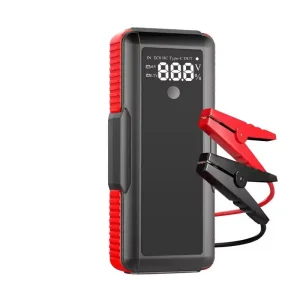
- Heavy-duty 12V/24V dual-voltage commercial starting packs (3000A peak)
- Cranking capability for heavy-displacement diesel engines up to 13.0L
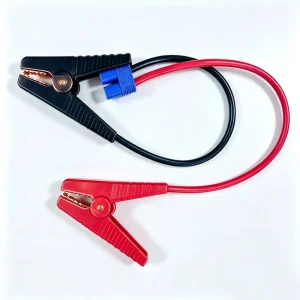
- EC8 high-ampacity braided copper silicone jumper harness assemblies
Municipal Transit & Emergency Utility Vehicles
SFMTA cable car support utilities, municipal water emergency trucks, and regional power utilities require tools certified for immediate deployment in damp, adverse operating environments.
- Ruggedized IP65 casing structures resistant to oil, grime, and water ingress
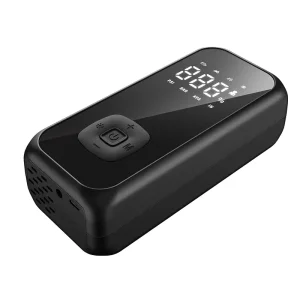
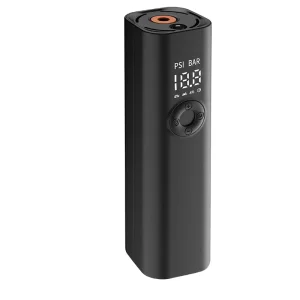
- Integrated digital tire inflation pumps delivering 150 PSI continuous power
- Zero battery maintenance: supercapacitors hold charge without shelf aging
California Compliance, CEC Title 20 & Environmental Assurances
Full statutory alignment with California state law, local municipality environmental mandates, and occupational workplace safety protocols for fleet and warehouse staging.
CEC Title 20 Appliance Efficiency
All SPKSTAR integrated charging systems, power supplies, and battery chargers strictly adhere to California Energy Commission (CEC) Title 20 efficiency regulations, limiting standby power consumption to less than 0.5W in non-charging operational states.
Safe Harbor Prop 65 Verification
All enclosures, silicone cables, smart alligator clamps, and structural polymers are formulated in certified non-toxic grades, fully compliant with California Safe Drinking Water and Toxic Enforcement Act (Proposition 65) limits on phthalates and heavy metals.
Cal/OSHA Zero Chemical Thermal Runaway
Unlike chemical lithium booster packs, which require special hazmat staging under California Occupational Safety and Health Administration (Cal/OSHA) fire prevention rules, our electrostatic supercapacitors carry zero thermal runaway fire risk.
Automotive Power Electronics & Diagnostics Roadmap (2025–2030)
How SPKSTAR is pioneering hybrid supercapacitor-graphene storage topologies, cloud-integrated predictive telematics, and high-voltage auxiliary isolation architectures.
Phase 1: Graphene Supercapacitor Hybrids
By engineering multi-walled carbon nanotube (MWCNT) graphene electrodes into our ultracapacitor cells, energy density increases by 320% while retaining instant discharge capability down to -40°C. This allows ultra-compact form factors capable of starting 16-liter industrial power plants.
Phase 2: Cloud Telematics & Predictive SOH
Future diagnostic units will feature Bluetooth Low Energy (BLE 5.3) and NB-IoT modems that broadcast battery conductance, state of charge, and alternator ripple parameters directly to centralized fleet management platforms (Samsara, Geotab) across Bay Area control rooms.
Phase 3: High-Voltage Isolated Auxiliaries
As commercial commercial vehicle platforms migrate toward 48V auxiliary systems and 800V tractive architectures, SPKSTAR is finalizing galvanic isolation test barriers capable of testing 12V/24V/48V systems with up to 3,000V DC breakdown isolation protection.
Enterprise Sourcing & Technical Queries for the San Francisco Market
In-depth responses regarding regional logistics, certification testing, warranty enforcement, and OEM/ODM engineering customization.
Unlike internal combustion starter batteries that only crank engines for brief intervals, EV and hybrid 12V auxiliary batteries power critical continuous loads including safety ECUs, high-voltage battery management system (BMS) pre-charge contactors, braking boosters, and drive-by-wire controls. Conductance testing injects an ultra-low non-destructive AC test signal to evaluate internal active plate surface area. This identifies degraded capacity and high internal resistance without causing voltage drops or electrical transients that could reset vehicle microcontrollers.
Supercapacitors store energy physically via an electrostatic double-layer (EDLC) rather than through chemical reactions. When connected to a discharged vehicle battery that lacks the cranking amperage to turn the starter (e.g., resting at 9V or 10V), the SPKSTAR booster pack harvests and concentrates the residual charge into its supercapacitors within 2 to 3 minutes. It then discharges up to 3000A of peak starting current in a high-velocity burst to start the engine, eliminating the need to pre-charge the booster pack months in advance.
Yes. All SPKSTAR automotive accessories, testers, and jump starters manufactured for the Northern California and broader North American market comply with California Energy Commission (CEC) Title 20 appliance standards, Proposition 65 requirements, FCC Class B electromagnetic interference rules, and RoHS directives. Formal laboratory certificates and material declarations are available for municipal procurement and compliance validation.
Core accessory SKUs, smart diagnostic tools, and emergency supercapacitors are stocked locally for immediate priority courier dispatch across San Francisco, South San Francisco, San Jose, and the East Bay. For volume custom OEM/ODM production (custom branding, specialized firmware, bespoke clamp assemblies, and retail packaging), direct factory fulfillment through our ISO-certified Shenzhen facility carries standard lead times of 18 to 25 business days, with direct shipping available into the Port of Oakland or air cargo via SFO.
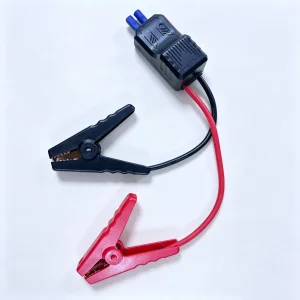
Our EC5 and EC8 smart alligator clamp harnesses integrate heavy-duty solid-state MOSFET and mechanical relay protection circuits. If a technician accidentally connects the clamps in reverse polarity (positive to negative), the integrated microcontroller detects the inverted potential within microseconds and blocks current flow, accompanied by an audible warning buzzer and flashing visual LED. Additional safety features include over-voltage, short-circuit, anti-spark, high-temperature, and reverse-charge protection.
Full Catalog Accessories In Stock for San Francisco Fulfillment
Comprehensive heavy-duty supercapacitor packs, smart jump cables, precision 12V/24V battery diagnostic instruments, and digital inflation units engineered for peak duty cycles.


Connect with SPKSTAR Power Electronics Engineering
Whether configuring high-volume OEM/ODM automotive diagnostic production, establishing custom PCBA firmware, or securing dedicated stock for San Francisco commercial fleet maintenance, our technical team is ready to assist.
Send Inquiry Now