In-Stock Automotive Diagnostic & Emergency Systems
Explore high-demand commercial load test battery testers, heavy-duty smart clamps, and ultra-safe supercapacitor cranking platforms available for rapid FOB/CIF dispatch.
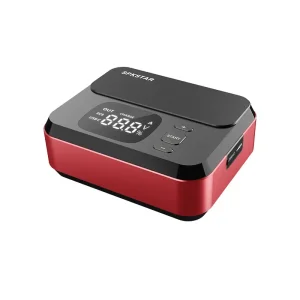
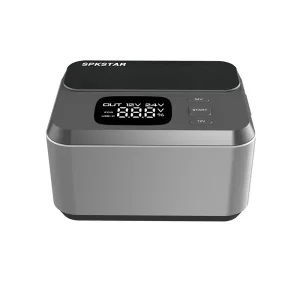
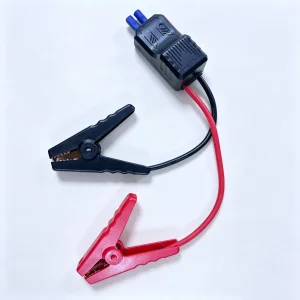
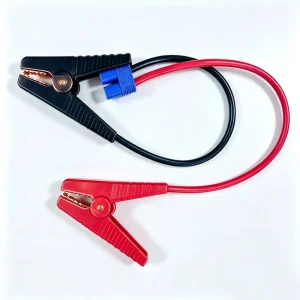
Engineering Load Test Battery Testers: From Static Conductance to Dynamic Load Profiling
Evaluating real internal resistance, electrochemical health, and true cranking current capabilities across modern automotive and industrial storage systems.
Battery diagnostics have undergone a radical transformation over the last two decades. Conventional passive multimeter readings—relying purely on Open Circuit Voltage (OCV)—consistently fail to identify internal plate sulfation, active material shedding, and high-impedance inter-cell interconnects. When automotive engineering teams and commercial fleet operators evaluate energy retention under real-world cranking stresses, true load test battery tester hardware provides the only authoritative benchmark.
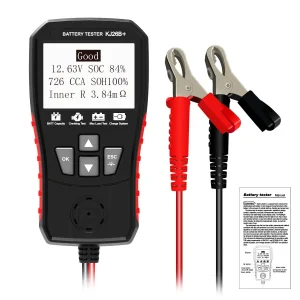
Unlike standard battery conductance testers that inject tiny high-frequency AC signals to approximate internal resistance without placing significant stress on the plates, dynamic load testers introduce a calibrated resistive load (typically between 50A and 500A for 12V and 24V starter systems). This allows the diagnostic microprocessor to evaluate voltage dip, rebound speed, and voltage drop under instantaneous high-amp conditions. Sourcing reliable, calibrated load testing equipment is critical for tier-1 distributors, aftermarket service networks, and industrial fleet depots.
Simulated Cranking Stress Analysis
Real-time dynamic discharge simulation places 100A to 300A resistive loads directly across battery terminals to assess cold cranking amp (CCA) capability under actual starter-motor current draw conditions.
Kelvin 4-Wire Impedance Measurement
Equipped with dedicated dual-core Kelvin sensing alligator clamps, eliminating contact resistance and lead impedance to ensure sub-milliohm testing accuracy across flooded, AGM, GEL, and EFB chemistries.
Alternator Diode Ripple & Starter Tests
Integrated microprocessors analyze cranking profile dropouts, starter relay resistance, and charging ripple output to isolate stator degradation, worn diodes, and charging regulator faults before road failures occur.
Why Tier-1 Global Brands Source Battery Testers from Shenzhen, China
Shenzhen's deep electronic supply chains, robust precision toolmaking, and mature automotive electronics ecosystem deliver unmatched production velocity and quality assurance.
Vertically Integrated Hardware Engineering
From custom SMT PCB assembly and thick-copper high-current power boards to CNC mold creation, Shenzhen factories eliminate subcontractor markup, yielding rapid turnaround on bespoke housings and user interfaces.
Stringent Multi-Standard Compliance
Leading manufacturers maintain compliance rigs certified to CE, FCC, UL, UKCA, and RoHS standards. Automated burn-in chambers, load cycle life tests, and ESD immunity testing protect brand reputations abroad.
Agile MOQ & Turnkey OEM/ODM Customization
Whether adapting private-label branding, rewriting custom firmware for local cold-cranking rating systems (EN, DIN, SAE, CCA, JIS, IEC, CA), or developing unique retail packaging, China's manufacturing clusters allow low-risk pilot-to-scale rollouts.
Emerging Technology Trends in Automotive Diagnostic Instruments
The battery diagnostic landscape is moving rapidly toward intelligent multi-chemistry monitoring, IoT cloud tracking, and hybrid high-current discharge testing algorithms.
Bluetooth BLE 5.0 & Cloud Diagnostic Telematics
Modern testing units feature wireless synchronicity with mobile apps and cloud servers, enabling fleet managers to aggregate fleet battery health records, anticipate field outages, and generate automated PDF maintenance reports.
Start-Stop (EFB/AGM) & Auxiliary EV 12V Diagnostics
Electric Vehicles (EVs) rely heavily on 12V auxiliary lead-acid or LiFePO4 batteries to engage main contactors. Today’s advanced load testers incorporate specialized algorithms tailored to low internal-resistance AGM and lithium auxiliary cells.
Thermal Compensation & Self-Protecting Safety Shunts
Next-generation load testers integrate micro-controlled ceramic thermal dissipation modules, preventing device burnout during continuous back-to-back testing cycles in high-throughput workshop environments.
Localized Application Scenarios & Macro Solutions
Engineered to operate reliably across harsh industrial sectors, roadside emergency recovery fleets, and high-frequency vehicle maintenance facilities.
Heavy Commercial Haulage & 24V Logistics Fleets
Cold-morning no-starts in logistics yards trigger expensive supply-chain delays. Dual-voltage 12V/24V dynamic battery testers allow logistics operators to screen dual-battery series configurations under simulated load within 10 seconds.
Automotive Dealerships & Quick-Lube Centers
Battery checkups during routine oil changes represent a premier revenue driver. Fast, foolproof digital load testers with instant printouts provide transparent proof of State of Health (SOH) and State of Charge (SOC), boosting battery replacement sales.
Marine & Extreme Off-Grid Energy Systems
Deep-cycle marine AGM and dual-purpose batteries endure extreme vibration and salt-fog conditions. Ruggedized testers with rubberized casings and high-current pure-copper insulated alligator jaws guarantee safe testing on offshore and recreational vessels.
Global Enterprise Procurement Requirements: Navigating Stock, Certifications & Warranty
Key procurement criteria professional buyers and automotive parts distributors prioritize when selecting an OEM/ODM manufacturing partner in China.
Buffer Inventory & Just-in-Time Dispatch
Mitigate supply disruptions during seasonal battery failure peaks (early winter). Sourcing from exporters with constant in-stock SKU programs guarantees predictable replenishment without lengthy factory tooling lead times.
Multilingual UI & Standardized Calibration
Exporting to European, North American, and Latin American territories mandates multi-language firmware (English, Spanish, German, French, Italian, Russian) and adherence to localized CCA, SAE, DIN, and EN testing tables.
Full Warranty Governance & Traceable RMA
Professional importers require transparent after-sales frameworks, including designated replacement module supply, localized repair manuals, and engineering RMA support backed by direct Sino-foreign joint-venture accountability.
Frequently Asked Questions on Sourcing Load Test Battery Testers
Engineered answers addressing specifications, minimum order quantities, OEM customization, and testing principles.
What is the functional difference between a true load test battery tester and an electronic conductance tester?
A true load tester applies a physical, measurable resistive load across the battery terminals for a specified timeframe (typically 5 to 15 seconds) to simulate the extreme power drain of an engine cranking cycle. This physically pulls heavy current (from 50A to 500A), measuring voltage drop directly under real thermal and electrochemical stress. In contrast, an electronic conductance tester passes a micro-current AC signal through the battery to mathematically calculate internal impedance and infer CCA without drawing significant battery power. While conductance testers are compact and safe for discharged batteries, load testers remain the definitive standard for validating real high-current mechanical readiness.
Can modern load test battery testers diagnose Start-Stop AGM and EFB batteries?
Yes. Contemporary diagnostic units manufactured in our Shenzhen facility feature dedicated microcontroller algorithms programmed specifically for Absorbent Glass Mat (AGM flat plate and spiral) and Enhanced Flooded Batteries (EFB). Because AGM and EFB batteries present significantly lower internal resistance and handle micro-hybrid regenerative braking cycles, our testers adjust the evaluation algorithm to avoid false negative verdicts that occur when testing AGM cells with standard flooded lead-acid thresholds.
What are the typical MOQs and lead times for in-stock versus OEM customized battery testers?
For in-stock standard models carrying neutral packaging or SPKSTAR branding, orders are ready for pallet dispatch within 3 to 7 business days with low MOQs (often as low as 20–50 units for distribution testing). For custom OEM programs—incorporating custom injection molding colors, silk-screened logos, customized packaging, and localized multilingual firmware—the standard MOQ is typically 500 to 1,000 units with an initial sample cycle of 7–14 days and full mass production in 25–35 days.
Are Kelvin 4-wire clamps essential for accurate load testing?
Kelvin 4-wire testing clamps are critical for high-accuracy diagnostics. One jaw of the clamp delivers the test current while the isolated opposite jaw monitors the voltage drop at the exact point of contact. This dual-circuit geometry negates the internal resistance of the test cables and contact impedance at the battery terminal posts, ensuring that the micro-ohmic readings reflect purely internal battery chemistry.
What certifications are provided for Western and international market customs clearance?
All SPKSTAR diagnostic instruments and power units are engineered and validated in accordance with CE (EMC/LVD), FCC Part 15, UL standards, UKCA (for the United Kingdom), and RoHS environmental directives. Certified lab test reports are provided directly to authorized distributors and commercial importers for seamless customs compliance and regulatory verification.
Verified OEM/ODM Battery Testers & Automotive Power Hardware
Review our core export catalog including multi-function digital battery analyzers, ultra-safe supercapacitor jump starters, and heavy-duty EC5/EC8 connectivity solutions.