
Engineered Extreme Cold Power Solutions
Direct from Shenzhen SPKSTAR factory lines: high-amperage supercapacitor boosters, dual-voltage truck starters, and smart diagnostic inflators ready for OEM private label and wholesale distribution.
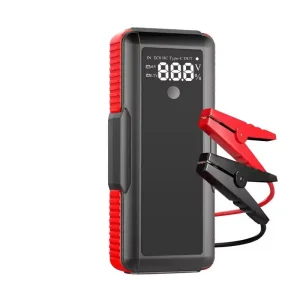
Low Price SPKSTAR Ultra Safe 1000A Supercapacitor Emergency Car Jump Starter Supplier, Suppliers
Inquire Product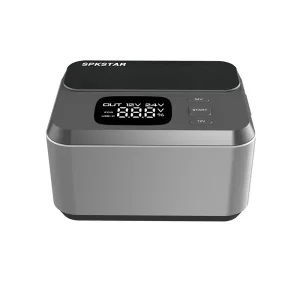
Easy-maintainable SPKSTAR 12/24V 3000A Heavy Duty Super Capacitor Car Truck Jump Starter Product, Price
Inquire Product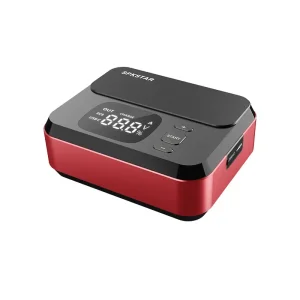
Wholesale SPKSTAR 12V 1500A Supercapacitor Car Battery Charger Jump Starter Vendor, Quotation
Inquire Product
High-Quality SPKSTAR 2-in-1 Portable Car Emergency Jump Starter With Air Compressor Suppliers, Quotation
Inquire Product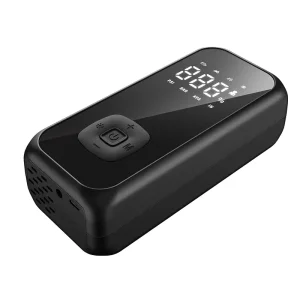
Budget Friendly SPKSTAR 6000mAh Wireless Air Pump Inflator Portable Car Air Compressor Vendor, Vendors
Inquire Product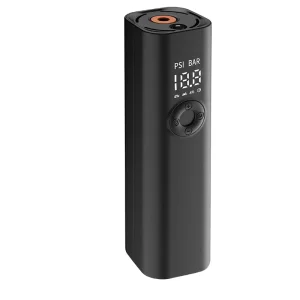
ODM SPKSTAR Super Mini Inflator Car Air Compressor Portable Auto Tire Pump Distributor, In Sales
Inquire Product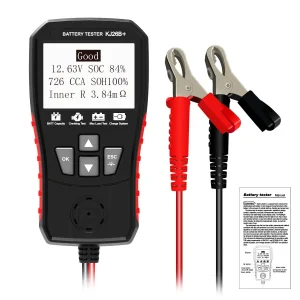
Durable SPKSTAR Digital Automotive Diagnostic Tool 12V 24V Car Battery Tester In Sales, Price
Inquire Product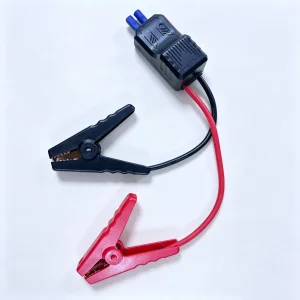
OEM SPKSTAR EC5 Smart Jump Starter Cable Replacement Alligator Clamps Manufacturer, Pricelist
Inquire ProductThe Global Commercial Reality of -40℃ Extreme Cold Starting
Across high-latitude logistical hubs, arctic mining regions, and cold-chain fleets, conventional chemical-reaction lithium starters encounter catastrophic electrolyte freezing and high internal impedance, driving the transition to electrostatic EDLC supercapacitor platforms.
Nordic & Arctic Logistics
In Scandinavia, Alaska, and Northern Canada, winter temperatures routinely fall below -35°C to -45°C. Fleets handling critical medical, food, and municipal supplies cannot tolerate starter failure. Traditional lead-acid batteries suffer a 60% cranking drop, while lithium-ion packs experience electrolyte crystallization and lithium plating risks during emergency boost discharges.
Heavy Industrial Machinery
Heavy earthmoving, forestry, and mining vehicles operating in remote permafrost areas depend on 24V starter systems demanding upwards of 2500A to 3000A peak breakaway current. High viscosity lubricating oil in sub-zero temperatures multiplies the mechanical torque required to overcome engine inertia, demanding instantaneous peak electrostatic current delivery.
Defense & Emergency First Responders
Ambulances, border patrols, and military support units require jump starters that can stay in vehicle boots for years without periodic charging. Unlike lithium units that undergo self-discharge and hazardous cell degradation under extreme storage conditions, supercapacitor units store energy electrostatically and charge from residual dead batteries in 180 seconds.
| Critical Performance Parameter | SPKSTAR -40°C Supercapacitor | Standard Lithium-Ion (NMC) | Lithium Iron Phosphate (LiFePO4) |
|---|---|---|---|
| Operating Temperature Window | -40°C to +70°C (-40°F to 158°F) | -10°C to +45°C (Fails under -15°C) | 0°C to +55°C (Severe cold impedance) |
| Internal Resistance (ESR) @ -40°C | < 0.25 mΩ (Minimal voltage sag) | > 35 mΩ (Electrolyte freezing) | > 50 mΩ (Inability to discharge) |
| Pre-charge Requirement | None (Harvests weak battery in 3m) | Must be kept pre-charged 100% | Must be pre-charged and warmed up |
| Rated Charge/Discharge Cycles | 100,000+ Cycles (10+ Year Life) | 300 - 500 Cycles | 1,500 - 2,000 Cycles |
| Thermal Runaway & Puncture Safety | Zero Risk (No chemical electrolyte) | High Fire Risk (Thermal runaway) | Moderate Risk under crushing |
| Shipping & Customs Classification | Non-DG (Exempt from UN3480 / UN3481) | Class 9 Dangerous Goods (High freight cost) | Class 9 Dangerous Goods |
Shenzhen Factory Efficiency & Vertical Integration
How Shenzhen SPKSTAR Technology Co., Ltd. combines localized component clustering, automated high-speed SMT lines, and specialized low-temperature environmental testing to slash OEM time-to-market.
One-Hour Component Ecosystem
Situated in Fuhai Street, Bao'an District, Shenzhen, SPKSTAR is plugged directly into the world’s most concentrated hardware cluster. High-purity aluminum electrolytic foils, active carbon coatings, low-ESR capacitors, and automotive microcontrollers are sourced within a 30km radius, eliminating multi-month supply-chain bottlenecks.
In-House Automotive PCBA Lines
Rather than outsourcing electronics, our factory operates specialized high-speed SMT lines capable of placing high-power MOSFETs and thick-copper heavy-current busbars. This ensures superior thermal dissipation and prevents micro-fractures in solder joints under acute thermal shock down to -40°C.
Strict Environmental Validation
Every SPKSTAR batch undergoes validation in programmable sub-zero climatic test chambers. Products are cold-soaked at -40°C for 48 continuous hours before undergoing high-rate transient load testing, simulating high-torque 13L diesel engine cranking under actual Arctic blizzard conditions.
Agile Tooling & DFM Review
Our dedicated tooling and mold development shop reduces new housing iterations to under 21 business days. Our engineers conduct thorough Design for Manufacturability (DFM) analyses to minimize component counts, optimize clamp ergonomics, and implement shared-tooling strategies for clients.
Emerging Technology Trends in Sub-Zero Power Electronics
As vehicle powertrains evolve toward 48V mild hybrids and commercial fleets transition to electrified platforms, cold-start emergency booster hardware is undergoing rapid architectural advances.
1. GaN & SiC High-Frequency Power Stages
By transitioning from silicon diodes and low-frequency switches to Gallium Nitride (GaN) and Silicon Carbide (SiC) power stages, our next-generation designs achieve 98.5% conversion efficiency. This drastically reduces thermal build-up and enables higher current density in chassis 30% more compact than previous iterations.
2. Bi-Directional USB-PD 140W Fast Charging
Modern emergency equipment can no longer rely on sluggish 5V/2A barrel ports. SPKSTAR's latest 12V 1500A platform integrates bi-directional USB Power Delivery (PD 3.1) capable of supplying up to 140W. This charges field laptops, drones, and test equipment while allowing field operatives to recharge the supercapacitor pack in minutes from any high-output vehicle USB-C port.
3. Dynamic Residual Energy Harvesting
The core advantage of SPKSTAR supercapacitor architecture is the ability to harvest residual electrochemical energy from a "dead" vehicle battery (even at 5V to 8V residual level). Using active boost converter circuitry, the supercapacitor concentrates this dispersed potential into high-energy electrostatic charge within 180 seconds, requiring zero external utility power.
4. Microcontroller-Driven Safety Matrices
Analog fuse-based jump starter cables are outdated. Modern -40°C starters incorporate 32-bit MCU-monitored smart clamps that assess terminal contact impedance, real-time battery polarity, reverse-charging backfeed, over-voltage spikes, and transient short-circuit conditions with a sub-microsecond trip speed.
5. Hybrid Ultracapacitor-LFP Integration
For combined use cases requiring both extreme cold burst current and secondary portable energy storage (such as continuous tire inflation or device powering), hybrid topographies couple high-rate EDLC capacitors for cranking bursts with thermal-jacketed LiFePO4 cells for steady energy storage.
6. Zero-Emission Hazardous Material Exemption
Global airline security (IATA) and ocean shipping authorities continue to tighten restrictions on lithium batteries (UN3480/3481 Class 9). Supercapacitor-based emergency starters operate completely chemical-battery free. As a result, distributors benefit from standard air freight rates, zero customs hazmat surcharges, and hassle-free retail storage.
Enterprise Sourcing: Matching Technical Specs to Global Channels
B2B importers, automotive aftermarket retail brands, and fleet contractors require differentiated specifications based on localized operating environments, compliance frameworks, and distribution economics.
North American Aftermarket Chains
Retail distribution chains in the northern US and Canada (such as automotive retail groups and warehouse clubs) prioritize eye-catching private-label packaging, multi-lingual English/French/Spanish user documentation, and comprehensive drop-test certified drop-resistant ABS housings. Dual function 2-in-1 jump starter inflators dominate retail shelf conversions.
European Fleet & Workshop Distributors
German, Nordic, and Eastern European enterprise buyers demand strict adherence to CE, UKCA, and RoHS standards with certified EMC compliance to prevent interfering with sensitive vehicle CAN-bus architectures. Heavy-duty 12V/24V 3000A dual-voltage units are preferred for municipal bus fleets, agricultural tractors, and logistics warehouses.
Government & Defense Tenders
Municipal procurement guidelines often specify military-grade MIL-STD thermal shock endurance, IP65 or IP67 ingress protection against heavy driving snow and dust, and pure copper 8AWG or 6AWG silicone insulated cables that remain 100% pliable and crack-free at -40°C.
Enterprise Procurement Due-Diligence Checklist
When conducting factory audits and issuing RFQs for extreme-cold emergency starting equipment, ensure your prospective manufacturer satisfies these six critical benchmarks:
Engineered Solutions Delivered Across Continents
Review real-world engineering interventions developed by Shenzhen SPKSTAR for international clients, converting ambitious concepts into mass-produced market leaders.
Ideas to Market Rollout
A UK consumer power brand wanted a completely new cold-weather emergency product line with zero reference units on the market. SPKSTAR developed a phased prototyping roadmap, negotiated agile component MOQs, and validated the design through small pilot batches that scaled into a commercial multi-generation SKU line.
Blueprint to Tracked Robot
An American engineering corporation provided complex mechanical blueprints for a waterproof tracked utility system demanding over 100 custom plastic and metal components. SPKSTAR performed turnkey DFM optimization, built the molds, integrated the supply chain, and delivered bespoke waterproof testing rigs for automated QC.
Sample Reverse Engineering
Following the unexpected shutdown of an overseas manufacturing plant, a Hong Kong electronics supplier required urgent product transfer without digital CAD drawings. SPKSTAR 3D-scanned physical samples, re-engineered the complete power circuitry, clustered tooling for family parts, and resumed high-volume shipments in record time.
High-Current BMS Architecture
Engineered proprietary PCBA and Battery Management Systems (BMS) for commercial high-power applications requiring ultra-low standby drain and high thermal dissipation. Deployed thick-copper PCB layouts, parallel multi-MOSFET load balancing, and smart digital algorithmic filtering.
Frequently Asked Questions on -40℃ Jump Starters
Direct answers prepared by SPKSTAR's engineering and export division to resolve common technical, logistical, and compliance questions during buyer evaluation.
Complete Automotive Starting & Diagnostic Portfolio
Explore additional high-demand models, heavy-duty smart clamps, diagnostic battery analyzers, and automotive power cords manufactured to industrial OEM tolerances.
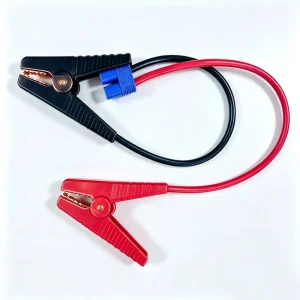
Cheap SPKSTAR 12V 24V Jump Starter Cable Replacement EC8 Alligator Clamps In Stock, Price
Inquire Product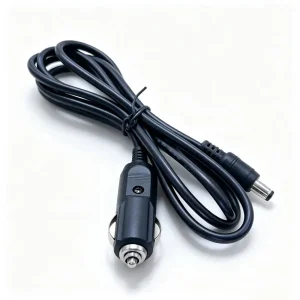
High-Quality SPKSTAR 12V 5A Car Charger Cigarette Lighter for Automotive Electronic Wholesaler, Price
Inquire Product
Low Price SPKSTAR Ultra Safe 1000A Supercapacitor Emergency Car Jump Starter Supplier, Suppliers
Inquire Product
Wholesale SPKSTAR 12V 1500A Supercapacitor Car Battery Charger Jump Starter Vendor, Quotation
Inquire Product
Easy-maintainable SPKSTAR 12/24V 3000A Heavy Duty Super Capacitor Car Truck Jump Starter Product, Price
Inquire Product
High-Quality SPKSTAR 2-in-1 Portable Car Emergency Jump Starter With Air Compressor Suppliers, Quotation
Inquire Product
Durable SPKSTAR Digital Automotive Diagnostic Tool 12V 24V Car Battery Tester In Sales, Price
Inquire Product
OEM SPKSTAR EC5 Smart Jump Starter Cable Replacement Alligator Clamps Manufacturer, Pricelist
Inquire ProductPartner with Shenzhen SPKSTAR Factory
Whether you require turnkey ODM mold creation, customized firmware, or direct wholesale pricing on our -40℃ supercapacitor jump starter lines, our senior engineering team is ready to support your market launch.