
High-Efficiency Vehicle Cranking, Inflation & Diagnostic Solutions
Engineered for instant cranking, thermal resilience (-40°C to +70°C), and low service overhead. Explore our top 8 enterprise-grade emergency power SKUs.
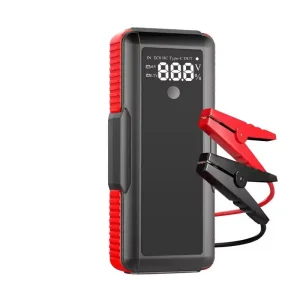
Low Price SPKSTAR Ultra Safe 1000A Supercapacitor Emergency Car Jump Starter Supplier, Suppliers
Inquire Model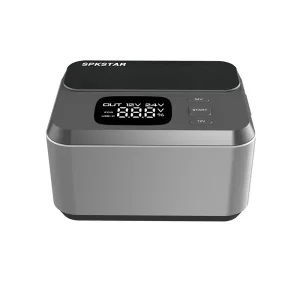
Easy-maintainable SPKSTAR 12/24V 3000A Heavy Duty Super Capacitor Car Truck Jump Starter Product, Price
Inquire Model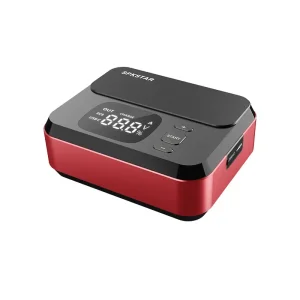
Wholesale SPKSTAR 12V 1500A Supercapacitor Car Battery Charger Jump Starter Vendor, Quotation
Inquire Model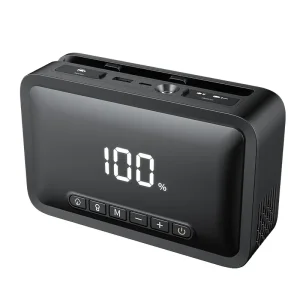
High-Quality SPKSTAR 2-in-1 Portable Car Emergency Jump Starter With Air Compressor Suppliers, Quotation
Inquire Model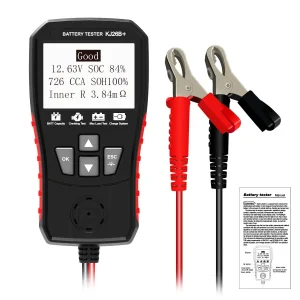
Durable SPKSTAR Digital Automotive Diagnostic Tool 12V 24V Car Battery Tester In Sales, Price
Inquire Model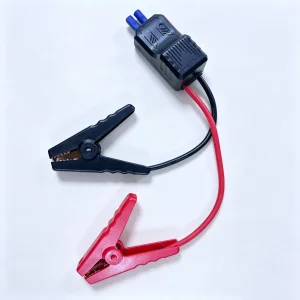
OEM SPKSTAR EC5 Smart Jump Starter Cable Replacement Alligator Clamps Manufacturer, Pricelist
Inquire Model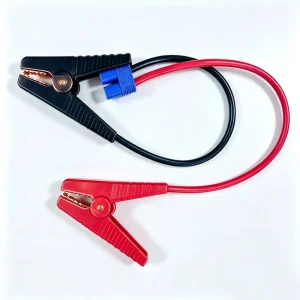
Cheap SPKSTAR 12V 24V Jump Starter Cable Replacement EC8 Alligator Clamps In Stock, Price
Inquire Model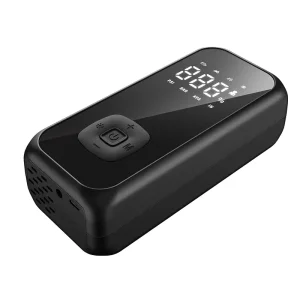
Budget Friendly SPKSTAR 6000mAh Wireless Air Pump Inflator Portable Car Air Compressor Vendor, Vendors
Inquire ModelAutomotive Starting Systems: The Transition from Chemical Wear to Electrostatic Reliability
Analyzing procurement shifts, hazardous materials shipping constraints, and why tier-1 brand distributors are turning to easy-maintainable supercapacitors.
The global automotive jump starter and roadside power equipment market is undergoing an unprecedented structural transition. For decades, commercial logistics fleets, auto salvage depots, military vehicle depots, and retail automotive aftermarket channels relied predominantly on portable lithium-cobalt oxide (LiCoO2) or lithium iron phosphate (LiFePO4) boost packs. While lithium units introduced compact convenience compared to legacy lead-acid wheel-cart chargers, enterprise fleet operators and professional supply chain directors have confronted systemic failure modes that inflate Total Cost of Ownership (TCO): battery degradation due to prolonged parasitic storage discharge, dangerous swelling inside gloveboxes during summer heatwaves (+65°C), and sudden electrochemical paralysis during sub-zero Arctic freeze events (-30°C to -40°C).
In response, international industrial buyers are aggressively shifting procurement strategies toward easy-maintainable supercapacitor jump starters (also designated as ultracapacitor booster packs or EDLC starting modules). Operating on physical electrostatic charge separation rather than volatile chemical redox reactions, supercapacitors store electrons on the polarized porous surface of activated carbon electrodes. This allows full energy harvesting and discharge without chemical phase transformations, eliminating electrolyte thermal runaway risks, dendritic shorts, and degradation curves.
Furthermore, stringent international freight regulations (UN38.3, IATA Dangerous Goods Regulations for lithium-metal and lithium-ion batteries Section IB/II) have created severe logistics bottlenecks for cross-border e-commerce brands, importers, and regional automotive wholesale hubs. Supercapacitor jump starters that operate completely battery-free bypass standard hazmat maritime shipping surcharges and air cargo bans, enabling direct global fulfillment, reduced warehousing insurance premiums, and frictionless customs clearance across the European Union, North America, the Middle East, and Oceania.
Why Chinese Power Electronics Factories Lead Global OEM/ODM Execution
Inside the Bao'an high-tech manufacturing corridor: How vertically integrated DFM engineering, in-house SMT tooling, and supply-chain density compress your product launch cycle.
Custom PCBA & Heavy-Copper Layouts
High-discharge automotive starters generate peak current spikes from 1000A to 3000A. Chinese manufacturing centers leverage thick 4-layer copper foil PCB architecture (up to 4oz copper), parallel ultra-low Rds(on) automotive-grade MOSFET arrays, and high-frequency noise-suppressing filtering algorithms that prevent transient voltage ringing from frying sensitive engine control modules (ECUs).
Hyper-Dense Component Clustering
Within a 30-kilometer radius in Bao'an, Shenzhen, precision component sourcing encompasses EDLC capacitor cells, copper busbars, fire-rated ABS/PC alloy polymers (UL94-V0), silicone 8AWG insulated cables, and custom microcontrollers. This allows prototype modifications, DFM (Design for Manufacturability) tooling redesigns, and pilot production runs to finish within 14 days rather than months.
Automated SMT & Stringent QA Gating
State-of-the-art factories employ dual-lane Yamaha and Panasonic high-speed SMT placement lines, optical automated inspection (AOI), X-ray solder void detection, and multi-station high-current discharge testing benches. Every completed assembly undergoes high-low temperature burn-in cycling and short-circuit isolation validation before export packaging.
Shared-Tooling & Modular Platforms
To reduce capital risk for international wholesalers and retail brand owners, forward-thinking manufacturers establish shared-housing tooling architectures. Brand partners can customize cosmetic faceplates, grip textures, firmware voltage thresholds, LED digital displays, and customized EC5 or heavy EC8 connector leads while saving tens of thousands of dollars in dedicated injection molding capital.
Turnkey OEM/ODM Scalability
Shenzhen SPKSTAR Technology Co., Ltd. (founded in 2005) operates as a dedicated Sino-foreign joint venture engineering enterprise. With 20+ years of power electronics expertise, our production facilities allow seamless transition from reverse-engineering physical samples to mass manufacturing certified to CE, FCC, UL, UKCA, and RoHS standards with comprehensive documentation.
The Anatomy of Easy-Maintainable Supercapacitor Architecture
A rigorous engineering comparison against traditional lithium boosters, examining internal impedance, thermal resilience, and maintenance lifecycle economics.
| Performance Parameter | SPKSTAR Supercapacitor System | Lithium-Ion (NMC) Booster | Lithium Iron Phosphate (LiFePO4) |
|---|---|---|---|
| Usable Cycle Life | 100,000+ Full Cycles | 300 - 500 Cycles | 1,500 - 2,000 Cycles |
| Shelf-Life Maintenance Required | Zero Maintenance (Store Discharged) | Recharge every 60-90 days | Recharge every 120-180 days |
| Pre-Charge Speed Before Start | 2 to 3 Minutes (from weak battery) | 2 to 4 Hours via Wall Charger | 1 to 3 Hours via DC Wall Charger |
| Cold-Cranking Threshold | -40°C to +70°C (No Derating) | -10°C (Output drops >60%) | -15°C (Output drops >45%) |
| Thermal Runaway / Puncture Risk | Zero Explosive Potential (Electrostatic) | High Risk of Oxygen Release & Fire | Low Risk, But Chemical Swelling Occurs |
| Storage In Hot Vehicle Cockpit | Safe up to +80°C Storage | Severe Hazard / Swelling Risk | Accelerated Chemical Degradation |
| Transport & Shipping Classification | Non-Dangerous Goods (Battery-Free) | Class 9 Dangerous Goods (UN3481) | Class 9 Dangerous Goods (UN3480/3481) |
Why "Zero-Maintenance" Lowers Commercial Warranty Costs
In retail automotive sales channels and enterprise commercial procurement, the return rate for traditional lithium jump starters routinely exceeds 12% to 18%. The prevailing cause is simple consumer behavior: after an initial vehicle recovery, the user deposits the booster in a vehicle trunk or tool chest for nine to twelve months. Parasitic circuit drain and native chemical self-discharge drop the cell voltage below the critical cut-off threshold (under 2.5V per cell). When the vehicle battery dies months later, the lithium booster pack is permanently bricked, prompting warranty replacement disputes.
In sharp contrast, an easy-maintainable supercapacitor jump starter intentionally thrives in an uncharged resting state. It does not store chemical potential energy. When an emergency happens, the operator attaches the alligator clamps to the vehicle's depleted lead-acid or AGM starter battery. Even a battery drained to 10V or 9V (insufficient to turn the vehicle starter motor) still contains kilojoules of remaining energy. The SPKSTAR internal step-up DC-DC converter draws this residual low-current energy to energize the supercapacitors to 15.5V in approximately 120 to 180 seconds. Once charged, the system releases an enormous surge of 1000A to 3000A cold-cranking amps over several seconds, instantly firing internal combustion engines up to 13.0L displacement. The operator needs zero preparatory maintenance, zero periodic charging schedules, and zero spare-part replenishment.
Mission-Critical Use Cases Across Global Industries
From Arctic heavy equipment hauling to municipal emergency recovery, examine how SPKSTAR engineered power platforms resolve localized operational challenges.
Sub-Zero Nordic & Arctic Transport
In Northern Europe, Canada, and high-latitude mining routes where winter temperatures plummet below -35°C, engine oil viscosity thickens significantly while lead-acid battery cranking power contracts by 50%. Supercapacitor booster units deliver immediate 1500A-3000A peak current without cell warming blankets, ensuring uninterrupted transport lines and eliminating dead-start stranded crews.
Commercial Long-Haul Logistics & Fleets
Commercial Class-8 tractor-trailers, municipal buses, and delivery vans cannot afford tow-truck calls that cost $400-$1,200 per roadside breakdown. Equipped with SPKSTAR 12V/24V dual-voltage heavy-duty units, maintenance technicians start 13-liter heavy diesel engines on the apron within 3 minutes by hooking up to shop chargers, cigarette lighter sockets, or the truck's residual battery banks.
Marine, Offshore & Ports
Maritime engine compartments present extreme salt spray and humidity that rapidly corrode exposed terminals and degrade lithium cells. SPKSTAR heavy-duty units incorporate conformally coated PCBA substrates, spark-proof reverse-polarity smart relays, and rugged IP65-rated structural casings suited for commercial fishing vessels, tugboats, and container yard reach-stackers.
Automotive Dealerships & Salvage Auctions
Vehicle auctions and auto dealerships manage hundreds of sitting vehicles where batteries continuously discharge due to keyless telematics and immobilizers. Using a single SPKSTAR supercapacitor unit, yard personnel jump dozens of vehicles consecutively in a single morning by recharging the booster from each running car's alternator within 60 seconds.
Municipal First Responders & Utilities
Emergency medical vehicles, fire department support trucks, and power grid service vans require immediate readiness. SPKSTAR jump starter combinations paired with integrated 150 PSI digital tire inflators guarantee that critical utility vehicles overcome both battery failure and sudden tire pressure loss during crisis management deployments.
Emerging Technology Trends Reshaping Automotive Emergency Power
From bidirectional USB-C PD 140W fast protocols to micro-channel thermal engineering and smart CAN-bus diagnostics.
GaN Power Conversion & PD 140W Charging
Next-generation automotive boosters integrate Gallium Nitride (GaN) high-efficiency switching chips with USB Power Delivery 3.1 protocols. This allows SPKSTAR models to recharge from standard 100W-140W Type-C laptop chargers or 12V vehicle cigarette ports in minutes while simultaneously powering laptops and diagnostic field gear.
Microcontroller Smart Clamp Safety Relays
Gone are passive mechanical alligator clips. Modern SPKSTAR EC5 and EC8 smart cables feature built-in 8-bit/32-bit MCU microcontrollers that monitor real-time clamp connection resistance, detect reverse polarity, short-circuit, over-temperature, reverse charging from running alternators, and over-voltage up to 30V before closing solid-state relay gates.
Hybrid Ultracapacitor-Battery Topologies
For specialized municipal and commercial fleets that require both long-lasting auxiliary work lights/inflators and massive cranking bursts, SPKSTAR is pioneering hybrid architectures. These pair a high-cycle lithium-iron or sodium-ion energy buffer with high-current electrostatic capacitor banks, achieving optimal energy density and instantaneous high-amperage boost power.
Comprehensive Digital Battery Conductance Diagnostics
Integrating battery starting equipment with real-time dynamic conductance testing enables technicians to assess Cold Cranking Amps (CCA), internal resistance in milliohms (mΩ), and State of Health (SOH) before attempting engine turnover. This prevents futile cranking attempts on physically shorted batteries.
What Global Sourcing Directors Demand from Automotive Power Factories
A systematic evaluation checklist for importers, brand licensors, and procurement committees evaluating factory capabilities.
Global Certification & Lab Audits
Legitimate access to big-box retail channels (e.g., AutoZone, Walmart, Halfords) and major e-commerce platforms requires genuine test certification: CE (LVD/EMC), FCC Part 15, RoHS directive compliance, UKCA for Great Britain, and UL 2743 standards for portable power packs. SPKSTAR provides verified laboratory reports directly to accredited buyers.
Flexible OEM Tooling & Agile MOQs
Global brand owners require private-label agility. Factories must offer tiered MOQ programs: starting from small-batch pilot validation runs (500-1000 units) to full container orders (10,000+ units) with custom Pantone color matching, laser-etched corporate logos, customized user interface displays, and localized language packaging.
Dedicated International Engineering Support
Communication breakdowns derail launch schedules. SPKSTAR bridges technical gaps with fluent, English-speaking account directors averaging 10+ years of power electronics expertise. Sourcing teams receive immediate DFM engineering reviews, circuit schematics, 3D CAD step files, and transparent bill-of-materials (BOM) breakdowns within 24 hours.
Frequently Asked Questions on Sourcing Automotive Jump Starters
Technical and commercial clarifications curated by our senior R&D engineers and international export directors.
What makes an automotive jump starter "easy-maintainable" compared to conventional boosters?
Can a supercapacitor jump starter crank a completely flat (0V) vehicle battery?
How does extreme cold (-30°C to -40°C) affect supercapacitor cranking performance?
What are the shipping and freight compliance advantages of supercapacitors over lithium batteries?
Which engine sizes and vehicle systems does the SPKSTAR 12V/24V 3000A heavy-duty unit support?
What OEM/ODM customization capabilities does SPKSTAR provide for private-label brand owners?
What is the difference between EC5 and EC8 smart jump starter cable connectors?
What quality assurance and life-testing protocols does SPKSTAR perform before shipment?
Commercial Fleet & Industrial B2B Portfolio Ready for Mass Order
Explore our export-certified automotive jump starters, high-volume compressors, diagnostic tools, and professional accessories.
Easy-maintainable SPKSTAR 12/24V 3000A Heavy Duty Super Capacitor Car Truck Jump Starter Product, Price
Get Price List
Wholesale SPKSTAR 12V 1500A Supercapacitor Car Battery Charger Jump Starter Vendor, Quotation
Get Price List
Low Price SPKSTAR Ultra Safe 1000A Supercapacitor Emergency Car Jump Starter Supplier, Suppliers
Get Price List
High-Quality SPKSTAR 2-in-1 Portable Car Emergency Jump Starter With Air Compressor Suppliers, Quotation
Get Price List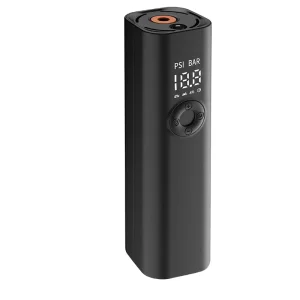
ODM SPKSTAR Super Mini Inflator Car Air Compressor Portable Auto Tire Pump Distributor, In Sales
Get Price List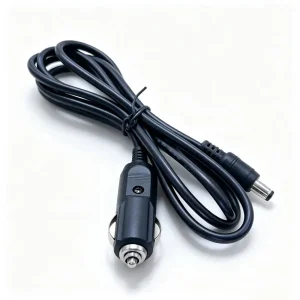
High-Quality SPKSTAR 12V 5A Car Charger Cigarette Lighter for Automotive Electronic Wholesaler, Price
Get Price List
OEM SPKSTAR EC5 Smart Jump Starter Cable Replacement Alligator Clamps Manufacturer, Pricelist
Get Price List
Durable SPKSTAR Digital Automotive Diagnostic Tool 12V 24V Car Battery Tester In Sales, Price
Get Price ListLaunch Your Custom Supercapacitor or Hybrid Jump Starter Program
Whether you require custom firmware, custom industrial housing molds, or full turnkey OEM manufacturing backed by 20+ years of power electronics excellence, SPKSTAR engineers turn your specifications into certified market-ready products.
Talk with a Factory Engineer