
Engineered Heavy-Duty Jump Starters & Diagnostic Tools
Factory-grade 12V/24V supercapacitor boosters, dual-voltage battery diagnostic testers, and smart high-amperage clamp assemblies calibrated for continuous industrial duty cycles.
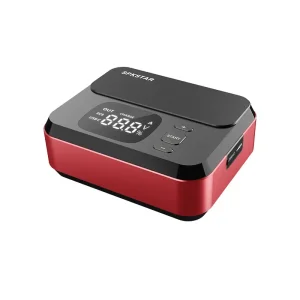
Wholesale SPKSTAR 12V 1500A Supercapacitor Car Battery Charger Jump Starter Vendor, Quotation
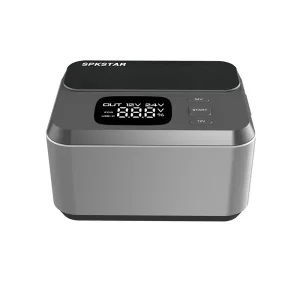
Easy-maintainable SPKSTAR 12/24V 3000A Heavy Duty Super Capacitor Car Truck Jump Starter Product, Price
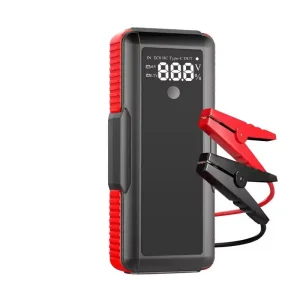
Low Price SPKSTAR Ultra Safe 1000A Supercapacitor Emergency Car Jump Starter Supplier, Suppliers
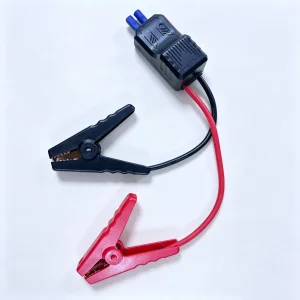
OEM SPKSTAR EC5 Smart Jump Starter Cable Replacement Alligator Clamps Manufacturer, Pricelist

High-Quality SPKSTAR 2-in-1 Portable Car Emergency Jump Starter With Air Compressor Suppliers, Quotation
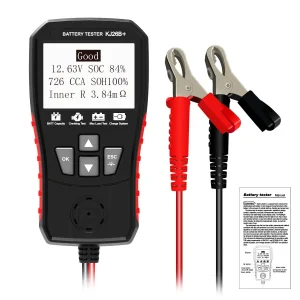
Durable SPKSTAR Digital Automotive Diagnostic Tool 12V 24V Car Battery Tester In Sales, Price
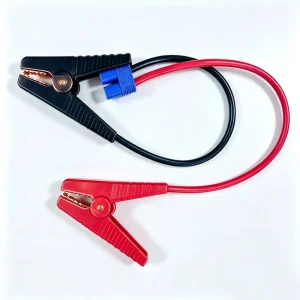
Cheap SPKSTAR 12V 24V Jump Starter Cable Replacement EC8 Alligator Clamps In Stock, Price
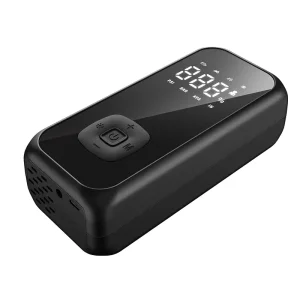
Budget Friendly SPKSTAR 6000mAh Wireless Air Pump Inflator Portable Car Air Compressor Vendor, Vendors
Global Commercial Landscape of 12V/24V Jump Starting Platforms
Analyzing macroeconomic supply vectors, the disruption of traditional lead-acid booster carts, and why international procurement directors are shifting to battery-free electrostatic topologies.
The global automotive emergency power and heavy commercial starting market is undergoing a structural paradigm shift. Historically dominated by heavy, toxic lead-acid starter carts (often weighing 25kg to 45kg) and later by consumer-grade lithium cobalt oxide (LiCoO2) boosters prone to thermal runaway, fleet operators worldwide are now demanding high-reliability, zero-maintenance solutions. The rapid expansion of long-haul logistics corridors across North America, the European Union, Central Asia, and Australia has placed intense scrutiny on vehicle downtime. A dead starter battery on a Class 8 commercial tractor or a 24V mining transport vehicle represents thousands of dollars in lost operational efficiency per hour.
Concurrently, international logistics regulations governing lithium battery transport—notably IATA Dangerous Goods Regulations (DGR) UN3480 / UN3481, IMO IMDG maritime transport mandates, and stringent customs oversight—have added substantial supply chain overhead to conventional battery-powered jump starters. This regulatory pressure has driven rapid institutional adoption of Ultracapacitor (EDLC) Jump Starters. Because supercapacitor systems contain zero chemical electrolytes subject to thermal runaway or hazardous substance classifications, they enjoy completely unhindered global air, ocean, and ground freight logistics with minimal compliance overhead.
Total Cost of Ownership (TCO): Fleet Economics Over a 5-Year Lifecycle
For industrial fleet operators managing 500+ commercial vehicles, roadside assistance organizations (such as AAA in North America or ADAC in Europe), and military motor pools, initial acquisition cost is secondary to lifecycle durability. Traditional high-discharge NMC/LFP lithium starter packs require strict maintenance protocols: they must be continuously topped off every 60–90 days to prevent copper shunt dissolution and cell undervoltage bricking. If left inside a service truck cab during extreme summer heat (+65°C greenhouse temperatures), chemical decomposition causes irreversible swelling and catastrophic internal short circuits.
By contrast, SPKSTAR’s 12V/24V supercapacitor platform utilizes symmetrical electrostatic electric double layers. The device stores zero energy during warehouse storage, completely eliminating self-discharge hazards. When deployed, it harvests the residual 10%–20% energy remaining in a depleted vehicle battery within 120–180 seconds, boosts the voltage, and delivers a massive 1500A to 3000A cranking current to overcome heavy engine mechanical inertia.
| Evaluation Parameter | SPKSTAR EDLC Supercapacitor System | High-Rate Lithium-Ion Booster Pack | Traditional Lead-Acid Mobile Cart |
|---|---|---|---|
| Operating Cycle Life | 100,000 to 500,000 Full Cycles | 300 to 800 Duty Cycles | 200 to 400 Float Cycles |
| Extreme Cold Output (-40°C) | 100% Full Rated Cranking Current | Degrades by 65% to 80% (Sluggish) | Degrades by 50% to 60% |
| Warehouse Shelf-Life | 10+ Years Maintenance-Free | Requires Re-charging every 90 days | High Sulfation Rate without Trickle |
| Recharge Duration | 120 – 180 Seconds (via weak battery) | 3 to 6 Hours (via AC Adapter) | 8 to 12 Hours (Continuous AC) |
| Thermal Safety Profile | Inherently Non-Combustible (No Runaway) | Potential Thermal Runaway / Fire | Acid Spillage / Hydrogen Off-Gassing |
| Logistics & Customs Class | Non-Dangerous Goods (Standard Air Freight) | Class 9 UN3480 / UN3481 Hazmat | Class 8 Corrosive Liquids Hazmat |
Electrostatic Cranking Physics & Dynamic Voltage Sensing
Examining how SPKSTAR’s in-house PCBA architecture, ultra-low ESR capacitor arrays, and multi-MOSFET solid-state switches deliver reliable high-amperage starting.
Sub-Milliohm Ultra-Low ESR Capacitance
Equipped with proprietary cylindrical ultracapacitors delivering an Equivalent Series Resistance (ESR) under 0.28mΩ per cell. This minimizes internal $I^2R$ resistive heating during 3000A heavy inrush peaks, ensuring that 98.4% of total electrostatic kinetic energy reaches the starter motor coils rather than turning into heat.
Intelligent 12V/24V Auto-Sensing Relay Matrix
An integrated high-speed 32-bit automotive microcontroller samples terminal voltage in 2.5 microseconds. It distinguishes between a deeply discharged 24V commercial bank and a healthy 12V system, automatically switching internal series/parallel capacitor arrays to eliminate destructive cross-voltage surges.
Multi-Tier Reverse-Polarity & Anti-Arc Snubbers
Equipped with parallel arrays of automotive-grade N-channel MOSFETs and heavy flyback TVS diodes. The system effortlessly withstands dead-short connections, back-feed alternator charging currents up to 40V, and inductive flyback energy spikes without damaging sensitive onboard vehicle ECUs.
Residual Energy Harvesting (Bootstrap Boost Topology)
The most critical operational advantage of SPKSTAR’s supercapacitor jump starters is their ability to bootstrap from an apparently "dead" battery. When a vehicle’s 12V lead-acid battery is depleted down to 6V–8V, it lacks the hundreds of amperes necessary to rotate the mechanical engine starter motor. However, it still holds tens of thousands of Joules of chemical energy stored inside its plates.
SPKSTAR’s embedded high-frequency synchronous DC-DC boost converter gently siphons this residual charge at a safe rate of 5A to 10A, stepping it up to store within the internal capacitor bank. Over the course of approximately 120 to 180 seconds, the bank reaches full 15V saturation. When the ignition is engaged, the capacitor bank instantly releases this accumulated energy at up to 1500A–3000A, firing the engine effortlessly without requiring an external wall outlet, auxiliary power bank, or secondary booster vehicle.
Macro Solutions: Turnkey OEM/ODM Engineering Ecosystem
From multi-layer thick-copper PCBA routing to custom plastic injection tooling and multi-national regulatory validation, SPKSTAR supports global automotive brands from concept to container.
Ideas to Product Turnkey Incubation
As proven in our partnership with leading UK power electronics brands, we convert high-level product briefs into production-grade hardware. We negotiate multi-tier component supply allocations, design iterative DFM prototypes, and navigate early-stage MOQs to scale pilot products into multi-generation category leaders.
Drawing & Blueprint to Tooling Realization
When an American robotics client required custom high-power electronics and specialized waterproof housings for tracked rovers, SPKSTAR handled over 100 complex mechanical components. We engineered ruggedized IP67 enclosure molds, custom high-copper busbars, and internal vibration-isolation dampeners.
Rapid Sample Reverse Engineering
When legacy factory closures threaten critical product line supply continuity, our Shenzhen engineering labs step in. For our Hong Kong corporate clients, our engineering team performed complete mechanical scanning, PCBA schematic tracing, BOM component rationalization, and modernized firmware coding in under 45 days.
Full-Stack In-House PCBA & Power Electronics Manufacturing
Unlike trading intermediaries or assembly-only contractors, Shenzhen SPKSTAR Technology Co., Ltd. controls the core power electronics lifecycle. Operating out of our Bao'an District manufacturing center since 2005, our SMT surface-mount lines, reflow ovens, and automated AOI optical inspection stations are tuned specifically for high-copper-thickness automotive boards (2oz to 4oz copper pour).
Heavy-duty starting boards require specialized thermal balancing and transient mitigation. Our firmware engineers implement advanced digital filtering algorithms that distinguish between normal engine compression strokes and hard mechanical lockups. This prevents premature relay disengagement while ensuring full solid-state shutdown before any internal bus temperature reaches critical thresholds.
Localized Use Cases & Environmental Extremes
Documenting real-world field endurance from sub-zero Scandinavian logistics corridors to high-temperature Pilbara open-cut iron ore mines.
Nordic & Arctic Cold-Soak Starting (-40°C)
In Northern Sweden, Norway, Canada, and Alaska, winter diesel fleets experience severe cold-cranking resistance due to thickened engine oil (15W-40) and depressed battery electrolyte mobility. While standard lithium boosters drop below their minimum discharge cutoff, SPKSTAR supercapacitors fire 13L diesel engines in under 2 seconds.
Desert Mining & Heavy Earthmoving (65°C Cab)
In the Pilbara mining basins of Australia and Middle Eastern desert oil fields, ambient temperatures exceed 48°C, with vehicle cab interiors reaching 70°C. Storing conventional lithium packs in these environments risks explosive cell venting. Our battery-free supercapacitors remain completely stable and explosion-proof across all shifts.
Professional Emergency Roadside Networks
Emergency recovery vehicles (tow trucks, police patrols, municipal roadside service) cannot waste hours between dispatches waiting to recharge an emergency jump starter. Our 1000A to 3000A platforms recharge while driving between calls in under 3 minutes via the service truck's 12V socket, ready for back-to-back engine jumps.
Technology Roadmap: 2026–2035 Emergency Starting Platforms
Examining the convergence of Gallium Nitride (GaN) bidirectional energy management, solid-state hybrid capacitors, and edge IoT diagnostic telematics.
Pure EDLC Ultracapacitors
Sub-0.3mΩ internal ESR, 100,000 duty cycles, wide operating thermal range (-40°C to +70°C), and automated 12V/24V mechanical switching relays. Fully compliant with CE, FCC, UL 2743, and RoHS standards.
GaN PD3.1 Bidirectional 240W
Integrating Gallium Nitride high-frequency switching FETs to downsize internal DC-DC converters by 40%. Full support for USB Power Delivery 3.1 bidirectional protocols, enabling 240W rapid recharging from any Type-C power grid.
Lithium-Ion Hybrid Supercapacitors
Transitioning to Lithium-Carbon Hybrid Capacitors (LiC). Combining the ultra-high power density of electrostatic double-layer electrodes with the 4x volumetric energy density of doped carbon anodes, yielding smaller 3000A hand-held units.
IoT Edge CAN-Bus Telematics
Integrating Bluetooth Low Energy (BLE 5.4) and industrial CAN-bus transceivers. The jump starter performs instant oscilloscope battery cranking health analysis, transmitting predictive failure telematics directly to enterprise cloud fleet dashboards.
Precision Accessories, Inflators & Emergency Booster SKUs
Expand your automotive distribution catalog with high-turnover OEM/ODM emergency vehicle accessories, heavy-gauge replacement clamps, and smart digital compressors.
Wholesale SPKSTAR 12V 1500A Supercapacitor Car Battery Charger Jump Starter Vendor, Quotation
Easy-maintainable SPKSTAR 12/24V 3000A Heavy Duty Super Capacitor Car Truck Jump Starter Product, Price
Low Price SPKSTAR Ultra Safe 1000A Supercapacitor Emergency Car Jump Starter Supplier, Suppliers
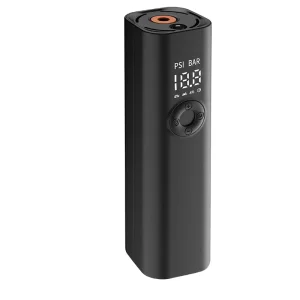
ODM SPKSTAR Super Mini Inflator Car Air Compressor Portable Auto Tire Pump Distributor, In Sales
Cheap SPKSTAR 12V 24V Jump Starter Cable Replacement EC8 Alligator Clamps In Stock, Price
OEM SPKSTAR EC5 Smart Jump Starter Cable Replacement Alligator Clamps Manufacturer, Pricelist
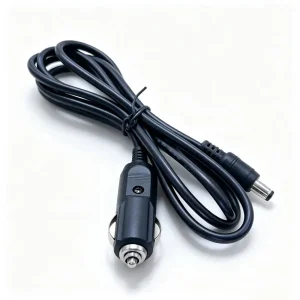
High-Quality SPKSTAR 12V 5A Car Charger Cigarette Lighter for Automotive Electronic Wholesaler, Price
Durable SPKSTAR Digital Automotive Diagnostic Tool 12V 24V Car Battery Tester In Sales, Price
Frequently Asked Questions for B2B Importers & Procurement Directors
Authoritative technical, regulatory, and supply-chain answers compiled by SPKSTAR's senior power electronics engineers and export compliance officers.