
Precision Diagnostic Tools & Emergency Power Systems
Engineered to withstand rigorous workshop cycles, high-frequency fleet diagnostics, and severe sub-zero roadside dispatch environments.
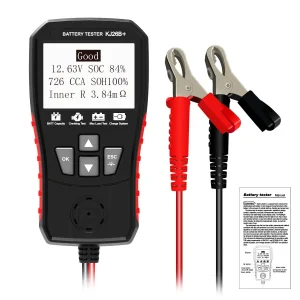

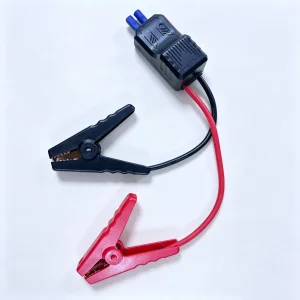
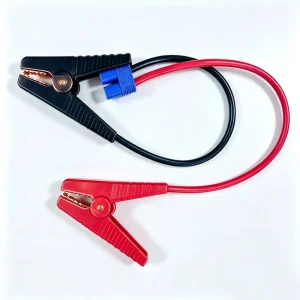
Easy-maintainable SPKSTAR 12/24V 3000A Heavy Duty Super Capacitor Car Truck Jump Starter
Product Details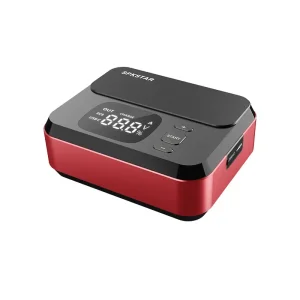

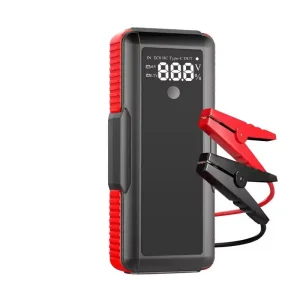
The Paradigm Shift in Vehicle Electrical Health & Battery Testing Economics
In modern automotive maintenance, battery failure remains the leading cause of unscheduled vehicle downtime globally. Precision diagnosis is now an operational imperative.
Total Cost of Ownership (TCO)
Traditional diagnostic approaches relied heavily on destructive carbon-pile discharge tests that accelerated battery degradation, produced thermal hazards, and drained vehicle reserves during routine inspection. SPKSTAR’s dynamic conductance algorithms eliminate parasitic drain entirely, cutting workshop inspection time from 15 minutes down to under 8 seconds per bay.
Reduces battery misdiagnosis and unnecessary warranty returns by up to 34% across automotive retail networks.
Advanced Micro-Hybrid Demands
The global proliferation of Start-Stop engine configurations, Absorbent Glass Mat (AGM), Enhanced Flooded Battery (EFB), and 12V auxiliary lithium-ion buffers in Electric Vehicles (EVs) creates unprecedented electrical stress. Modern testers must distinguish between genuine chemical cell degradation and temporary surface charge fluctuations without disconnecting onboard sensitive electronics.
Calibrated across SAE, DIN, EN, IEC, and JIS international cold-crank ampere measurement protocols.
Distributor Margin Optimization
For private-label distributors, Tier-1 wholesalers, and national retail chains, sourcing directly from Shenzhen SPKSTAR delivers factory-direct bill-of-materials (BOM) cost efficiency. By bypassing multi-tier broker markups and leveraging our proprietary molded chassis, firmware stacks, and automated SMT lines, partners realize 28% to 42% gross margin expansion on diagnostic equipment lines.
Full turnkey OEM/ODM customization from firmware splash screens to ruggedized drop-proof housing molds.
Technology Roadmap & Future Outlook: Next-Gen Diagnostic Intelligence
From Kelvin four-terminal sensing to multi-frequency electrochemical impedance spectroscopy, examine the core engineering driving SPKSTAR’s diagnostic platforms.
Kelvin 4-Wire Conductance Sensing
Every SPKSTAR vehicle battery tester incorporates isolated dual-conductor Kelvin clamps. By injecting an ultra-low frequency AC test signal through one current path while independently measuring the induced voltage gradient across the second signal path, the system nullifies cable contact resistance, terminal oxide impedance, and lead thermal drift. This ensures lab-grade repeatability across extreme ambient temperatures ranging from -30°C to +65°C.
The internal mathematical engine instantly correlates dynamic conductance against cold-cranking ampere (CCA) rating tables, isolating plate sulfation, active material shedding, and internal cell stratification without heating the battery or generating sparks.
Roadmap: Electrochemical Impedance Spectroscopy (EIS)
As the automotive fleet evolves toward 48V mild hybrids and dedicated EV 12V auxiliary lithium iron phosphate (LiFePO4) systems, SPKSTAR's Shenzhen R&D team is standardizing swept-frequency EIS algorithms into handheld architectures. Traditional single-frequency conductance testing cannot adequately characterize the passivated SEI (Solid Electrolyte Interphase) layer or charge-transfer resistance of modern lithium cells.
Our 2026–2028 roadmap introduces broadband multi-tone excitation from 10 mHz to 1 kHz. This capability empowers fleet technicians to evaluate both state-of-health (SOH) and real-time internal resistance ($R_i$) within complex battery management system (BMS) sub-topologies.
Comprehensive Charging & Starter Analysis
A battery does not operate in isolation. SPKSTAR diagnostic firmware provides full starting motor and charging system analysis in a unified workflow. During ignition crank, the device samples voltage drops at microsecond intervals, recording the lowest drop point to identify starter mechanical binding, armature shorting, or excessive cable resistance.
During engine idle and high-RPM testing, the tool evaluates alternator charging voltage stability and computes real-time AC ripple voltage. Excessive ripple indicates failing alternator diodes, preventing premature battery cook-off and intermittent ECU malfunction codes.
IoT Telemetry & Cloud Fleet Integration
The future of battery asset tracking lies in centralized telemetry. Emerging SPKSTAR diagnostic modules feature Bluetooth Low Energy (BLE 5.3) and optional Wi-Fi synchronizers that transmit diagnostic batch logs directly to fleet management ERPs or retail CRM systems.
Service managers can audit workshop testing compliance, monitor battery replacement trends across thousands of service centers, and generate tamper-proof PDF diagnostic reports with custom dealership branding, increasing customer trust and closing genuine replacement sales effortlessly.
| Diagnostic Technology | Test Duration | Thermal / Spark Risk | Internal Drain Impact | AGM / EFB / LiFePO4 Accuracy | Fleet Data Traceability |
|---|---|---|---|---|---|
| Legacy Carbon Pile Load Tester | 15–30 Seconds | Extreme (Resistive Heat) | High (Draws 100A–300A) | Poor (Surface charge distortion) | None (Manual gauge reading) |
| Standard Single-Frequency Conductance | 3–5 Seconds | Zero (Low-power AC pulse) | Negligible (< 100mA) | Moderate (Requires standard curves) | Basic On-Screen Code |
| SPKSTAR Dynamic Kelvin Algorithm (Current) | < 2.5 Seconds | Zero (Spark-free isolated circuit) | Zero (Passive sensor draw) | High (±1.5% CCA repeatable precision) | Thermal Print + QR Cloud Output |
| SPKSTAR Swept-Frequency EIS (Next-Gen) | 6–10 Seconds | Zero (Multi-frequency low signal) | Zero (Calibrated impedance draw) | Ultra-High (Direct SEI & Nyquist plot) | Full BLE / Wi-Fi Cloud Diagnostic Hub |
Macro Industry Solutions: Targeted Strategies by Vertical Market
Discover how enterprise fleets, franchised service chains, battery manufacturers, and rescue responders deploy SPKSTAR diagnostic architectures to protect profitability.
Commercial Heavy-Duty Logistics
Class 7 and 8 long-haul diesel fleets run 24V dual-to-quad 8D battery banks. A single failing cell in a parallel bank drags down healthy adjacent batteries, leading to early morning no-start events that cost upwards of $850 per delay. SPKSTAR heavy-duty testers evaluate individual 6V/12V blocks within 24V packs in-circuit, isolating failing units prior to highway departure.
Fast-Lube & Tire Service Franchises
For high-turnover service chains, speed is margin. Technicians cannot afford complicated calibration menus. SPKSTAR OEM platforms offer one-touch automated test sequencing: technician clips the clamps, presses 'Enter', and within two seconds receives an unequivocal 'GOOD / RECHARGE / REPLACE' verdict with cold-cranking performance percentages.
Battery OEMs & Warranty Auditing
Battery manufacturers face millions of dollars in illegitimate warranty claims each year for batteries that are merely discharged rather than chemically dead. SPKSTAR diagnostic tools provide tamper-resistant internal test counter memory, cryptographic test verification codes, and unalterable date-stamped logs, providing irrefutable arbitration data for return authorizations.
Roadside Assistance & Breakdown Clubs
Emergency breakdown service patrol vans require ultra-rugged, drop-tested equipment operating in blistering heatwaves or Siberian cold snaps. SPKSTAR testers combine integrated supercapacitor booster compatibility with reverse-polarity, over-voltage, and anti-kickback protections that prevent operator injury or tester burn-out during high-pressure roadside assists.
China Factory 4.0: Supply Chain Resilience & Shenzhen Efficiency Advantages
Operating from Bao'an District, Shenzhen—the global epicenter of high-performance electronics—SPKSTAR fuses lean automation with complete localized supply chain mastery.
High-Speed SMT & Automated Optical Inspection
Our production floor features automated high-precision Yamaha and Panasonic Surface Mount Technology (SMT) pick-and-place lines. Every mainboard for our 12V/24V battery testers undergoes 3D Automated Optical Inspection (AOI) followed by in-line functional test (FCT) jigs, guaranteeing zero cold solder joints, missing decoupling capacitors, or misaligned IC pins.
Thick-copper PCB designs and reinforced signal traces minimize electrical parasitic noise, providing unwavering stability when sensing micro-volt deviations under noisy workshop conditions.
Automated Multi-Point NIST-Traceable Calibration
Manual potentiometer trimming is completely eliminated in our Factory 4.0 setup. Each finished tester is connected to automated, computer-controlled precision resistor networks and digitally calibrated across multiple voltage and conductance thresholds.
Calibration coefficients are permanently flashed into EEPROM memory. This automated workflow maintains absolute unit-to-unit consistency across manufacturing batches exceeding 100,000 units annually, maintaining strict compliance with ISO 9001 quality management procedures.
The Bao'an Shenzhen Supply Cluster
Within a 15-kilometer radius of SPKSTAR’s production facility lies the world's dense ecosystem of automotive plastic injection molders, cable extrusion plants, LCD/OLED panel manufacturers, and certified testing laboratories. This localized proximity compresses prototype iteration time from months down to days.
When supply chains fracture globally, our multi-source silicon inventory, long-standing supplier equity, and in-house tooling capabilities insulate distributors from extended lead times and volatile spot-market component pricing.
Enterprise Sourcing & Compliance Assurance: OEM/ODM Turnkey Execution
B2B importers, private labels, and government procurement buyers receive comprehensive turnkey program management from initial industrial design to localized regulatory documentation.
Turnkey Customization Tiers
SPKSTAR provides three modular engagement models to match client market strategy:
- White-Label / Private Label: Fast turnaround on existing proven platforms. Custom Pantone color injection, laser-etched housing logos, branded packaging, and multilingual manuals within 3-4 weeks.
- Firmware & Software Specialization: Custom splash screens, specialized testing thresholds for proprietary OEM batteries, customized language packs, and encrypted cloud upload protocols.
- Complete ODM Design from Scratch: Industrial exterior styling, custom ergonomics, proprietary dual-color tooling molds, and bespoke PCB layout architectures.
Global Regulatory Approvals
Every diagnostic platform and emergency booster engineered by SPKSTAR is validated against international safety and electromagnetic compatibility (EMC) standards to ensure friction-free customs clearance and retail compliance:
- European Union: CE Marking (EN 61326-1, EN 61010-1) and full RoHS directive compliance eliminating hazardous lead, cadmium, and hexavalent chromium.
- North America: FCC Part 15 Subpart B verification for radiated/conducted emissions; UL-grade fire-retardant 94V-0 compliant enclosure plastics.
- United Kingdom: UKCA standard certification.
- Environmental Protection: IP54/IP65 ingress sealing options for field diagnostic durability.
Dedicated Account Leadership
Global buyers work directly with English-speaking technical sales managers possessing an average of 10+ years in automotive power electronics. From initial Design for Manufacturability (DFM) reviews and bill-of-materials transparency to containerized ocean freight logistics and palletized DDP delivery, we remove communication friction and international procurement vulnerabilities.
Guaranteed 24-hour turnaround on technical quotation proposals and 100% factory pre-shipment sign-off inspection.
Frequently Asked Questions: Vehicle Battery Tester Engineering & Sourcing
Comprehensive technical and commercial answers prepared by SPKSTAR engineers to assist B2B distributors in equipment evaluation and procurement decisions.
Why is conductance testing preferred over traditional high-current load testing?
Conductance testing applies a low-power, high-frequency AC signal to determine plate surface area available for chemical reaction. Unlike carbon-pile load testers that pull hundreds of amps, create extreme heat, and risk igniting outgassed hydrogen fumes, conductance testing draws virtually zero energy (<100mA). It operates safely without sparking, preserves the battery's remaining state of charge, and delivers actionable results within seconds, even on heavily discharged batteries.
Can SPKSTAR digital battery testers evaluate Start-Stop AGM and EFB batteries accurately?
Yes. Standard flooded lead-acid calibration curves will misdiagnose AGM (Absorbent Glass Mat) and EFB (Enhanced Flooded Battery) units due to lower internal resistance and differing plate saturation chemistry. SPKSTAR testers feature specialized microprocessor firmware with dedicated profiles for Regular Flooded, AGM Flat Plate, AGM Spiral, GEL, and EFB designs, preventing costly false replacements in modern Start-Stop micro-hybrids.
How does the tester maintain accuracy across extreme cold and hot workshop climates?
Battery electrolyte viscosity and chemical kinetics fluctuate substantially with temperature. SPKSTAR diagnostic devices incorporate automated temperature compensation algorithms and four-wire Kelvin lead sensing. The Kelvin setup cancels lead resistance shifts, while firmware compensation models adjust the CCA calculation dynamically, delivering laboratory-level repeatability across operating ranges from -20°C to +50°C.
What is the minimum order quantity (MOQ) and lead time for OEM/ODM private label programs?
For standard custom logo placement and packaging (Private Label), our baseline MOQ starts at 500 units with an average mass-production lead time of 20 to 28 business days. For customized plastic injection tooling, proprietary firmware modification, or new structural hardware (ODM), initial pilot batch runs can be scheduled following prototype validation. Evaluation samples ship within 3–5 working days via express courier.
How do you test alternator diode ripple voltage, and why does it matter?
When an alternator diode rectifier bridge degrades, AC voltage "leaks" into the vehicle's DC electrical bus. This AC ripple cooks batteries through chronic overheating and injects electrical noise into sensitive ADAS, infotainment, and ECU controllers. SPKSTAR diagnostic tools isolate and measure root-mean-square (RMS) AC ripple under loaded engine conditions, alerting technicians to faulty alternator diodes before catastrophic breakdown occurs.
Are SPKSTAR vehicle battery testers compatible with 12V auxiliary batteries in Electric Vehicles (EVs)?
Yes. Although EVs use high-voltage traction packs (400V–800V) to power the drivetrain, virtually all electric vehicles rely on an auxiliary 12V lead-acid or LiFePO4 battery to boot up main contactors, ECUs, power windows, and safety systems. A dead 12V auxiliary battery bricks the EV. SPKSTAR testers provide specialized low-draw auxiliary modes that diagnose EV 12V health without generating voltage spikes that could trip vehicle safety interlocks.
High-Performance Power & Testing Portfolio
Complete product listings ready for wholesale distribution, fleet integration, and custom private-label branding worldwide.
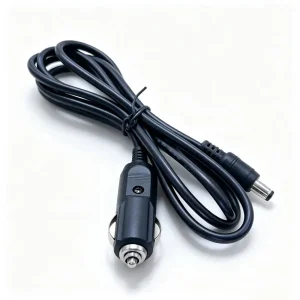
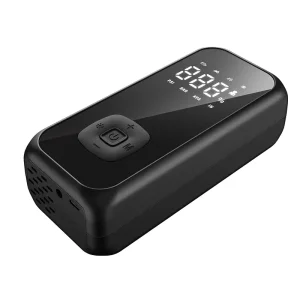
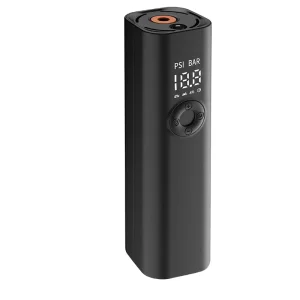
Budget Friendly SPKSTAR 6000mAh Wireless Air Pump Inflator Portable Car Air Compressor
Product Details
Easy-maintainable SPKSTAR 12/24V 3000A Heavy Duty Super Capacitor Car Truck Jump Starter
Product DetailsAccelerate Your Automotive Electronics Supply Line
Partner directly with Shenzhen SPKSTAR Technology Co., Ltd. for factory-direct wholesale pricing, certified OEM/ODM manufacturing, and rapid global fulfillment. Contact our senior technical engineering team today.