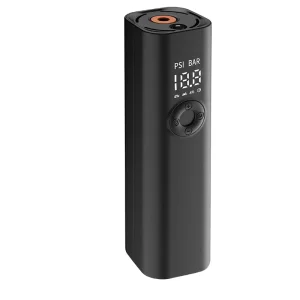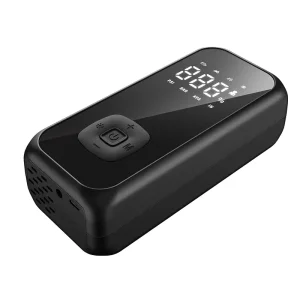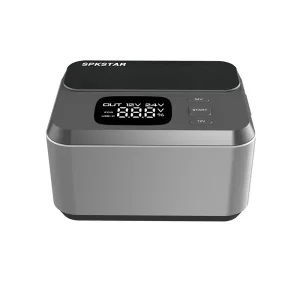
Top-Tier Fleet & Workshop Solutions
Featured Automotive Diagnostic & Power Equipment
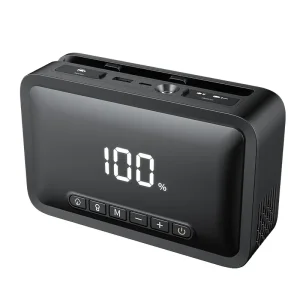
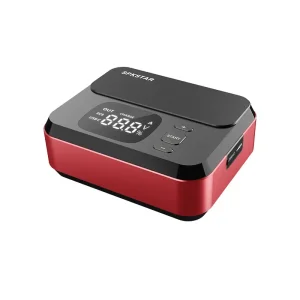
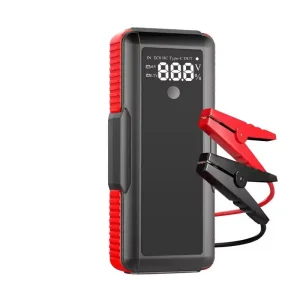
Precision-engineered electrical validation tools and ultracapacitor starting units built to meet rigorous CE, FCC, and RoHS compliance specifications for bulk OEM distribution.
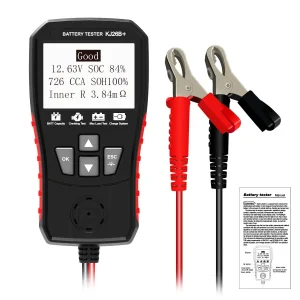
Global Industrial Outlook
Automotive Battery Load Testing: Global Procurement Dynamics
As internal combustion engines integrate complex Start-Stop configurations and modern fleet managers face stringent uptime parameters, commercial procurement demands robust, highly accurate dynamic load and conductance testing architectures.
Complex Battery Chemistries
The rapid shift from traditional flooded lead-acid batteries to Absorbent Glass Mat (AGM), Enhanced Flooded Battery (EFB), and Gel cell formulations necessitates adaptive load testing algorithms capable of isolating plate degradation without inducing destructive heat cycles.
Zero-Tolerance Warranty Audits
Automotive aftermarket retailers and OEM dealerships require verifiable, digital test traces. False battery condemnations generate unnecessary warranty replacement claims, whereas missed internal cell short-circuits trigger stranded vehicles and roadside downtime.
Commercial Fleet Pressures
Long-haul freight, municipal transport, and last-mile delivery services operate under tight turnaround times. Technicians demand multi-chemistry 12V and 24V diagnostic instruments capable of delivering comprehensive State of Health (SOH) and State of Charge (SOC) results under 5 seconds.
Deep Engineering Insights
Dynamic Conductance vs. Pure Carbon-Pile Resistive Load
An engineering breakdown of modern diagnostic methodologies: eliminating thermal dissipation hazards while enhancing internal resistance precision via Kelvin four-wire measurement.
Kelvin 4-Wire Precision
Eliminates contact resistance error across clamp interfaces. By separating the excitation current path from the sensing circuit, micro-ohm variations inside the battery core are accurately isolated.
Passive Conductance Analysis
Utilizes high-frequency AC perturbation signals to measure active electrochemical surface area, avoiding excessive energy drain, spark risk, and dangerous thermal runaways typical of traditional carbon piles.
Ripple & Cranking Diagnostics
Captures cranking voltage drop profiles down to milliseconds while simultaneously assessing alternator rectifier diode health via real-time micro-ripple waveform detection.
Multi-Standard Rating Engine
Native algorithmic translation covering CCA, CA, MCA, JIS, DIN, SAE, IEC, and EN rating standards guarantees global compatibility for multinational importers and testing agencies.
100–2000
Cold Cranking Amps (CCA) Test Scope
< 3.0s
SOH / SOC Rapid Decision Loop
±0.5%
Conductance Measurement Precision
100K+
Supercapacitor Cycle Endurance
Manufacturing Excellence
Wholesale & OEM/ODM Turnkey Engineering Infrastructure
Shenzhen SPKSTAR Technology Co., Ltd. has delivered end-to-end power electronics engineering since 2005. From raw PCB layout and firmware calibration to customized chassis tooling and export-ready compliance packaging, we serve global automotive brands.
Custom PCBA & Algorithmic Calibration
Our internal engineering division customizes microprocessor logic, anti-polarity relays, thick-copper thermal layers, and low-power standby circuits to align with specialized private-label requirements.
Precision Tooling & Enclosure Design
We run dedicated injection mold lines crafting impact-resistant ABS+PC drop-tested housings, ergonomic all-copper insulated clamps, and high-visibility back-lit dot-matrix or color TFT diagnostic displays.
Pilot Batch & High-Volume Assembly
With agile SMT lines and systematic Burn-In testing regimens, our Shenzhen production floors transition smoothly from initial 500-unit pilot market validations to monthly multi-container mass shipments.
Global Market Access
Compliance Certifications & Regional Logistic Safeguards
International distribution demands absolute adherence to regional electrical safety, electromagnetic compatibility, and environmental directives.
CE & UKCA Directives
Full compliance with the European EMC Directive 2014/30/EU and UK Electromagnetic Compatibility Regulations 2016, verifying anti-static suppression (ESD) and radio-frequency noise isolation.
FCC Part 15 & RoHS Conformity
Rigorous Class B emissions certification for North American automotive retail channels, together with 100% lead-free, non-hazardous assembly under RoHS 2.0 (Directive 2011/65/EU and 2015/863).
Localized Technical Traceability
Dedicated documentation packages: bilingual comprehensive technical datasheets, customs HS classification guidance (8504.40 / 9031.80), and full serial-number tracking for seamless regional warranty verification.
Engineering Horizon
Technology Roadmap: Next-Gen Battery Diagnostics & Auxiliary Power
Strategic product development directions integrating telemetry, hybrid EV auxiliary 12V bus analytics, and hybrid electrostatic energy storage.
IoT & Cloud Telemetry Integration
Integrating Bluetooth Low Energy (BLE 5.2) and Wi-Fi modules into commercial load testers, synchronizing battery health profiles instantly into cloud ERP and fleet asset management systems.
EV & Hybrid Auxiliary 12V Isolation
Specialized software algorithms configured for EV auxiliary lead-acid and lithium LFP batteries, preventing false diagnostic interference caused by high-voltage DC-DC converter active feedback.
Hybrid Ultracapacitor Co-Processing
Fusing supercapacitor burst capability with digital conductance testing, enabling devices to execute high-rate instantaneous crank-simulation pulses without internal thermal battery cells.
Procurement Inquiries
Frequently Asked Questions for B2B Importers
Direct answers addressing technical parameters, minimum order quantities (MOQs), CE conformity, and private-label delivery cycles.
What is the technical advantage of conductance battery testing over traditional resistive load testing?
Traditional resistive testers dissipate large amounts of power as heat through carbon piles or ceramic resistors, drawing substantial current (up to 100A–300A) which can spark, degrade battery state of charge, and create thermal hazards. Conductance technology injects a low-amplitude AC perturbation signal to measure active plate surface area. This achieves precise State of Health (SOH) and Cold Cranking Amps (CCA) evaluation within 3 seconds, totally spark-free and safe for deeply discharged batteries.
Can SPKSTAR digital battery testers evaluate modern Stop-Start AGM and EFB batteries?
Yes. Our testers feature tailored algorithmic look-up tables calibrated specifically for regular flooded, AGM flat plate, AGM spiral, EFB, and GEL batteries. Testing parameters dynamically account for the different internal impedance characteristics inherent to AGM and EFB chemical matrices.
What certifications and compliance documentation are provided with wholesale export shipments?
All units are engineered for compliance with CE (EMC Directive 2014/30/EU), FCC Part 15 Class B, and RoHS 2.0 directives. Upon order verification, complete test reports issued by accredited laboratory partners (such as SGS, TUV, or Intertek) are provided alongside Declarations of Conformity (DoC) for customs clearance and retail compliance audits.
What are the OEM and ODM customization options available for distributor programs?
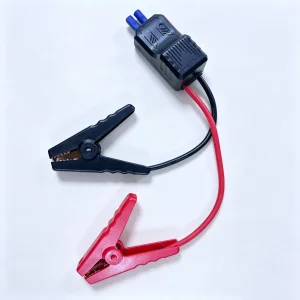
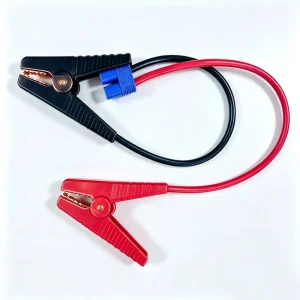
We provide full turnkey OEM/ODM services: customized silicone/ABS housing colors, silk-screened company logos, custom boot-up firmware screens, multilingual UI localizations, personalized rating scale defaults (SAE, EN, DIN, etc.), custom clamp configurations (EC5, EC8, heavy-duty Kelvin clamps), and full retail packaging.
How do supercapacitor jump starters compare to conventional lithium battery jump starters in extreme cold?
Supercapacitors store electrical charge electrostatically on physical electrodes rather than through an electrochemical reaction. Consequently, while lithium jump starters suffer severe capacity fade and chemical sluggishness below -10°C, supercapacitor systems operate reliably between -40°C and +65°C, delivering full burst cranking current without degradation or risk of thermal runaway.
What is the typical production lead time and minimum order quantity (MOQ) for wholesale orders?
Standard factory models carry an MOQ of 200–500 units with an average dispatch lead time of 15 to 25 business days. Full custom OEM/ODM tooling or proprietary firmware revisions are evaluated per project schedule, typically achieving pilot batch production in 30 to 45 business days.
Complete Hardware Portfolio
Comprehensive Wholesale Inventory & Hardware Catalog
Explore our full line of supercapacitor jump starters, smart air pumps, digital load testers, and industrial replacement connectors available for global container orders.