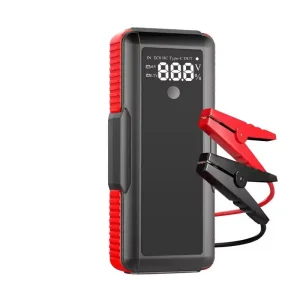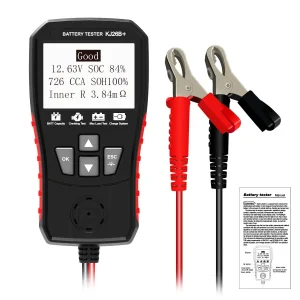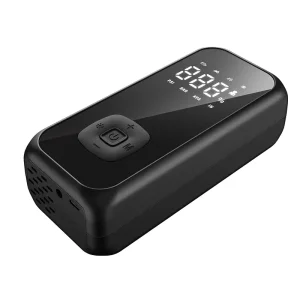
OEM / ODM Product Showcase
Factory-Engineered Automotive Diagnostics & Starting Platforms
Precision 12V/24V battery checkers, ultra-capacitor starters, and digital inflator systems manufactured to strict CE, FCC, RoHS, and UKCA engineering standards.

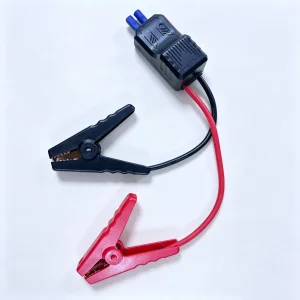

Industrial Status & E-E-A-T Architecture
Global Commercial Status of Vehicle Battery Diagnostic Tools
In the contemporary global automotive aftermarket, the demand for precision car battery checkers and diagnostic testing units has undergone a seismic shift. Modern vehicles equipped with Start-Stop (ISS) technology, advanced micro-hybrids, and multi-rail electrical architectures rely on AGM, EFB, and specialized GEL lead-acid batteries that are significantly more sensitive to voltage instability and internal plate sulfation than traditional flooded designs. Consequently, the commercial footprint of 12V and 24V battery checkers has transitioned from archaic carbon-pile resistive load heaters to ultra-precise AC conductance testing algorithms that assess electrochemical state-of-health without depleting power or risking thermal runaway.
Shenzhen SPKSTAR Technology Co., Ltd. has stood at the core of this transformation since 2005. As an established Sino-foreign joint venture, our manufacturing operations balance high-throughput automated PCBA fabrication with stringent regulatory compliance. Securing authentic CE Certification—specifically harmonized against the Electromagnetic Compatibility Directive (EMC 2014/30/EU) and Low Voltage Directive (LVD 2014/35/EU)—is an essential technical milestone for B2B distributors, Tier-1 fleet service networks, and global retailer brands entering European Economic Area (EEA) and global markets.
20+
Years Electrical Engineering Expertise
100%
CE, FCC, RoHS Tested Production
< 0.15%
Defect Rate across OEM PCBA
100K
Supercapacitor Extended Cycles
Kelvin 4-Wire Diagnostic Precision
Eliminates contact lead resistance errors during cranking ampere (CCA) measurements, delivering ±0.5% measurement repeatability across 100 to 2000 CCA arrays conforming to SAE, DIN, EN, and IEC criteria.
EMC & EMI Immunity (CE Certified)
Engineered multilayer PCB ground planes and TVS clamping arrays suppress secondary transient spikes during vehicle alternator charging system analysis, fully compliant with EN 61326-1 testing limits.
Scalable Bill-of-Materials Pricing
Factory-direct micro-controller unit (MCU) integration without middleman markup enables customized pricing profiles from mass-market handheld testers to comprehensive workshop diagnostic hubs.
Procurement Economics
CE Certification Car Battery Checker Price & Cost Analysis
Demystifying factory-level unit costs, certification auditing investments, and margin optimization for commercial distributors.
In wholesale and private-label automotive tool supply chains, pricing structures for CE-marked battery analyzers are directly governed by internal sensor tolerances, LCD display technologies, and enclosure ingress protection ratings (IP code). Non-certified gray-market testers typically cut costs by eliminating optocoupler isolation, using inferior low-gauge copper-plated aluminum clamps, and omitting certified third-party EMC lab verifications. Such short-cuts expose brand importers to substantial customs seizure liability under EU market surveillance frameworks (Regulation EU 2019/1020).
| Equipment Category | Target System | Key Hardware Standards | Certification Coverage | Estimated Factory Direct MOQ Price |
|---|---|---|---|---|
| Handheld Digital Tester | 12V Passenger SLI, AGM, GEL | Segmented Backlit LCD, Reverse Polarity Protection | CE, RoHS, FCC | $7.50 – $14.00 / unit |
| Professional Conductance Analyzer | 12V / 24V Commercial & Fleet | 2.8" Color TFT, Kelvin Clamps, USB Export | CE, EMC Directive, RoHS, UKCA | $18.50 – $32.00 / unit |
| Integrated Battery Tester + Printer | 12V/24V Heavy Duty Machinery | Built-in Thermal Printer, Ripple Waveform Analyzer | CE (LVD/EMC), UL/FCC Listed Components | $45.00 – $68.00 / unit |
| Multifunction Booster & Checker | 12V/24V Dual System | Supercapacitor Core (1000A–3000A), Dynamic Load | CE, UN38.3, RoHS, UKCA, UL | $65.00 – $180.00 / unit |
Engineering Versatility
Localized Application Scenarios & Technical Roadmaps
Cold-Climate Fleet Logistics
Operable down to -40°C in Nordic and Canadian regions where sub-zero electrolyte freezing prevents typical chemical battery boosters from delivering power. Supercapacitor technology pairs with checkers for immediate field recovery.
Automotive Dealership Preparation
Streamlining pre-delivery inspection (PDI) protocols. Accurately determines State of Charge (SOC) and State of Health (SOH) across vehicles subjected to prolonged transit, minimizing dead-on-arrival (DOA) delivery claims.
Heavy Commercial Road Haulage
24V heavy transport checks analyze dual 12V series-connected batteries simultaneously, evaluating inter-cell balance and catching single-cell voltage collapse before highway breakdown occurrence.
IoT Cloud Telematics Integration
Next-generation Bluetooth/CAN-bus testing interfaces that push diagnostic impedance profiles directly to workshop management software and insurance telematics platforms via mobile API linkages.
Integrated Manufacturing
Macro-Industry Solutions: From Schematic to Port
Shenzhen SPKSTAR delivers complete supply chain resilience for international brands through our Bao'an production facilities.
1. Rapid DFM Review
Our hardware and structural engineering units evaluate client CAD models and schematics for high-efficiency Surface Mount Technology (SMT) fabrication within 72 hours.
2. Custom Tooling
In-house mold processing for drop-resistant ABS/PC automotive housings, ergonomic rubberized grips, and bespoke heavy-duty smart clamp assemblies.
3. Firmware Localization
Preloaded UI firmware supporting multi-language operational dialogues, customized testing thresholds (EN, CCA, CA, MCA, JIS, SAE), and private-label branding graphics.
4. Audit Verification
Pilot-batch validation and provision of full CE technical construction files (TCF), EMC lab validation reports, and RoHS substance compliance dossiers.
Technical FAQs
Frequently Asked Questions: Sourcing & Compliance
What specific CE directives apply to car battery checkers and testers?
Car battery checkers fall under the European EMC Directive 2014/30/EU (tested via standards EN 61326-1 / EN 55032 / EN 55035) to verify electromagnetic compatibility against vehicular interference. Checkers that connect to mains power or test systems exceeding standard safety voltage parameters must also comply with the Low Voltage Directive (LVD 2014/35/EU). SPKSTAR units provide complete compliant documentation for customs clearance.
How does conductance testing differ from traditional load testing?
Traditional load testers draw heavy currents (typically 100A–300A) across an internal resistive heater coil, generating extreme heat and potentially damaging weak batteries. SPKSTAR digital battery checkers utilize low-frequency AC conductance testing. By introducing a known micro-signal and analyzing the phase variance and electrochemical impedance, our checkers instantly compute State of Health (SOH) and Cold Cranking Amps (CCA) safely without surface discharge.
What parameters affect the pricing of OEM battery checkers?
Pricing is governed by: (1) Processor speed and ADC resolution (8-bit vs. 32-bit Cortex MCUs), (2) Screen technology (standard segment display vs. multi-color TFT displays), (3) Testing clamp metallurgy (plated iron vs. solid Kelvin four-wire pure copper clamps), and (4) Integrated peripherals such as embedded thermal receipt printers, Bluetooth LE modules, or supercapacitor jump-starter combos.
Can SPKSTAR customize battery testing algorithms for proprietary lithium (LiFePO4) batteries?
Yes. Although automotive SLI batteries primarily utilize Lead-Acid (Wet, AGM, EFB, GEL) chemistries, our in-house engineering team designs custom PCBA firmware configurations with adjusted charge/discharge curves and specific impedance thresholds suited for 12V LiFePO4 automotive starter and auxiliary batteries.
What is the typical production lead time for an OEM order with custom branding?
Standard lead times for customized private-label runs (including custom molded enclosures, customized silicone cabling, branded startup screen animations, and custom retail color boxes) range between 25 and 35 calendar days following golden sample sign-off and safety audit approval.
Complete Equipment Catalog
Comprehensive Commercial Inventory & Accessories
Direct industrial procurement options for global automotive electronics distributors.