
Primary Product Matrix (Industrial Stock)
Direct OEM & wholesale supplies featuring military-grade transient discharge circuits, ultracapacitor cold-start safety modules, and intelligent diagnostic tooling.
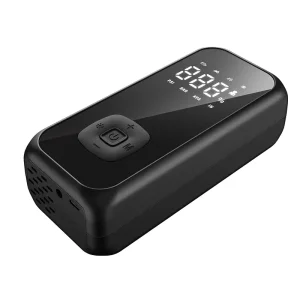

The Paradigm Shift in Automotive Energy Recovery
From volatile electrochemical lithium batteries to solid-state electrostatic supercapacitors: analyzing commercial vehicle availability, parasitic drain mitigation, and extreme-temperature resilience.
Electrochemical vs. Electrostatic
Conventional lithium-ion jump boosters rely entirely on internal chemical migration. In severe arctic freezes or tropical engine compartments exceeding 60°C, internal chemical impedance increases radically, prompting dangerous electrolyte off-gassing and catastrophic voltage drops. Supercapacitor jump starters operate strictly on electrostatic double-layer capacitance (EDLC), decoupling emergency engine ignition from ambient thermal volatility.
Total Cost of Ownership (TCO)
Commercial logistics lines and roadside recovery outfits frequently replace lithium battery packs every 18 to 24 months due to capacity decay and shelf self-discharge. Battery-free supercapacitor jump systems require zero scheduled cycle top-ups, retaining operational capability for over a decade. By harvesting residual voltage (down to 5V) from depleted batteries in under 3 minutes, fleet maintenance overhead drops by up to 72%.
Transient Inrush & Crank Profiling
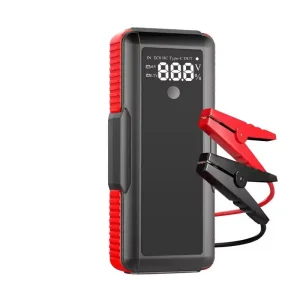
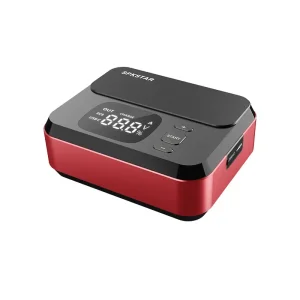
Modern heavy commercial vehicles (Class 6-8 transport) demand sudden burst outputs reaching 1500A to 3000A within milliseconds to overcome high-compression diesel engines. SPKSTAR's engineering topology delivers instantaneous, low-ESR (Equivalent Series Resistance) power curves without causing microcontroller voltage brownouts across modern multiplexed vehicle architectures.
Localized Regulatory Compliance & Supply Chain Security
Mitigating cross-border procurement vulnerabilities through internationally recognized certifications, localized hazardous cargo exemptions, and direct OEM engineering accountability.
UN38.3 & Class 9 Freight Exemption
Unlike conventional high-capacity lithium booster packs that trigger stringent Class 9 dangerous goods classifications and restricted maritime routing, SPKSTAR battery-free supercapacitors offer non-spillable, chemical-free freight classifications. This vastly streamlines air freight clearance, cuts cross-border demurrage expenses, and bypasses regional warehouse fire-suppression restrictions.
Global Audit Accreditation
Every industrial batch is produced in accordance with strict ISO9001/IATF standards. Hardware platforms conform fully to CE (EMC/LVD), FCC Part 15B, UL2743 standards for portable power packs, UKCA certification for British logistics corridors, and RoHS environmental directives, securing compliance against stringent shelf audits and customs scrutiny.
Localized Warranty & Field Support
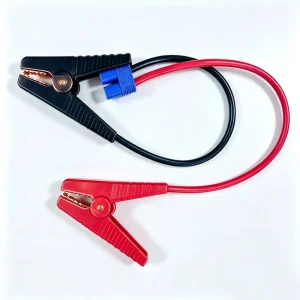
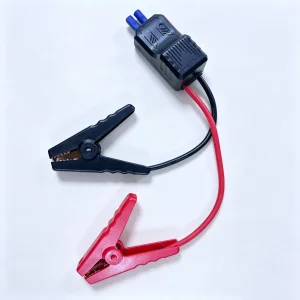
We provide complete technical support for wholesale distributors and industrial buyers across Europe, North America, and Australasia. From modular spare-part inventory support (EC8 high-current assemblies, smart relays, replacement diagnostic clamps) to dedicated RMA response pipelines, your brand reputation is safeguarded at every touchpoint.
Engineered Scenarios Across Diverse Operational Arenas
Where failure is not an option: dissecting mission-critical field challenges across transport sectors, remote exploration, and harsh environments.
Arctic & Sub-Zero Logistics
In regions such as Scandinavia, Canada, and Northern Japan, winter temperatures routinely fall below -30°C. Standard lead-acid and lithium jump packs experience catastrophic chemical freeze, resulting in zero terminal voltage. SPKSTAR supercapacitors fire instantly regardless of ambient chill, maintaining normal engine turn-over without thermal lag.
Class-8 Heavy Duty Fleets
Long-haul commercial tractor trailers powered by heavy 11L to 13L diesel engines require massive 24V starting currents to initiate compression stroke cycles. Our 3000A heavy-duty supercapacitor stations bridge internal dual-voltage channels with zero battery degradation, getting stalled cross-border transport back in motion.
Off-Grid Field Exploration
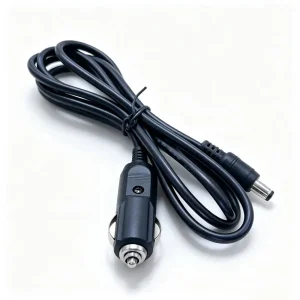
Mining exploration convoys, defense vehicles, and back-country search teams frequently encounter dead batteries hundreds of miles from electric charging infrastructure. Because supercapacitors do not store volatile chemical charges, they can be stored dry and safely energized on-site via a companion vehicle's auxiliary 12V DC circuit in roughly 3 minutes.
Dealerships & Repair Centers
Automotive staging lots, vehicle repair hubs, and long-term storage auctions continually face depleted battery stock. Technicians utilizing conventional chargers spend hours tending lithium power banks. Our ultracapacitor solutions permit back-to-back engine cranks continuously throughout an entire shift without internal heating downtime.
Technology Roadmap: 2026–2030 Engineering Horizon
Forward-looking architectural advancements from our Shenzhen R&D facility, pushing the boundaries of solid-state safety and digital telemetry integration.
Graphene Hybrid EDLC Cells
Integration of nitrogen-doped graphene sheets within electrostatic electrodes, lowering internal ESR to sub-milliohm levels and delivering up to 3500A peak crank pulses while expanding working life to 150,000 cycles without terminal passivation.
Gallium Nitride (GaN) Inverters
Deployment of ultra-compact GaN-based fast chargers directly into the booster chassis, achieving PD3.1 240W bidirectional charging capable of recovering an ultracapacitor stack from dead zero in less than 45 seconds via USB-C or car auxiliary inputs.
CAN-Bus Diagnostic Telemetry
Merging smart EC8 connector lines with wireless micro-controllers to stream real-time alternator waveform diagnostics, CCA degradation matrices, and cranking health directly to cloud fleet management software dashboards via Bluetooth Low Energy (BLE).
Frequently Asked Questions for Industrial B2B Sourcing
Direct technical clarifications regarding ultracapacitor architectures, cell life cycles, and wholesale customization parameters.
How does a supercapacitor jump starter operate without an internal battery storage bank?
Unlike conventional lithium booster packs that store energy chemically within an electrolyte bath, supercapacitors store energy physically in an electrostatic double layer between high-surface-area activated carbon electrodes. This allows the unit to extract minimal leftover voltage from a "flat" vehicle battery (even as low as 5V–6V) over 120 to 180 seconds, concentrate that energy into its capacitor bank, and discharge it instantly at up to 1000A–3000A to spin the vehicle starter motor.
Why are ultracapacitor jump starters vastly superior in extreme sub-zero weather?
Electrochemical reactions inside lithium-ion cells slow exponentially as temperatures approach 0°C, suffering severe internal resistance (ESR spike) below -20°C that frequently renders them incapable of generating the high amperage needed to overcome viscous, frozen engine oil. Supercapacitors rely on purely physical electron migration without chemical phase change, allowing nominal peak discharge operations down to -40°C (-40°F) without thermal blankets or preheating routines.
What is the realistic service lifespan and cycle durability compared to LiFePO4 or Lithium Cobalt?
Premium automotive lithium packs typically deliver 300 to 1000 full recharge cycles before losing 20-30% of their rated capacity, and they degrade continuously even in dry storage due to internal chemical aging. Industrial ultracapacitors are rated for over 100,000 to 500,000 charge-discharge duty cycles with a shelf operational life exceeding 10+ years without maintenance charging.
Can SPKSTAR fulfill custom PCBA, custom enclosure injection tooling, and private label branding?
Yes. Shenzhen SPKSTAR operates as a full-spectrum OEM/ODM manufacturer with 20+ years of power-electronics history. We offer turnkey services including internal DFM engineering evaluations, custom structural mold fabrication, tailored PCBA firmware (adjusting current thresholds, reverse-polarity warning buzzers, force-start parameters), customized laser etching, and tailored export packaging aligned with your brand identity.
What primary compliance certificates are provided for customs clearance in Europe and North America?
SPKSTAR products are tested and certified to comply with CE (under relevant Electromagnetic Compatibility and Low Voltage Directives), FCC Part 15 Class B, UL2743 standards for portable power electronics, UKCA certification for the United Kingdom, and full RoHS compliance. Factory test reports, MSDS, and third-party lab documentation are available directly to verified distributors and enterprise clients.
Wholesale Hardware & Diagnostic Accessories Catalog
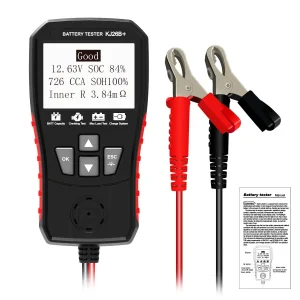
Explore our full ecosystem of emergency power electronics, smart cable safety assemblies, and high-precision testing apparatus.