
High-Precision Diagnostic & Emergency Hardware
Factory-direct platforms engineered for international automotive distributors, fleet operations, commercial workshops, and OEM brands requiring high durability.



Macro Industry Solutions & Measurement Paradigms
How modern conductance spectroscopy is displacing heavy thermal resistive load testing in 12V/24V lead-acid and auxiliary lithium battery platforms.
Dynamic AC Conductance Algorithmic Core
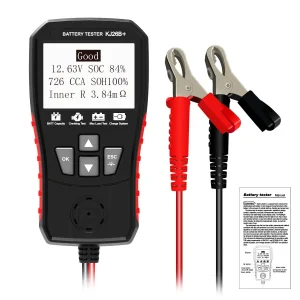
Traditional carbon-pile load testers discharge significant kinetic energy as heat, degrading cell chemistry during testing. Modern industrial voltage and conductance testers inject an AC micro-signal across a specific frequency band (typically 100 Hz to 1 kHz). By measuring the complex admittance and phase shift, the microcontroller isolates electrochemical plate resistance from physical grid corrosion without triggering spark hazards or surface-charge distortions.
Multi-Standard Diagnostic Mapping (CCA/SAE/DIN)
Industrial testing demands real-time mathematical translation across distinct international rating systems: Cold Cranking Amps (CCA), DIN (German Industrial Norm), EN (European Norm), IEC (International Electrotechnical Commission), and JIS (Japanese Industrial Standard). Advanced testers maintain internal look-up matrices adjusted for plate chemistry variations across Regular Flooded, AGM Flat Plate, AGM Spiral, GEL, and EFB (Enhanced Flooded Battery) start-stop configurations.
Holistic Starting & Charging System Evaluation
Voltage alone serves as an insufficient proxy for electrical resilience. Modern devices incorporate integrated cranking health verification (monitoring minimum voltage trough during millisecond-range engine turnover) and ripple voltage rectification profiling (detecting defective stator diodes inside the alternator while running under electrical load). This end-to-end evaluation stops intermittent roadside breakdowns before component burnouts cascade.
Global Commercial & Industrial Vendor Landscape
A granular breakdown of competitive tiers across global manufacturing hubs, algorithmic IP, unit economic bands, and procurement structures.
| Vendor Tier & Class | Algorithmic Architecture | Core Hardware Specs | Typical FOB Price Matrix | Ideal Procurement Channel |
|---|---|---|---|---|
| Tier-1 Industrial Leaders OEM / Diagnostic Lab Grade |
Dynamic Admittance & Multi-Frequency EIS, Thermal Drift Calibration, Closed-loop algorithms | 32-bit Cortex ARM MCU, high-precision 24-bit ADC, integrated thermal mini-printers, 4-wire gold-plated Kelvin clips | $140.00 – $380.00 / unit MOQ: 50 – 100 units |
Authorized OEM Dealerships, Military & Rail Maintenance Depots, Tier-1 Assembly Inspection |
| Tier-2 Precision OEM/ODM SPKSTAR Factory Direct |
Patented Single/Dual-Frequency AC Conductance, Real-time Kelvin Compensation, Ripple Voltage Decoding | Industrial-grade ABS housing, backlit LCD/OLED, high-copper silicone wire, reverse-polarity suppressors | $18.50 – $48.00 / unit MOQ: 500 – 1,000 units |
Professional Aftermarket Brands, Fleet Logistic Hubs, Regional Hardware Wholesalers, Retail Chains |
| Tier-3 Commodity Makers Basic Commercial |
Static Open-Circuit Voltage Look-up, Passive Internal Resistance Estimates | 8-bit low-cost MCU, simple 7-segment LED or standard LCD, iron-plated clips, copper-clad aluminum leads | $4.80 – $11.50 / unit MOQ: 2,000+ units |
Consumer E-commerce Promos, Entry-level DIY Repair Kits, Supermarket Impulse Bins |
BOM (Bill of Materials) Cost Formation & Scaled Margin Economics
Understanding what dictates price fluctuations in automotive diagnostic procurement allows supply chain directors to pinpoint value-add engineering versus unnecessary hardware bloat. The production BOM divides into four primary cost centers:
1. Microcontroller & Signal Processing (28-35% BOM)
High-speed ADC conversion precision defines measurement repeatability. Upgrading from a noisy 10-bit analog-to-digital converter to an isolated 16-bit or 24-bit differential sigma-delta ADC reduces variance on sub-milliohm internal resistance readings from ±8% down to <±0.5%.
2. Kelvin 4-Wire Contact Tooling (22-26% BOM)
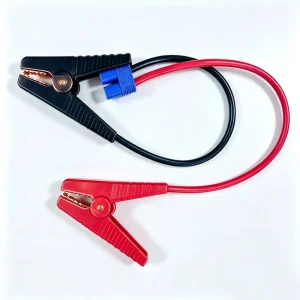
Every professional tester uses dual-conductor Kelvin clamps. The separation of the excitation current wire from the voltage-sensing wire eliminates lead resistance from the equation. Thick electrolytic brass clips with beryllium-copper spring jaws dictate manufacturing unit cost.
3. Over-Voltage & Surge Suppression (15-18% BOM)
Automotive electrical spikes during load dumping can exceed 80V on 24V commercial vehicle systems. Transient Voltage Suppressor (TVS) diodes, PPTC resettable fuses, and optocoupler isolation circuits prevent destruction from misconnection.
4. Enclosure & Structural Ergonomics (12-16% BOM)
Dual-injection TPU/PC casing with drop ratings of 2 meters, hydrocarbon/oil resistance, and IP54 dust and splash proofing are mandatory for professional workshop longevity, directly driving mold and tooling investments.
Localized Application Scenarios & Industrial Edge Deployments
Operational requirements vary radically depending on climatic geography, vehicle vocation, and service-bay workflows.
Sub-Zero Nordic & Arctic Logistics
In high-latitude winter conditions (-30°C to -45°C in Scandinavia, Canada, and Northern Asia), standard electrochemical testing fails due to electrolyte stratification and frozen liquid electrolytes. Advanced testers incorporate cold-compensation algorithms that correct internal resistance readings back to standard 25°C reference bases, preventing false battery replacement decisions.
High-Ambient Desert Fleet Operations
In Middle Eastern and Southwestern American operations, the main failure mode is plate grid growth, accelerated positive grid corrosion, and rapid water loss from excessive ambient heat. Testers calibrated for high operating temperatures detect early micro-cracking and internal impedance surges long before complete battery collapse occurs on long-haul transport corridors.
EV & Hybrid 12V/16V Auxiliary Subsystems
Modern electric vehicles rely critically on low-voltage lithium (LiFePO4) or sealed AGM auxiliary batteries to boot up primary contactors, computers, and safety systems. A dying 12V auxiliary pack immobilizes an entire EV. Next-generation voltage and impedance testers isolate the low-voltage network from high-voltage DC-DC converter electrical noise, verifying auxiliary system health safely.
Localized Support, Regulatory Assurances & Calibration
How Tier-1 factory certification shields global distributors from product liabilities and import non-conformity risks.
Electromagnetic Compatibility (EMC) & RF Hardening
Industrial diagnostic environments are flooded with high-frequency ignition pulses, shop welders, and powerful radio transceivers. Sourcing equipment tested strictly under EN 61326-1 and FCC Part 15 Class B ensures internal operational amplifiers and microprocessor clocks do not absorb spurious EMI. Compliance guarantees that voltage measurements remain steady and repeatable right next to running high-output alternators or active jump starters.
ISO/IEC 17025 Traceable Factory Calibration
A diagnostic tool is only as dependable as its traceable calibration matrix. Qualified OEM/ODM manufacturing facilities deploy automated five-point calibration benches tied directly to national metrology standards (NIST/CNAS). This ensures that every shipped device displays voltage accuracy down to the second decimal place and conductance within ±10 CCA tolerances throughout its warranty lifecycle.
Environmental & Chemical Safety (RoHS/REACH)
Selling hardware across the European Union and the United Kingdom demands strict enforcement of RoHS Directive 2011/65/EU and REACH Regulation (EC 1907/2006). This eliminates restricted flame retardants, plasticizers in test lead PVC/TPE jackets, and heavy metal concentrations in lead-free soldering profiles, avoiding costly customs holds at regional container ports.
Localized Supply Chain Warehousing & RMA Policies
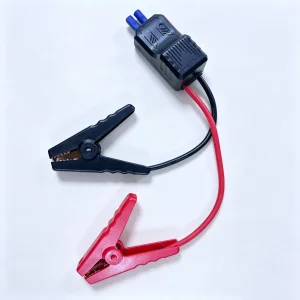
A sustainable equipment procurement program requires more than low FOB pricing; it mandates localized spare parts depots for consumable parts (Kelvin clamps, flexible test cables, thermal printer mechanisms) and clear RMA protocols. SPKSTAR partners with international brand distributors to provide dedicated sub-assembly swap units and fast regional warranty support.
Technical Roadmap: The Next Era of Automotive Diagnostics
From isolated hand-held meters to interconnected telematics and automated AI-driven battery prognosis.
Bluetooth 5.4 Mesh & Cloud Fleet Telematics
Hand-held testers are evolving into IoT data collection nodes. Field technicians no longer jot down readings by hand; testers automatically sync serial numbers, milliohm values, and dynamic cranking curves directly to enterprise fleet management databases, generating cloud-stamped inspection certificates for automated customer billing.
AI Predictive Degradation Modeling
Instead of relying purely on static CCA tables, emerging testing architectures leverage neural networks trained across millions of historical charge-discharge cycles. These algorithms assess internal resistance spikes alongside temperature and operational age to predict the exact probability of failure over the upcoming 30 to 90 operational days.
Multi-Voltage Scalability (12V / 24V / 48V)
With the rise of 48V mild-hybrid powertrains and dual-voltage commercial haulers, diagnostic hardware is transitioning toward wide-input front ends capable of safely switching test loads between 6V small powersports, 12V standard passenger cars, 24V heavy diesel trucks, and 48V energy recuperation packs without changing tools.
Advanced Automotive Diagnostics: Engineering & Sourcing Q&A
In-depth answers to core engineering, calibration, and bulk procurement questions encountered by global equipment buyers.
Industrial Procurement Portfolio & Auxiliary Gear
Complete your sourcing program with our high-cycle supercapacitor units, heavy-duty clamps, and automotive power electronics.

Launch Your Custom Battery Testing Program
Direct factory engineering support, rapid DFM mold evaluation, custom firmware calibration, and full international certification coverage.