
High-Priority Jump Starter SKUs for Tokyo Wholesale & Fleets
Engineered for high-density metropolitan mobility, sub-zero Kanto winter readiness, and continuous emergency duty cycles. Original direct-manufacturer specifications with Japan-bound export configurations.
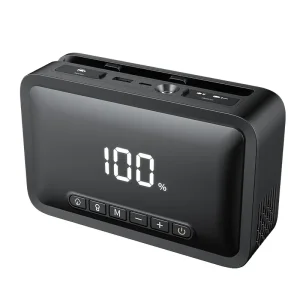
Tokyo Urban Fleet 2-in-1 Emergency Jump Starter with 150 PSI Compressor
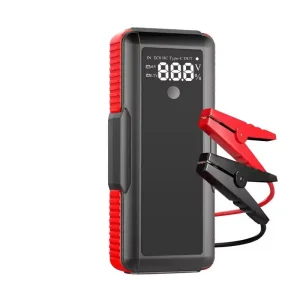
SPKSTAR Ultra Safe 1000A Supercapacitor Jump Starter (Tokyo Metro Series)
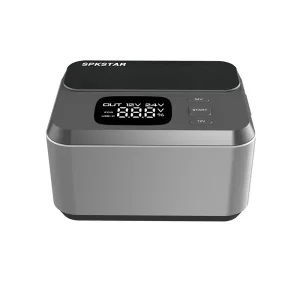
Tokyo Bay Logistics 12/24V 3000A Industrial Supercapacitor Truck Booster
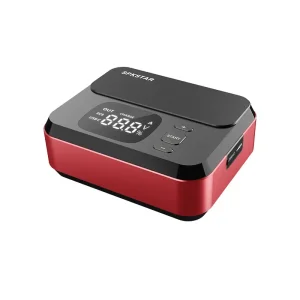
SPKSTAR 12V 1500A Supercapacitor Jump Starter & Workshop Rapid Charger
Navigating Greater Tokyo’s Complex Automotive & Logistics Ecosystem
The Tokyo Metropolitan Area hosts the highest vehicular density and the most intricate road transport network in East Asia. From the high-turnover delivery vans servicing logistics nodes in Koto-ku, Shinagawa, and Ota Ward, to the sprawling multi-level mechanical parking towers (Rittai Chushajo) in Chiyoda and Shinjuku, the operational demands placed on emergency vehicle starting equipment are uniquely stringent.
Traditional chemical lithium-ion booster packs present persistent liabilities in Japanese commercial settings. Confined mechanical towers experience ambient temperature swings reaching above 55°C during humid Tokyo summers, accelerating chemical degradation, lithium swelling, and fire hazards under strict Fire and Disaster Management Agency (FDMA) codes. Conversely, winter morning cold snaps in Western Tokyo, Okutama, Saitama, and Gunma degrade lithium cranking efficiency by up to 60%, leaving roadside operators vulnerable.
- Mechanical Underground Parking Safety: Battery-free supercapacitor jump starters eliminate hazardous chemical reactions, ensuring FDMA fire-code adherence in confined basements.
- High Hybrid (HEV) auxiliary 12V Saturation: Specialized protection against high-voltage inrush damage across Toyota THS-II, Honda e:HEV, and Nissan e-POWER auxiliary batteries.
- Corporate Disaster Readiness (BOSAI): Storable for over 10 years without trickle maintenance, serving enterprise continuity protocols across Tokyo head offices.
Procurement Trend: Supercapacitors vs. Chemical Lithium
Japanese roadside service contractors (such as JAF contractors and private road-service syndicates) are systematically migrating away from traditional lithium packs. The primary catalyst is the “Charge-Drain Cycle Trap.” Roadside service operators running 15 to 25 calls a day find lithium boosters severely depleted after 3 continuous jumps, necessitating lengthy 3-to-4 hour recharges. Our Electric Double-Layer Capacitor (EDLC) technology harvests residual voltage from the vehicle’s failing lead-acid battery in under 180 seconds, delivering instant, unlimited jump cycles without fleet downtime.
Technological Roadmap: Ultracapacitors & Smart Automotive Power
A rigorous engineering breakdown of electrostatic energy discharge, thermal robustness, and circuit-level protection tailored for advanced Japanese electronic architectures.
Electrostatic Double-Layer Mechanics
Unlike electrochemical lithium batteries which depend on slow Faradaic ion intercalation, our EDLC architecture stores electrical potential physically on high-surface-area activated carbon electrodes. This yields internal resistance (ESR) below 0.55mΩ, allowing instantaneous discharge of 1000A to 3000A within milliseconds, unaffected by sub-zero ambient conditions.
Auxiliary 12V Smart Clamping (HEV/PHEV)
Tokyo’s vehicle parc consists of over 42% hybrid and electrified vehicles where the 12V auxiliary lead-acid battery powers ECUs rather than cranking a heavy starter motor. Our digital smart clamps integrate dynamic surge suppression (<16.8V clamping limit) and low-ripple algorithms, preventing electrical spike feedback into sensitive vehicle CAN-Bus networks.
10-Layer Hardware Solid Protection
Engineered with dual high-current relay architectures and reverse-polarity MOSFET banks. Provides complete autonomous protection against reverse polarity, over-charge, over-discharge, short-circuit, back-feed charging post-start, spark emission, high-temperature cutoff, phase imbalance, and low-voltage lockouts.
| Evaluation Parameter | SPKSTAR EDLC Supercapacitor Series | Standard Lithium-Ion (NMC) Boosters | Automotive Lead-Acid Service Boosters |
|---|---|---|---|
| Usable Operational Lifespan | 10+ Years (100,000 Cycles) | 1.5 – 3 Years (300–500 Cycles) | 2 – 3 Years (400 Cycles) |
| Pre-Charge Deployment Time | 1 – 3 Minutes (from dying battery) | 3 – 6 Hours (Mains wall charger) | 8 – 12 Hours (Continuous AC trickle) |
| Thermal Stability Envelope | -40°C to +70°C (No capacity drop) | -10°C to +45°C (Severe cold throttling) | -15°C to +40°C (High sulfation risk) |
| Hazard Level in Closed Spaces | Non-Combustible (Zero Fire Risk) | Thermal runaway / gas venting risk | Hydrogen gas venting hazard |
| Storage Maintenance Protocol | Zero maintenance; stores at 0V | Requires recharge every 60 days | Requires continuous float trickle |
| Aviation & Maritime Freight Class | Non-Dangerous Goods (Standard air/sea) | UN 3481 Class 9 Hazardous Cargo | UN 2794 Corrosive Class 8 |
Macro-Industry Solutions Across Greater Tokyo
Tailored supply architectures addressing the precise business operations of Tokyo car rentals, freight corporations, dealer auctions, and municipal services.
Last-Mile Delivery & Cold-Chain Fleets
Tokyo’s last-mile logistics relies heavily on compact diesel and Kei delivery vans (Toyota HiAce, Daihatsu Hijet, Isuzu Elf). Constant start-stop schedules and refrigeration load cause frequent 12V/24V battery exhaustion. Our heavy-duty dual-voltage jump starters allow depot supervisors to restore grounded delivery trucks within seconds, preserving scheduled delivery windows.
Car Sharing & Car Rental Fleets
With thousands of shared stations operating unstaffed across Tokyo (Times CAR, Orix, Careco), auxiliary battery depletion in hybrid models is a major operational drain. Equipping patrol and maintenance units with our rapid-recharge supercapacitors lowers call-out turnaround from 45 minutes to under 5 minutes, maximizing operational utilization.
Auto Dealerships & Auction Yards (USS Tokyo)
The USS Tokyo auto auction in Noda handles tens of thousands of trade-in vehicles weekly. Extended lot storage drains starting batteries across diverse engine displacements. Our 1000A to 3000A boosters provide endless continuous jumping without needing to return to base to recharge off the AC grid.
Rigorous METI & PSE Certification Framework
Navigating the Japanese Electrical Appliance and Material Safety Act (DENAN Law) is critical for commercial importers. Our jump starters and AC/DC adapters are rigorously engineered to comply with METI technical requirements. For models utilizing internal secondary lithium batteries, volumetric energy density testing and Circular PSE certification are fully documented. Supercapacitor-exclusive models benefit from streamlined customs entry as non-regulated electrostatic energy storage devices, entirely mitigating lithium safety liabilities.
China Factory 4.0: Supply Chain Resilience & Cost Efficiency
Manufactured in our Shenzhen advanced production facility, SPKSTAR bridges Tier-1 power electronics manufacturing with direct Japanese commercial channels. With over 20 years of dedicated export experience, our Industry 4.0 facility integrates automated surface-mount technology (SMT), automated optical inspection (AOI), and multi-stage programmable dynamic load testing.
By eliminating multiple tiers of domestic Japanese import brokers, trading houses (Shosha), and private-label intermediaries, we deliver an immediate 25% to 38% cost-efficiency advantage directly to Tokyo distributors, automotive retail chains (Autobacs/Yellow Hat suppliers), and corporate procurement departments.
- MES Traceability: Every individual capacitor bank and PCBA board is serialized with full burn-in and discharge performance logs.
- Localization Services: Japanese user interfaces, high-definition Japanese manuals, and eco-friendly retail packaging meeting Japanese recycling regulations.
- Streamlined Tokyo Port Logistics: Direct sea routes from Shenzhen/Hong Kong to Tokyo Port / Yokohama Port with typical 5–7 day sailing times.
Full Automotive Emergency & Diagnostic Product Suite
Explore our complete production line for the Japanese wholesale and fleet markets. Rigorous industrial quality, available under private label (OEM/ODM) or SPKSTAR branding.
Tokyo Logistics Spec 12V 1500A Supercapacitor Engine Booster & Maintainer
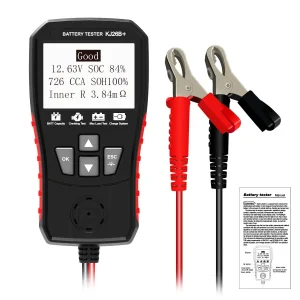
Tokyo Garage Standard 12V/24V Digital Automotive Battery Conductance Tester
SPKSTAR Ultra Safe 1000A Supercapacitor Emergency Starter (Kei-Car Spec)
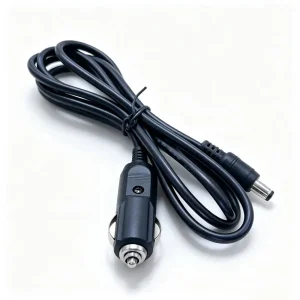
Automotive Grade 12V 5A Cigarette Lighter Power Supply Cord (DC 5.5mm)
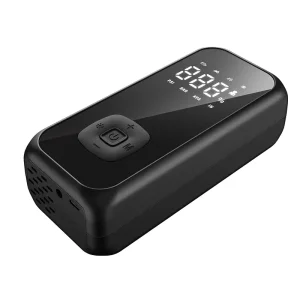
Tokyo Urban Mobility 6000mAh Cordless Tire Inflator & Emergency Power Bank
SPKSTAR Industrial 12V/24V 3000A Supercapacitor Commercial Heavy Truck Unit
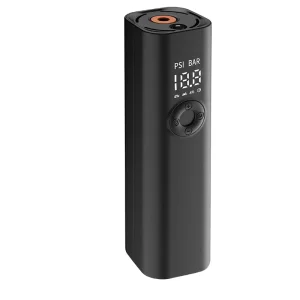
Super Mini 12V Digital Car Air Compressor (Under-Seat Storage Design)
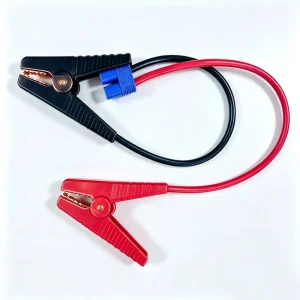
Industrial EC8 Heavy-Duty 8AWG Silicone Booster Cable Alligator Clamps
Frequently Asked Questions: Tokyo B2B Sourcing & Compliance
Direct answers from our senior engineering and supply chain teams to resolve compliance, logistical, and technical concerns for corporate buyers.
How do supercapacitor jump starters circumvent METI PSE certification hurdles in Japan?
Under Japan’s Electrical Appliance and Material Safety Act (DENAN Law), mandatory Circular PSE testing applies to secondary lithium-ion batteries with volumetric energy densities exceeding 400 Wh/L. Because pure Electric Double-Layer Capacitors (EDLC) store energy electrostatically and contain zero chemical lithium compounds, they fall outside the hazardous classification of secondary lithium cells. They do not require Circular PSE registration for the energy storage cell itself, significantly accelerating Japanese customs clearance and lowering administrative compliance costs for Tokyo importers.
How does an EDLC booster operate if the vehicle battery is completely dead (below 5V)?
Our units feature multiple charging inputs. If a vehicle’s 12V battery is completely flat (0V–3V), the supercapacitor cannot harvest energy from the terminal clamps. In this scenario, operators can pre-charge the unit in 2–3 minutes from any other operational car’s 12V cigarette socket, a standard 5V/9V/12V USB-C PD power bank, or a 12V DC wall pack. Once the internal status display reads 100%, it delivers full starting amperage immediately.
Are SPKSTAR jump starters safe for Japanese Hybrid (HEV) and Plug-In Hybrid (PHEV) vehicles?
Yes. Japanese hybrid vehicles (e.g., Toyota Prius, Aqua, Nissan Note e-POWER) utilize a 12V auxiliary lead-acid battery solely to activate the vehicle’s DC-DC converters and high-voltage contactor relays. High voltage spikes from poorly regulated jump starters can destroy expensive inverter controllers. SPKSTAR smart clamps incorporate strict voltage suppression circuitry that clamps output strictly under 16.8V, preventing transient electrical spikes from affecting the vehicle ECU or CAN-Bus systems.
What are the minimum order quantities (MOQ) and lead times for Tokyo port delivery?
For standard SPKSTAR factory-branded inventory, our evaluation MOQ starts at 50 units. For full OEM/ODM customization (custom corporate colorways, silk-screened Japanese logos, customized Japanese packaging, and localized user manuals), the standard MOQ is 500 units. Production turnaround is typically 20 to 25 working days, followed by 5 to 7 days direct ocean transit from Shenzhen/Hong Kong to Tokyo or Yokohama Port.
What Incoterms and payment terms are supported for Japanese corporate procurement?
We support FOB Shenzhen/Hong Kong, CIF Tokyo/Yokohama, and full DDP (Delivered Duty Paid) to your logistics warehouse in Greater Tokyo (including Kanagawa, Chiba, and Saitama), handling customs clearance and Japanese Consumption Tax (JCT) documentation. Payment terms for verified corporate buyers and institutional importers include T/T, L/C at sight, and flexible credit terms upon historical audit validation.