
Featured Automotive Diagnostic & Starting Solutions
Tested and certified hardware platforms engineered for professional workshop technicians, commercial fleets, and retail distribution.
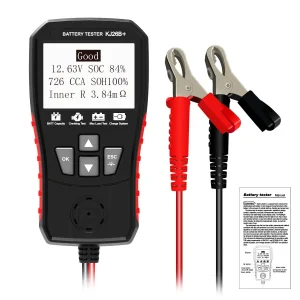
Durable SPKSTAR Digital Automotive Diagnostic Tool 12V 24V Car Battery Tester In Sales, Price
View Product Specs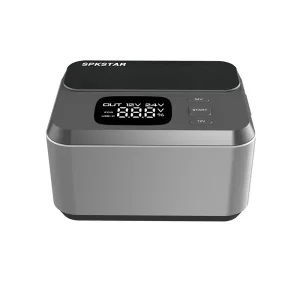
Easy-maintainable SPKSTAR 12/24V 3000A Heavy Duty Super Capacitor Car Truck Jump Starter Product, Price
View Product Specs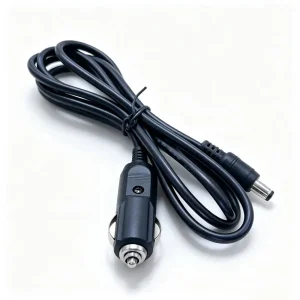
High-Quality SPKSTAR 12V 5A Car Charger Cigarette Lighter for Automotive Electronic Wholesaler, Price
View Product Specs
High-Quality SPKSTAR 2-in-1 Portable Car Emergency Jump Starter With Air Compressor Suppliers, Quotation
View Product Specs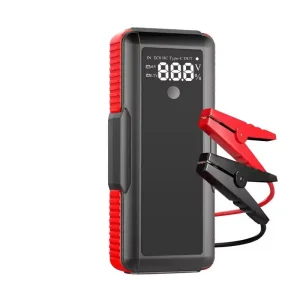
Low Price SPKSTAR Ultra Safe 1000A Supercapacitor Emergency Car Jump Starter Supplier, Suppliers
View Product Specs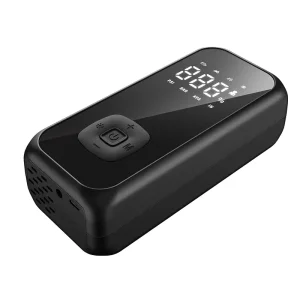
Budget Friendly SPKSTAR 6000mAh Wireless Air Pump Inflator Portable Car Air Compressor Vendor, Vendors
View Product Specs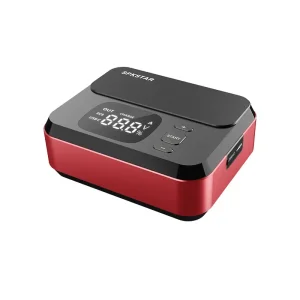
Wholesale SPKSTAR 12V 1500A Supercapacitor Car Battery Charger Jump Starter Vendor, Quotation
View Product Specs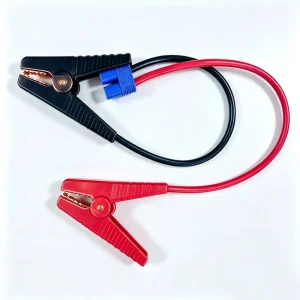
Cheap SPKSTAR 12V 24V Jump Starter Cable Replacement EC8 Alligator Clamps In Stock, Price
View Product SpecsGlobal Auto Battery Testing Landscape: The Transition to High-Frequency AC Conductance
Automotive electrical architectures have evolved dramatically. Modern vehicles equipped with Start-Stop engines, regenerative braking, advanced ADAS suites, and dual-battery systems require diagnostic instruments that go far beyond primitive resistive carbon-pile load testers.
Expanding Market Valuation
The global automotive battery tester market is projected to reach USD 4.8 billion by 2032, advancing at a CAGR of 6.2%. Expansion is catalyzed by rising vehicle age across North American and European roads (averaging 12.5 years), alongside the stringent maintenance cycles necessitated by modern AGM and EFB chemistries.
Complex Chemistry Demands
Traditional flooded lead-acid batteries represent a shrinking proportion of new vehicle installations. Modern fleets rely on Enhanced Flooded Batteries (EFB), Absorbed Glass Mat (AGM flat plate and spiral), GEL, and auxiliary LiFePO4 cells. Testers must accurately measure internal resistance without sparking, draining, or surface heating.
Electrification & EV Auxiliaries
Contrary to common perception, Battery Electric Vehicles (BEVs) and Plug-in Hybrids (PHEVs) experience significant 12V auxiliary system breakdown rates. If the 12V auxiliary battery fails, the high-voltage contactor cannot close. Dedicated 12V auxiliary testing is now an indispensable workshop standard.
Why Tier-1 Importers Source Auto Battery Testers from Shenzhen Factories
Shenzhen SPKSTAR Technology Co., Ltd. operates in the epicenter of the global hardware innovation ecosystem. Sourcing directly from an established Sino-foreign joint venture ensures rapid turnaround, strict IP protection, and uncompromising build quality.
Full PCBA Turnkey Design
We develop high-precision 24-bit Analog-to-Digital Converter (ADC) multi-layer circuit boards with integrated temperature compensation algorithms in-house. Rapid prototyping loops allow functional PCBA delivery in under 14 days.
In-House Tooling & Molding
Avoid expensive middleman markups. Our automated injection molding facility develops rugged, drop-resistant ABS/polycarbonate dual-molded enclosures built to endure oil, grease, brake fluid, and 2-meter workshop drops.
Rigorous Factory Compliance
Every diagnostic unit conforms to CE, FCC Part 15 Subpart B, RoHS, UKCA, and UL industrial standards. Every manufacturing batch undergoes 100% automated optical inspection (AOI), high-voltage isolation tests, and burn-in chamber runs.
Agile MOQ & Private Label
From custom localized graphical UI (supporting English, Spanish, German, French, Japanese, and Arabic) to laser-etched OEM branding and custom packaging, our lean production lines support both pilot trial runs and high-volume containerized shipments.
Measurement Physics: Dynamic Conductance vs. Traditional Carbon-Pile Testing
Why professional fleet managers and diagnostic mechanics reject carbon-pile load devices in favor of dynamic AC conductance and electrochemical impedance spectroscopy (EIS).
Legacy Resistive Carbon-Pile Testers
Carbon-pile testers apply a heavy discharge load (often 100A–300A) across the terminals for 10–15 seconds to observe voltage drop.
- Extreme Heat & Safety Hazard: Generates dangerous thermal spikes, increasing fire risks in battery maintenance bays containing hydrogen gas.
- Severe Energy Depletion: Drains an already weak battery, preventing immediate engine restarts without lengthy recharges.
- Subjective Assessment: Relies on mechanical needle bounce, introducing significant human interpretation error.
- Cannot Determine Active Plate Area: Incapable of differentiating between surface charge, severe sulfation, and internal grid detachment.
SPKSTAR High-Frequency AC Conductance
Injects an ultra-low frequency, low-current AC signal through a 4-wire Kelvin clamp network to measure platelet conductivity and ion flow impedance.
- 100% Non-Destructive & Safe: Zero discharge current drawn; zero sparks, zero heat generation, and zero danger of hydrogen ignition.
- Instantaneous Precision (<3s): Instantly calculates State of Health (SOH %), State of Charge (SOC %), and micro-ohm Internal Resistance ($m\Omega$).
- Accurate on Discharged Batteries: Evaluates battery integrity accurately down to 8.0V without requiring pre-test bench charging.
- Comprehensive Standard Mapping: Converts algorithmic conductance directly to CCA, SAE, EN, DIN, IEC, and JIS international standards.
| Evaluation Parameter | SPKSTAR Conductance Tester | Conventional Load Coils | Digital Multimeter (Voltage Only) |
|---|---|---|---|
| Measurement Accuracy | ±1% Conductance Precision | ±15% Temperature Dependent | Fails (Voltage alone cannot verify SOH) |
| Test Duration | Less than 3 seconds | 15s discharge + 2min cool down | Instantaneous (Zero load capability) |
| Battery Health (SOH) Metric | Algorithmic calculation from $m\Omega$ & CCA | Approximated via voltage under load | None (Unable to detect capacity decay) |
| Start-Stop AGM / EFB Calibration | Native programmed curves | High risk of plate warping | Not supported |
| Starter & Alternator Diode Ripple | Real-time waveform ripple capture | External oscilloscope required | Basic uncalibrated AC RMS voltage |
Mission-Critical Deployment Scenarios Across Global Markets
From cold-cranking verification in sub-zero freight corridors to rapid diagnostic check-ins at commercial automotive franchises, our diagnostic equipment is calibrated for varied commercial environments.
Heavy Commercial & Logistics Fleets
Long-haul trucks operating on 24V dual-battery series configurations require balanced internal resistance across cells. Unbalanced internal impedance leads to premature alternator failures and roadside stranding. SPKSTAR testers isolate parasitic cell resistance instantly.
Dealership Service Lanes & Quick-Lube
Streamline reception triage. In less than 10 seconds, service advisors print or transmit automated battery health reports to customers, dramatically boosting legitimate battery replacement conversions during routine oil changes and brake inspections.
Warranty Claim Verification Hubs
Battery distributors face thousands of false warranty returns annually from vehicle owners with merely discharged batteries. Factory-calibrated micro-ohm testing prevents costly warranty leakage by identifying recoverable discharged units vs. mechanically shorted cells.
Roadside Assistance & Towing Units
Roadside service providers require combined diagnostic versatility. Coupling a digital battery tester with our battery-free supercapacitor jump starters (delivering 1000A to 3000A peak power) ensures instant roadside diagnosis and guaranteed cranking even in -40°C northern climates.
Marine & Off-Grid Power Storage
Deep-cycle GEL and AGM marine batteries endure irregular deep discharge cycles. Our firmware features dedicated marine cranking amp (MCA) testing and deep-cycle reserve capacity estimation algorithms tailored for boatyards and off-grid solar storage maintenance.
Key Technological Trends Reshaping Automotive Diagnostic Tools
Discover how intelligent connectivity, multi-chemistry algorithms, and cloud integration are defining the next generation of workshop testing equipment.
Bluetooth 5.4 & Mobile App Telematics
Transition from standalone small monochrome screens to connected ecosystems. Wireless modules enable technicians to perform hands-free under-hood tests, generating instant digital inspection sheets with vehicle VIN scanning, customized shop logos, and direct SMS/email dispatches to vehicle owners.
Fleet Cloud Health Dashboards
For municipal transit, logistics carriers, and car-sharing fleets, batch test data synchronizes automatically to enterprise cloud servers via IoT bridges. Fleet managers can monitor battery degradation trends across thousands of assets and plan predictive replacements before failure.
Multi-Functional Hardware Convergence
The modern workshop demands consolidated, high-efficiency equipment. SPKSTAR leads convergence engineering by merging dynamic battery testing, automated desulfation reconditioning, and supercapacitor emergency starting modules into unified, durable chassis.
B2B Sourcing Checklist: Key Criteria for Battery Tester Procurement
Professional buyers, OEM brand managers, and automotive parts distributors should evaluate suppliers across these five critical manufacturing criteria before signing supply agreements.
1. 4-Wire Kelvin Clamp Integrity
Ensure the supplier uses genuine 4-wire Kelvin contacts with gold or nickel-plated dual-conductor jaws rather than standard alligator clips with internal jumpers. Kelvin sensing isolates lead-wire resistance, ensuring micro-ohm measurement repeatability.
2. Dual-Voltage Auto Switching (12V/24V)
Verify that internal protection circuitry handles voltage spikes up to 36V or 40V. Industrial trucks and municipal buses routinely generate high alternator load dumps; your tester must feature over-voltage, reverse-polarity, and transient spike suppression.
3. Standards & Formula Calibration
Confirm the firmware contains native conversion matrices for CCA (100-2000), SAE, EN1/EN2, DIN, IEC, JIS (Japanese Industrial Standards), and CA/MCA. Inquire if algorithmic updates can be applied via USB or Bluetooth firmware flashing.
4. Private Label Customization Depth
Assess supplier capability in custom tooling, laser engraving, silicone boot color matching, silk-screened logos, customized splash boot screens, localized user guides, and retail clamshell or heavy-duty EVA storage packaging.
5. Direct Factory Supply Chain Transparency
Partner directly with legitimate manufacturers maintaining physical assembly lines, SMT placements, and quality burn-in chambers in Shenzhen, rather than trading intermediaries who cannot support technical RMA analysis or firmware revisions.
Frequently Asked Technical & Sourcing Questions
Clear, engineering-backed answers to the most common questions raised by wholesale buyers, procurement executives, and technical brand managers.
How does AC conductance technology determine Cold Cranking Amps (CCA) without loading the battery?
Can SPKSTAR digital battery testers test modern EFB and AGM Start-Stop systems accurately?
What is the advantage of a 4-wire Kelvin test clamp over standard alligator clips?
Can these testers evaluate the 12V auxiliary batteries in Electric Vehicles (EVs) and Hybrids?
What is the typical OEM/ODM customization lead time and minimum order quantity (MOQ)?
What international safety and compliance certifications accompany wholesale export shipments?
Power Electronics, Diagnostic Tools & Emergency Hardware
Integrate high-reliability battery testers, supercapacitor jump boosters, and smart air pumps into your regional distribution portfolio.
Durable SPKSTAR Digital Automotive Diagnostic Tool 12V 24V Car Battery Tester In Sales, Price
Request B2B Quote
Easy-maintainable SPKSTAR 12/24V 3000A Heavy Duty Super Capacitor Car Truck Jump Starter Product, Price
Request B2B Quote
High-Quality SPKSTAR 12V 5A Car Charger Cigarette Lighter for Automotive Electronic Wholesaler, Price
Request B2B Quote
High-Quality SPKSTAR 2-in-1 Portable Car Emergency Jump Starter With Air Compressor Suppliers, Quotation
Request B2B Quote
Low Price SPKSTAR Ultra Safe 1000A Supercapacitor Emergency Car Jump Starter Supplier, Suppliers
Request B2B Quote
Budget Friendly SPKSTAR 6000mAh Wireless Air Pump Inflator Portable Car Air Compressor Vendor, Vendors
Request B2B Quote
Wholesale SPKSTAR 12V 1500A Supercapacitor Car Battery Charger Jump Starter Vendor, Quotation
Request B2B Quote
Cheap SPKSTAR 12V 24V Jump Starter Cable Replacement EC8 Alligator Clamps In Stock, Price
Request B2B QuotePartner Directly with Shenzhen SPKSTAR Technology Co., Ltd.
Whether you require custom firmware calibration for proprietary battery architectures, OEM brand development, or high-volume wholesale pricing, our engineering and export teams respond within 24 hours.