
10 Best Smart Jump Starters for Global Buyers
A dead car battery can turn a normal morning into a roadside problem. S&P Global Mobility reported that the average age of vehicles in the United States reached about 12.6 years in 2024. Older vehicles often place greater demands on batteries, cables, and emergency equipment. Meanwhile, the International Energy Agency continues to report strong global growth in electric mobility, but conventional 12-volt systems still support many hybrid and internal-combustion vehicles.
That is where a Smart Jump Starter becomes useful. It combines portable starting power with features such as reverse-polarity protection, short-circuit control, USB-C charging, LED lighting, and battery-status displays. However, advertised peak current can be misleading. Real starting performance depends on temperature, battery condition, cable quality, and engine size. The label is not the whole story.
This guide evaluates 10 Best Smart Jump Starters for Global Buyers through practical and technical criteria. These include tested starting capacity, lithium-battery stability, clamp construction, recharge time, thermal protection, water resistance, and warranty support. Reports from MarketsandMarkets identify portable power equipment as a growing product category, driven by mobility, emergency preparedness, and compact battery technology. Yet market growth does not guarantee product reliability.
Buyers should consider local climate, vehicle type, storage conditions, and regional after-sales service. A compact unit may suit a small petrol car, while a larger diesel engine needs stronger verified output. Some models look impressive in photographs. Field use may reveal different results. For that reason, this comparison values transparent specifications, independent testing, user experience, and manufacturer accountability over marketing language. Reliability matters most when the dashboard is dark, rain is falling, and help is far away.
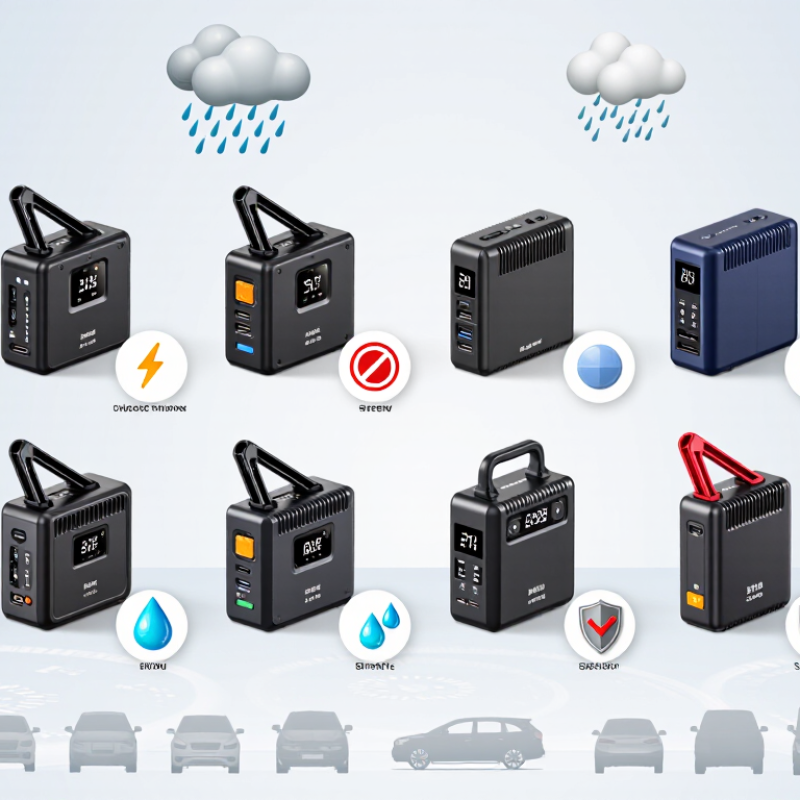
Smart Jump Starter Basics: 12V Systems, Peak Amps, and Battery Capacity
Smart Jump Starter Basics: 12V Systems, Peak Amps, and Battery Capacity
Most passenger cars use 12V electrical systems, but voltage alone does not guarantee compatibility. Check the vehicle manual before choosing a jump starter. A small petrol engine may need less starting power than a large diesel engine, especially in cold weather. Peak amps show the highest short burst available, not the unit’s sustained performance. This rating can look impressive, but it may not reflect real starting conditions. Cranking amps and tested output often provide more useful guidance.
Battery capacity, measured in mAh or Wh, affects how many starts the unit may support. Higher capacity usually means more weight and longer charging time. A practical model should also include reverse-polarity protection, short-circuit protection, and clear status indicators. These features reduce mistakes when working beside a dark roadside. Still, protection circuits are not a substitute for careful connection.
Tips: Keep the jump starter above its recommended charge level. Store it away from heat and moisture. Inspect the clamps before every use. Let the vehicle run for several minutes after starting. I would not trust peak amps alone when comparing products. Capacity, safety design, cable quality, and cold-weather performance deserve equal attention. My own buying judgment would remain cautious, because published specifications do not always match field conditions. A controlled test can reveal more than a bold number on the package.
10 Best Smart Jump Starters for Global Buyers - Smart Jump Starter Basics: 12V Systems, Peak Amps, and Battery Capacity
| Unit | Recommended Vehicle Type | System Voltage | Peak Current | Battery Capacity | Starting Cable Gauge | USB Output | Protection Features | Operating Temperature | Approx. Weight |
|---|---|---|---|---|---|---|---|---|---|
| 01 | Small cars and motorcycles | 12 V DC | 600 A | 6,000 mAh | 8 AWG | 5 V / 2.1 A | Reverse polarity, short circuit, over-current | -20°C to 60°C | 0.65 kg |
| 02 | Compact cars and small SUVs | 12 V DC | 1,000 A | 8,000 mAh | 8 AWG | 5 V / 2.4 A | Reverse polarity, over-temperature, overload | -20°C to 60°C | 0.78 kg |
| 03 | Sedans, SUVs, and light vans | 12 V DC | 1,500 A | 10,000 mAh | 6 AWG | 5 V / 3 A | Spark-proof, reverse polarity, overcharge | -20°C to 60°C | 0.95 kg |
| 04 | Large SUVs and pickup trucks | 12 V DC | 2,000 A | 12,000 mAh | 6 AWG | USB-C 5 V / 3 A; USB-A 5 V / 2.4 A | Spark-proof, short circuit, thermal protection | -20°C to 60°C | 1.15 kg |
| 05 | Diesel SUVs and commercial vans | 12 V DC | 2,500 A | 16,000 mAh | 4 AWG | USB-C 5 V / 3 A; USB-A 5 V / 2.4 A | Reverse polarity, overload, over-discharge | -20°C to 60°C | 1.35 kg |
| 06 | Cars in cold-weather regions | 12 V DC | 1,800 A | 12,000 mAh | 6 AWG | USB-C 5 V / 3 A; USB-A 5 V / 2 A | Low-temperature monitoring, spark-proof, reverse polarity | -30°C to 60°C | 1.10 kg |
| 07 | Boats, ATVs, and recreational vehicles | 12 V DC | 1,200 A | 10,000 mAh | 6 AWG | USB-A 5 V / 2.4 A | Reverse polarity, short circuit, water-resistant housing | -20°C to 55°C | 1.00 kg |
| 08 | Fleet vehicles and service vans | 12 V DC | 3,000 A | 20,000 mAh | 4 AWG | USB-C 5 V / 3 A; USB-A 5 V / 2.4 A | Spark-proof, overload, thermal, reverse polarity | -20°C to 60°C | 1.65 kg |
| 09 | Emergency roadside use | 12 V DC | 2,000 A | 15,000 mAh | 6 AWG | USB-C 5 V / 3 A; USB-A 5 V / 2.4 A | LED warning light, reverse polarity, over-current | -20°C to 60°C | 1.30 kg |
| 10 | Heavy-duty petrol vehicles | 12 V DC | 2,200 A | 18,000 mAh | 4 AWG | USB-C 5 V / 3 A; USB-A 5 V / 2.4 A | Spark-proof, reverse polarity, short circuit, overheat | -20°C to 60°C | 1.50 kg |
FAQS
Not always. Check the vehicle manual, engine size, fuel type, and required starting power before buying.
Peak amps show the highest short burst available. They do not prove sustained starting performance. Bold numbers can mislead.
Around 1,000A may suit small petrol engines. Choose at least 1,500A for mixed vehicles and colder regions.
Yes. Larger diesel engines usually need stronger delivery and thicker cables. Published engine limits may be optimistic.
Capacity, measured in mAh or Wh, affects possible jump starts. Higher capacity often means more weight and longer charging.
Look for reverse-polarity, short-circuit, overheating, and low-voltage protection. These reduce mistakes beside a dark roadside.
Cold reduces vehicle battery power and increases engine demand. Check tested cold-start performance, not only the temperature label.
USB-C can charge compatible devices when its power rating matches their needs. A wide LED beam helps reveal terminals at night.
Keep it charged above the recommended level. Store it away from heat and moisture. Inspect clamps before every use.
Do not trust peak output alone. Compare cable quality, clamp grip, capacity, recharge time, and tested results. I would still remain cautious.
Conclusion
Choosing the right Smart Jump Starter requires more than comparing peak amperage. This guide explains the essentials of 12V systems, battery capacity, and realistic output levels, helping global buyers understand whether a unit can support compact cars, SUVs, vans, or light trucks. It also highlights important safety features, including UL 2743 certification, reverse-polarity protection, short-circuit safeguards, and suitable IP ratings for protection against dust and water.
The comparison of the 10 best models focuses on verified specifications, warranty coverage, and overall value rather than marketing claims. Key performance factors include 1,000–3,000A output, engine compatibility, reliable starting power, and dependable operation in temperatures from −20°C to 60°C. Additional features such as USB-C Power Delivery, LED lighting, emergency signaling, clear battery indicators, and durable designs can improve everyday usefulness. By balancing safety, performance, portability, and long-term support, buyers can select a practical jump starter for personal, household, or professional vehicle needs.
